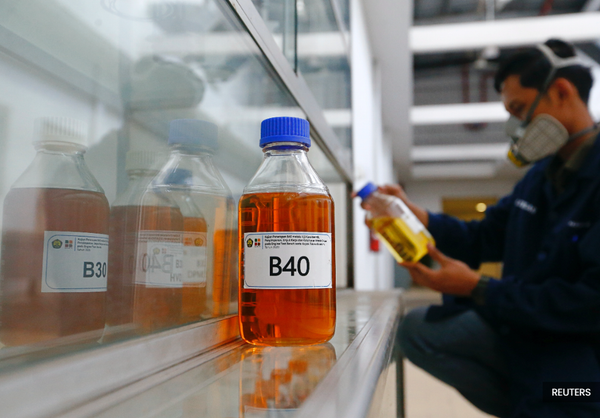
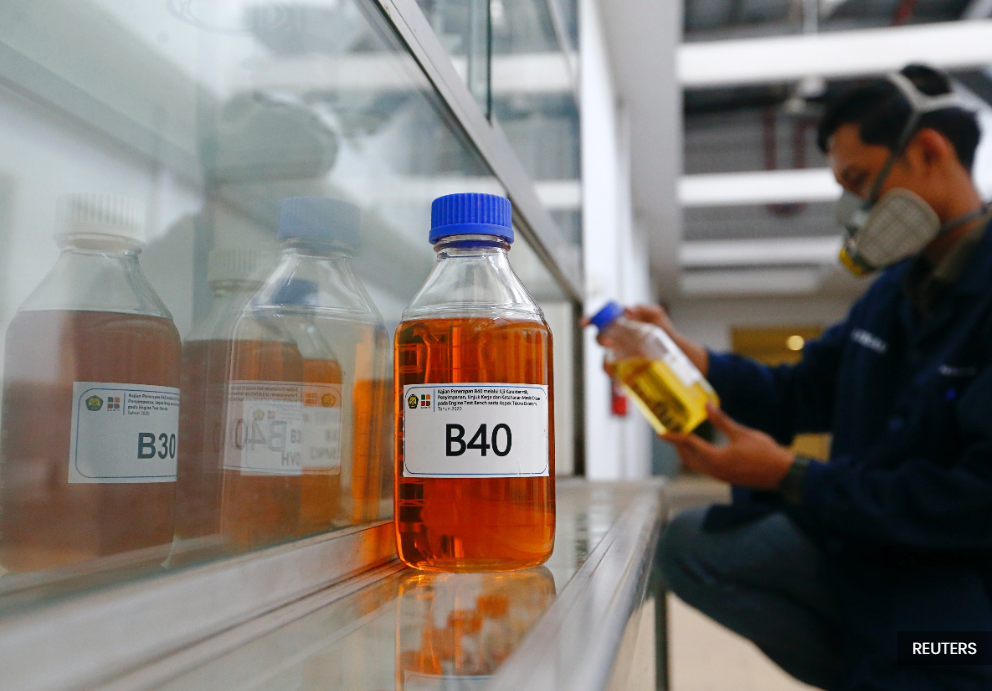
KUALA LUMPUR, April 14 — The government has agreed to increase the biodiesel blend rate from B10 to B15, beginning with B12, in order to further sustain the country’s diesel supply following the crisis in West Asia.
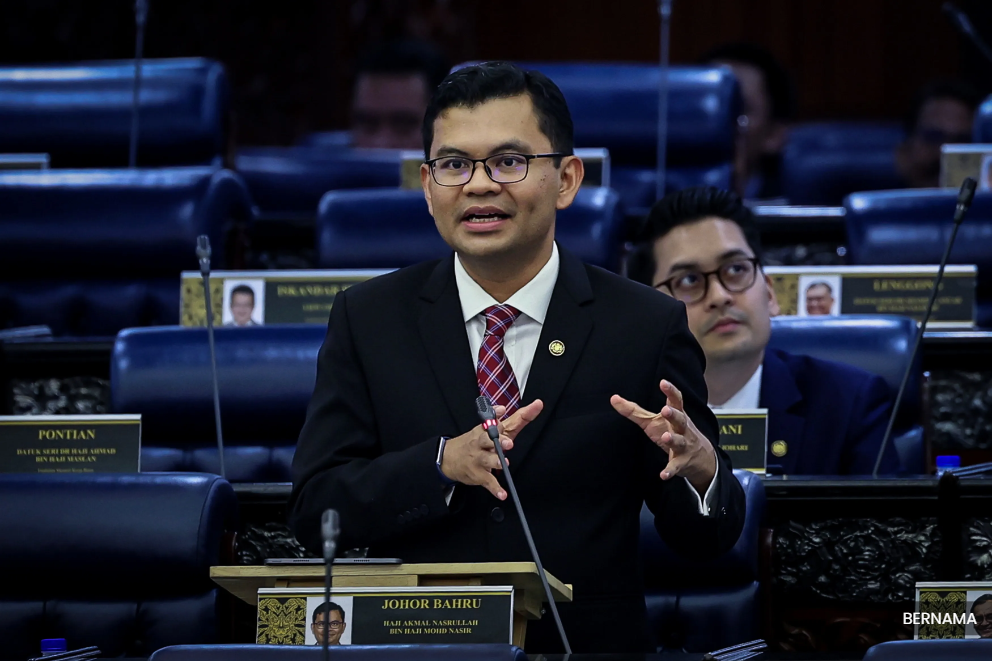
Economy Minister Akmal Nasrullah Mohd Nasir said that to avoid excessive dependence on imported fossil fuels and external markets, economic restructuring through a transition to renewable energy must be accelerated.
The government agreed to the upgrade to B12 because the foundation already exists, allowing it to be done at no additional cost using existing biodiesel blending infrastructure.
“As a medium-term measure, we must accelerate economic restructuring through the transition to renewable energy to ensure more secure domestic energy sources.
“In this context, the government is not only stabilising supply and prices but also building long-term resilience, as recovery from this crisis is expected to take up to 18 months,” he said during today’s global energy crisis briefing.
Current data indicate that the country is in a position to expedite this move.
“In 2025, Malaysia’s biodiesel production totalled 975,207 metric tonnes, while production capacity reached 2.36 million metric tonnes.
“This shows that the industrial base, supply chain, and blending capacity are already in place and only need to be strengthened in a structured manner to deliver greater benefits to the country,” Akmal said.
Simultaneously, the government’s commitment is demonstrated through a working visit to Syarikat PS Pipeline Sdn Bhd, a joint venture between Petronas Dagangan Bhd and Shell Malaysia Trading Sdn Bhd, at the Klang Valley Distribution Terminal, which shows the readiness of infrastructure, management, and blending facilities have been assessed directly.
He added that the National Economic Action Council meeting today agreed in principle that biodiesel is one of the most practical alternative biofuel sources, which can be readily implemented in the near term.
“The government must choose measures that can be mobilised immediately, have a direct impact, and are based on existing domestic capabilities.
“Biodiesel meets these requirements as it is an alternative energy source that can help reduce dependence on fossil fuels, which are increasingly uncertain (in supply),” Akmal said.
He noted that the use of biodiesel can prolong the country’s diesel supply, supported by mitigation plans and the B20 and B30 depot upgrade under the 13th Malaysia Plan, including preparations toward a B30 mandate for the commercial and public sectors.
“The government will also hold an engagement with the Oil Industry Technical Committee to ensure that this implementation proceeds in an orderly manner,” Akmal said.
The government will continue to monitor global developments, ensure sufficient energy supply, and accelerate reforms toward a more resilient energy system as a strategic national priority.