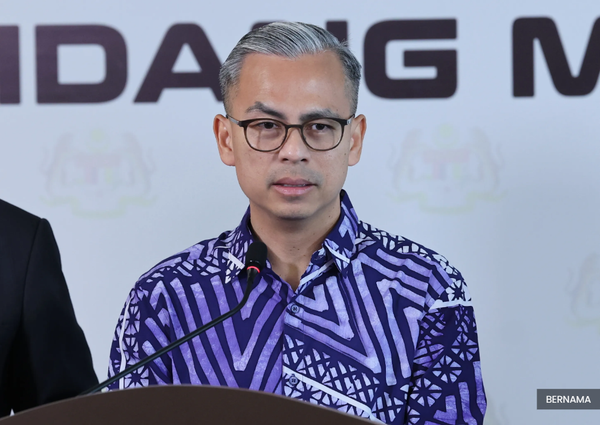
KUALA LUMPUR, April 9 — The Communications Ministry today announced several incentives to ensure the welfare of professionals and the sustainability of the country’s creative industry.
Communications Minister Datuk Fahmi Fadzil said among the initiatives is a collaboration between the National Film Development Corporation (FINAS) and Insolvency Department to reduce industry players’ financial burden and improve their well-being.
He said for the sustainability of the creative industry, the ministry has launched the RM10 million CITRA fund, which focuses on the development of content based on Malaysia’s identity and values.
“The message we want to convey is that the government will continue to assist artists, professionals and all workers involved in the creative and film industry.
“Government assistance is not only limited to providing funds or allocations for developing the country’s film industry but also covers legal aspects for those facing bankruptcy problems,” he told reporters after the Artistes Symposium 2026 here today.
Also present were Minister in the Prime Minister’s Department (Law and Institutional Reform) Datuk Seri Azalina Othman Said, Deputy Communications Minister Teo Nie Ching, Communications Ministry secretary-general Datuk Abdul Halim Hamzah, and FINAS chairman Datuk Hans Isaac.
Fahmi expressed confidence that a collaboration between FINAS and the Insolvency Department, which was signed today, will help artists, professionals and those involved in the creative industry, who are facing bankruptcy, to get back on their feet and continue to work.
“I hope that through this collaboration, artists and those involved in the field will benefit.
“I welcome the commitment from Datuk Seri Azalina to mobilise the Legal Aid Department to assist in terms of mediation to assist those involved in the creative industry free of charge if there are disputes or contract issues worth less than RM250,000,” he said.
Fahmi said that in addition, the government has also allocated RM300 million in funds through FINAS under the Filming Incentive in Malaysia (FIMI) for a period of five years to attract more international productions to film in this country.
He said the initiative could also increase job opportunities for local artists, thus ensuring the sustainability of the country’s creative industry.
Meanwhile, Fahmi said FINAS had been asked to examine the legal and copyright aspects to protect the rights of artists and filmmakers in facing the challenges of artificial intelligence (AI) technology.
He said the ability of AI to produce videos with voices and body movements similar to real actors is a challenge for artists who rely heavily on these factors in their work.
“For artists, their faces and voices are their most important assets, so I ask that FINAS look into these aspects to ensure their rights are protected in this AI era,” Fahmi said.