
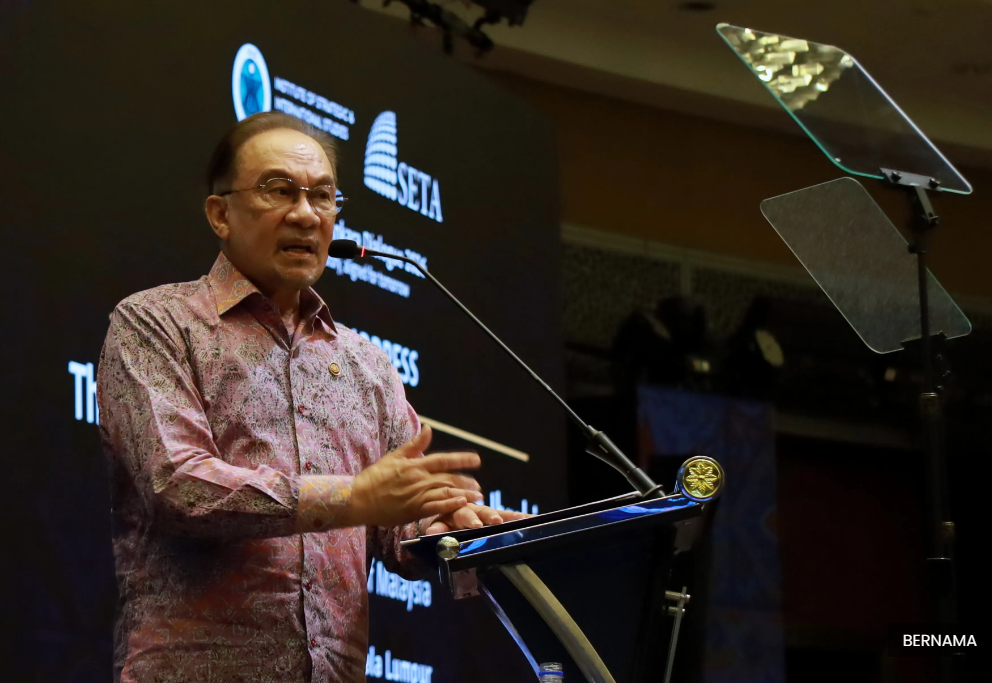
KUALA LUMPUR, April 7 — Malaysia’s energy supply is expected to remain sufficient at least until June this year, said Prime Minister Datuk Seri Anwar Ibrahim.
“For now, projections for May and June (show) there may be some price disruptions, but (regarding) the supply for the next few months, we are quite sure of that,” he said during a question-and-answer session at the KL-Ankara Dialogue 2026 today.
Anwar added that while Malaysia is an energy-producing country, it is also a net importer as its products are of premium quality and cost slightly higher.
Despite sufficient supply for domestic usage, potential price disruptions arising from ongoing global energy uncertainties are unavoidable.
Meanwhile, he attributed the country’s supply stability to the strong track record and global network of Petroliam Nasional Bhd (Petronas), which maintains long-standing relationships with major oil-producing countries.
These strategic partnerships have enabled Malaysia to avoid supply shortages despite heightened geopolitical tensions affecting global energy markets.
Meanwhile, on liquefied natural gas (LNG), Anwar said that Malaysia continues to benefit from both domestic production and imports, particularly from Australia under long-standing arrangements, as well as contributions from Petronas’ operations in Canada.
“Malaysia has massive LNG production capacity, complemented by imports from Australia and our successful operations in Canada, which collectively support our energy security,” he said.
At the same time, the country is aggressively exploring opportunities with Turkiye across multiple strategic sectors, including LNG and semiconductors, as part of efforts to strengthen bilateral economic ties and enhance supply chain resilience.
Turkiye's oil production rose 26 per cent, and natural gas output increased 39 per cent in 2025.
Ankara aims to reduce external dependence and strengthen energy security, and the country currently meets roughly two-thirds of its energy demand through imports, costing an estimated US$60 billion to US$70 billion (RM242.1 billion to RM282.4 billion) annually.
Turkiye is the fourth-largest gas market in Europe and plays a critical role in the region’s energy landscape, while Malaysia is a top-five global LNG exporter.