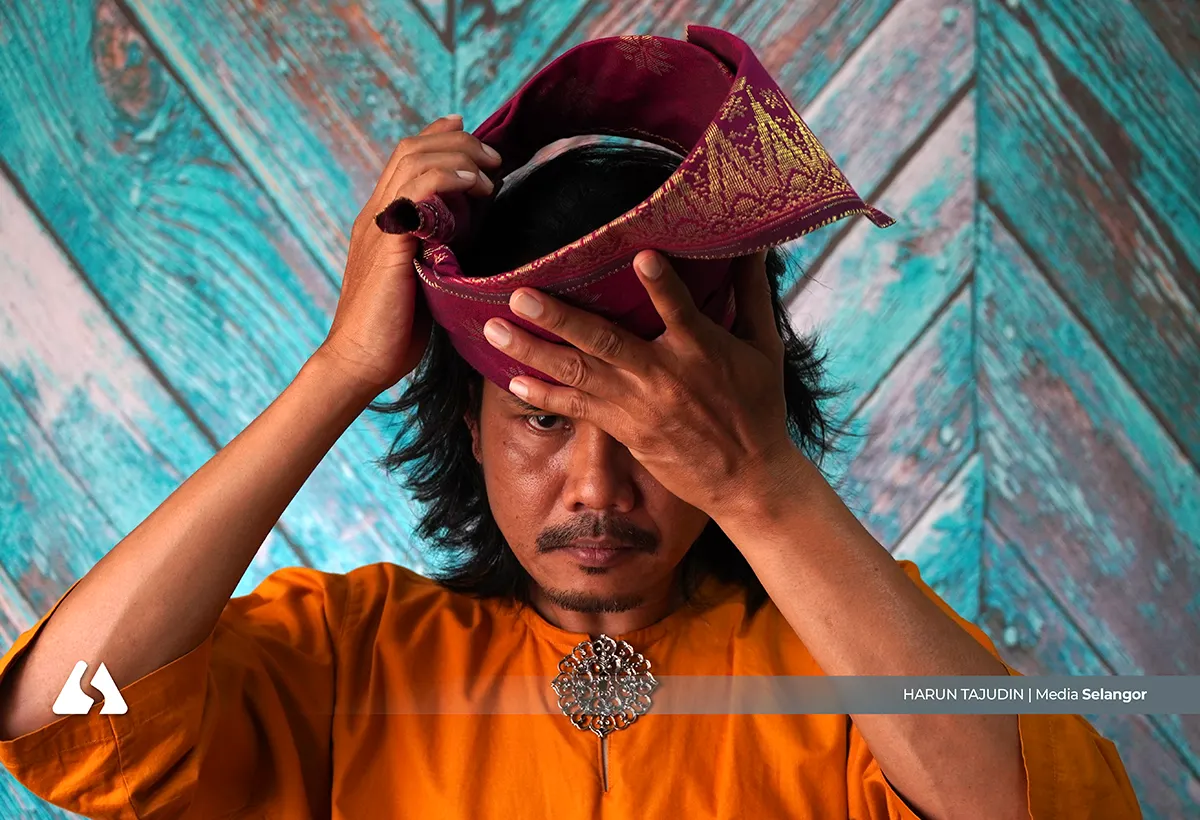
SHAH ALAM, March 23 — In recent decades, the wearing of the tanjak among the younger generation during Hari Raya Aidilfitri celebrations has become increasingly popular and is no longer limited to weddings or certain ceremonial occasions.
Although the songkok remains more widely used during festive seasons, interest in the tanjak has grown rapidly. Moreover, it is closely associated with the Malay community of earlier times.
The tanjak is not merely a headpiece, but a symbol of identity and Malay cultural heritage that must be preserved so that the tradition does not fade away in the face of modernity.
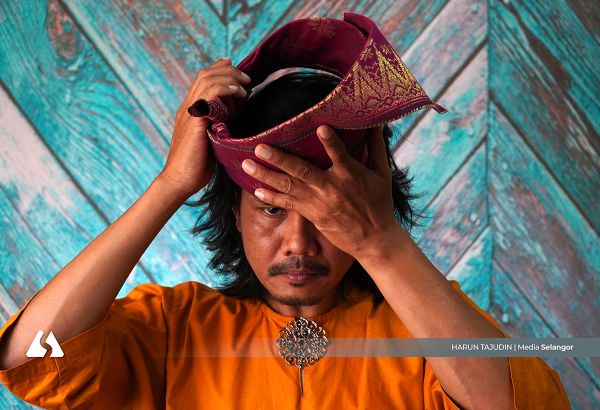
Mohd Sallehin Hussain, 46, firmly upholds this principle. As such, the former cameraman-turned-craftsman has been actively crafting tanjak for nearly a decade.
Driven by a desire to see the Malay community once again appreciate traditional attire that is increasingly being forgotten, he has turned the tanjak into a source of supplementary income.
“You need passion. Without it, the business would have folded long ago. Personally, I have always had a deep interest in Malay attire and the tanjak,” Sallehin told Media Selangor.
He also aims for the tanjak to reflect the philosophy of traditional Malay dress. To that end, he learned the art of crafting from noted Malay heritage instructor Johan Iskandar.
“As a Malay person, I have always wondered why our knowledge of traditional clothing is lacking, when in the past it was worn by people of rank,” Sallehin said.
For the Kuala Lumpur native, the art of shaping a tanjak is not simply about folding cloth, but involves its own structure and philosophy that must be understood.
He is also skilled in crafting various tanjak styles: Gumpal Garam, Ketupat Palas, Simpul Kasih, and Burasak, each with its own distinct identity.
The Tanjak Fansuri brand owner added that one of the most popular styles among customers is the Mahkota Alam tanjak, a heritage design considered easier to maintain than others.
Sallehin uses a variety of fabrics to produce unique and attractive tanjak, including cotton, songket, and batik.
“I often use scattered floral songket and Japanese cotton fabric. I source these materials from Thailand, Indonesia, and Vietnam to give my tanjaks a distinctive touch.
“However, most customers tend to choose black. For those new to wearing a tanjak, I usually recommend black as it is easier to match,” he said.
As Aidilfitri approaches, orders typically increase. He crafts three tanjaks a day, with around 90 completed in time for the festivities. Sallehin also prioritises quality over sales volume.
“What matters is that buyers are assured of free repairs for their tanjak, even years after purchase,” he said.
Tanjak Fansuri is sold at prices ranging from RM70 to RM200, depending on the style and fabric. Sallehin also pays close attention to etiquette and traditional taboos rooted in Malay heritage.
This includes ensuring that he is clean and in a state of ablution, dresses modestly, and does not step on the fabric during the crafting process.
Others include the prohibition on commoners wearing the same styles as those worn by royal family members, as doing so may even constitute an offence under the law.
Sallehin hopes that his efforts will, in some way, help reintroduce the beauty of traditional Malay attire so that it continues to be appreciated by future generations.