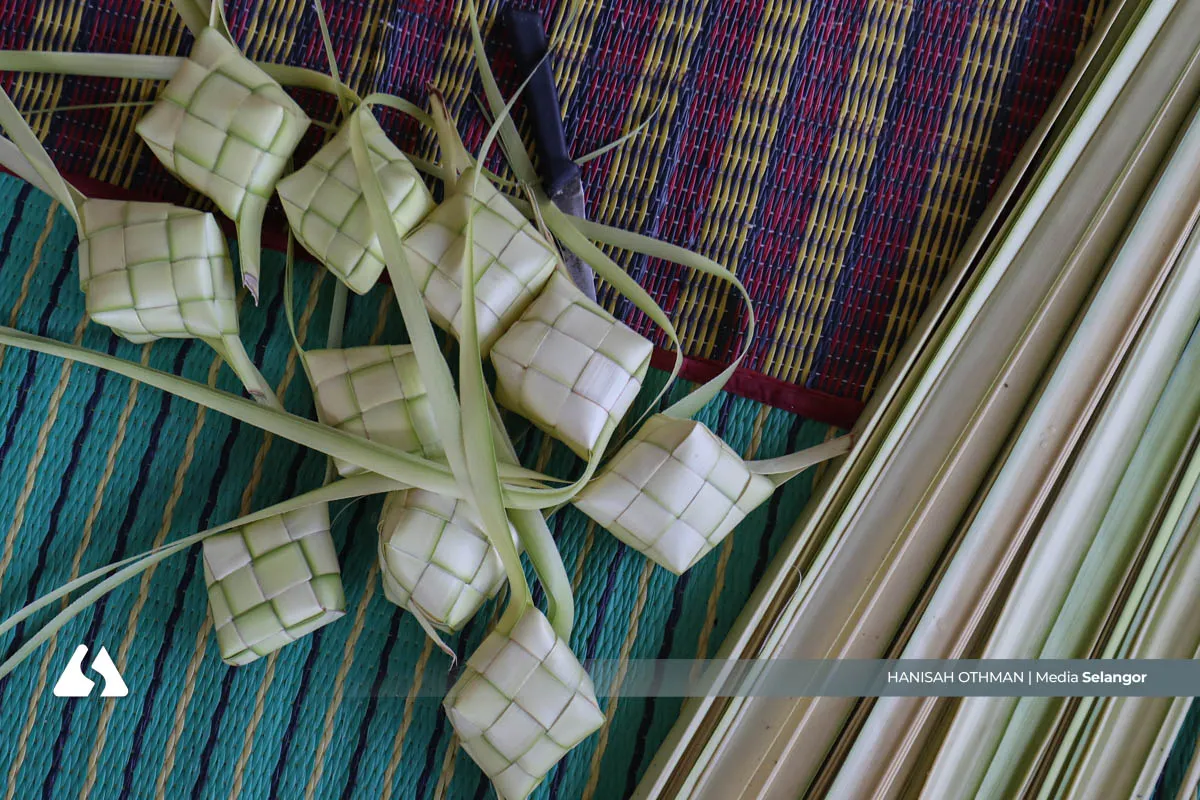
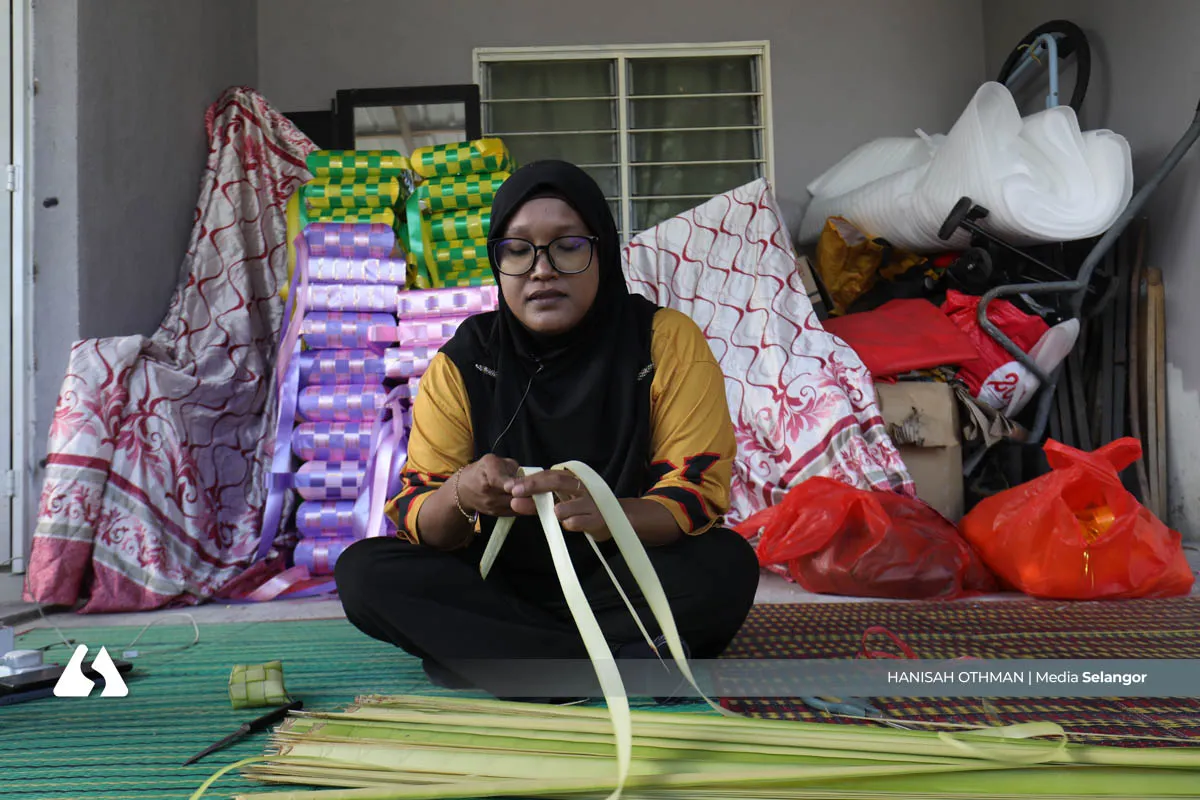
SHAH ALAM, March 17 — The aroma of fresh young coconut leaves, the sound of the prayer call from an old radio, and nimble hands weaving ketupat casings were once a familiar scene in the lead-up to Hari Raya Aidilfitri.
Amid the bustle of preparing other festive dishes, ketupat nasi remained a staple that was inseparable from Aidilfitri celebrations in the Malay community.
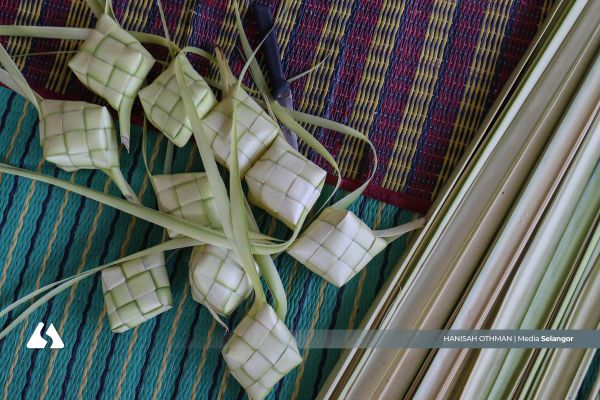
Each strip of young coconut leaf is carefully interlaced to ensure the rice packed inside stays firm after long hours of boiling. It is typically served with rendang, serunding, or peanut sauce.
Unlike ketupat palas, which is popular in the north and east coast regions, the square-shaped ketupat nasi symbolises tradition, patience, and togetherness.
In the past, Aidilfitri eve was filled with the lively atmosphere of communal weaving. Today, the tradition is gradually fading due to time constraints and the availability of easier alternatives, such as instant ketupat.
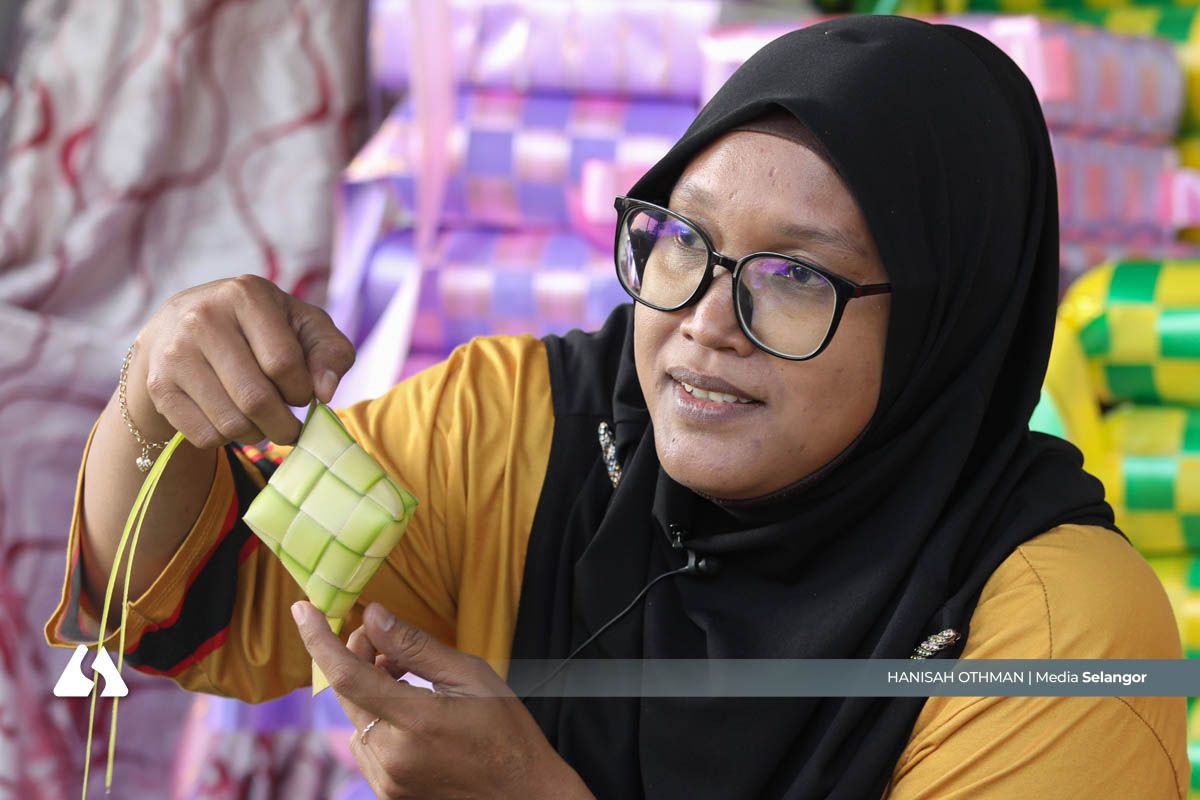
However, some continue to preserve the practice to maintain its authenticity and sentimental value. In fact, weaving ketupat casings has become a lucrative seasonal source of income ahead of the festivities.
For housewife Norhashimah Mohd Taib, the skill she inherited from her late mother and grandmother at age 18 has opened the door to a home-based business in ketupat nasi weaving in Gombak.
“In the past, I helped my mother and grandmother sell ketupat casings at markets. I never imagined it would now become a source of income. When I weave, I am reminded of them,” she told Media Selangor.
The business began on a small scale before gaining wider attention, especially after the COVID-19 pandemic. Since then, orders have surged, coming not only from individual customers but also from wholesalers and market traders.
Norhashimah is assisted by her husband Mat Awi Maskor, 46, who can produce between 500 and 1,000 ketupat a day. During the festive season, orders can exceed 20,000 pieces.
She produces duduk-shaped ketupat (resembling an onion) and pasar styles, priced at RM1 per empty casing.
The 39-year-old also sells ready-filled ketupat, pre-boiled ketupat, as well as young coconut leaves, usually harvested by Mat Awi, who is skilled at climbing coconut trees.
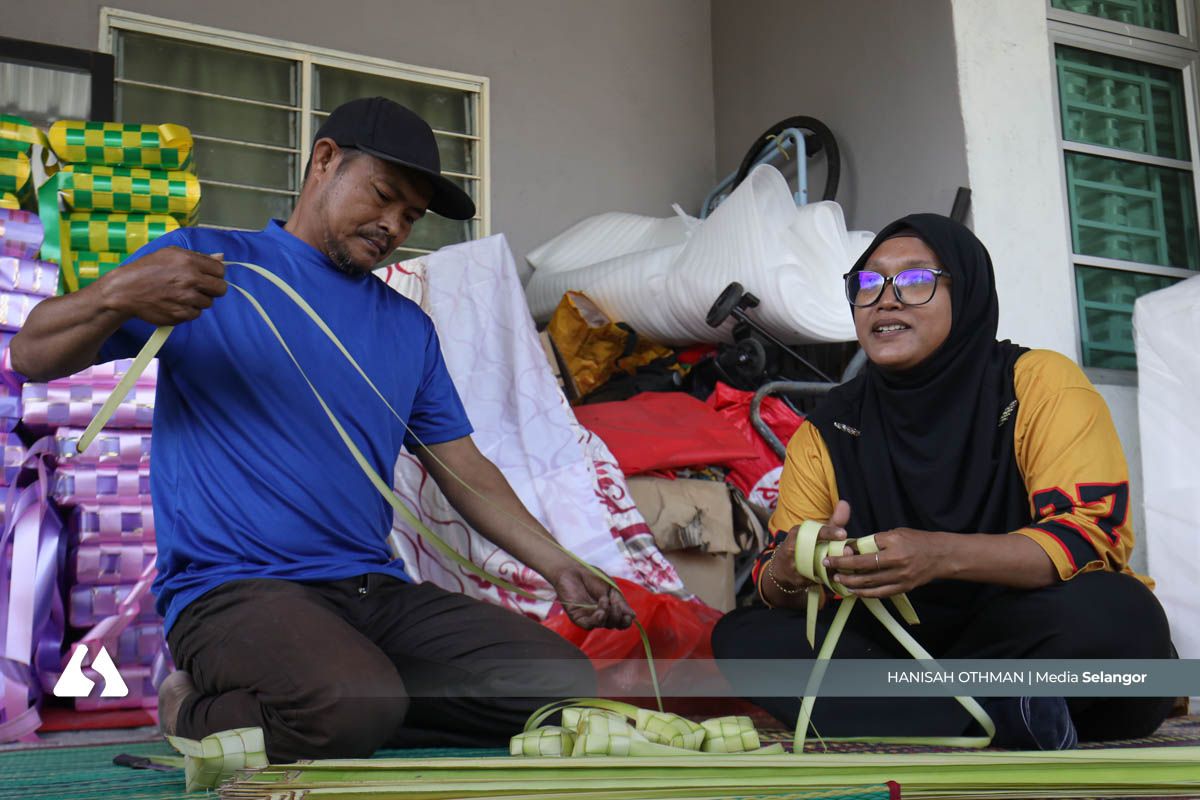
“At first, my husband did not know how to weave at all. But when he saw I was overwhelmed with orders, he learned alongside me. Now, I have a weaving partner,” Norhashimah said.
Beyond the festive season, the mother of four receives orders year-round for drama shoots, advertisements, and food products.
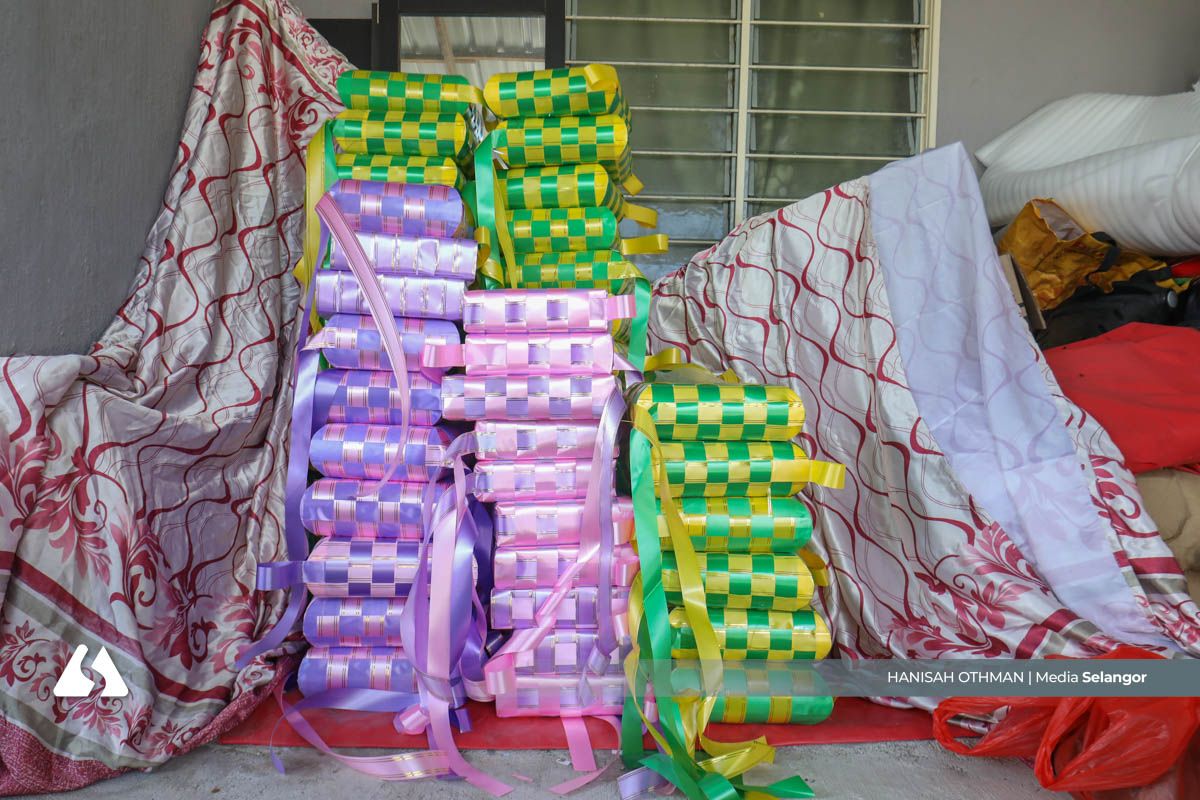
She also takes commissions to create decorative ketupat using ribbon weaving, priced between RM1.50 and RM3.50 per unit depending on size.
Many customers admit they no longer know how to weave, and they purchase casings to relive childhood Aidilfitri memories with their families.
“They say Hari Raya feels complete with ketupat nasi. Many want to experience the nostalgia of the past, but they do not know how to weave, which is why they choose to buy them," Norhashimah said.
For her, every strip of coconut leaf she weaves carries the legacy of cherished memories with her late mother and grandmother, who taught her the craft.
Although Norhashimah admits it can be tiring, especially with last-minute orders close to Aidilfitri, she is grateful that the skill has become a source of livelihood for her family during the festive season.
Despite the late nights spent fulfilling orders, she hopes the tradition will continue through future generations; not merely as a business, but as a cultural heritage that brings families together every Syawal.
“This is a traditional culture passed down from our ancestors, so we should learn about it. Everyone wants convenience, but if we master the skill of weaving, we will find joy in it.
“If you do not know how to weave, that is fine: learn. It is not about having artistic hands or not.
"The tip is, if you feel you are not skilled, try to clear your mind while learning to weave — it will work,” Norhashimah said.