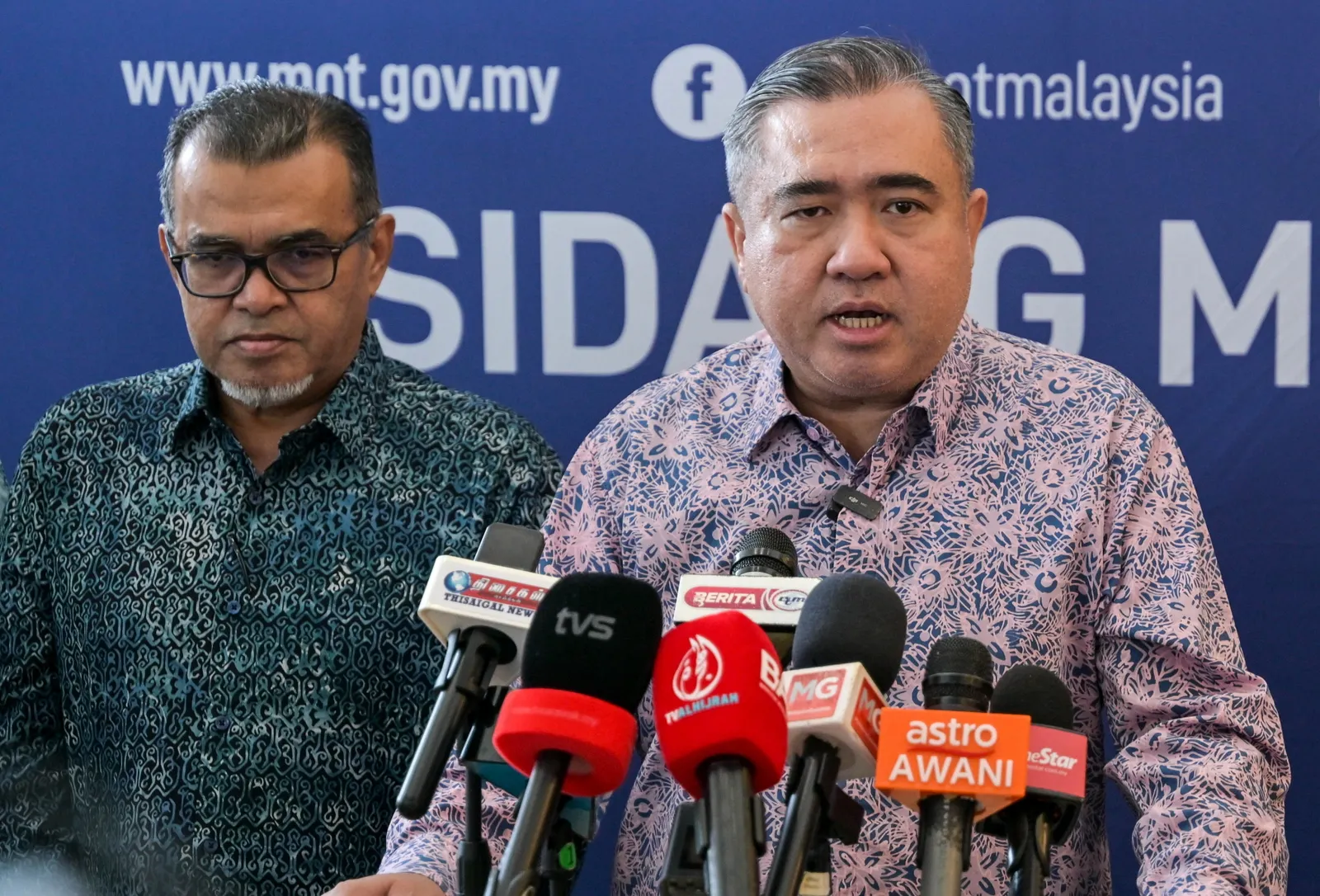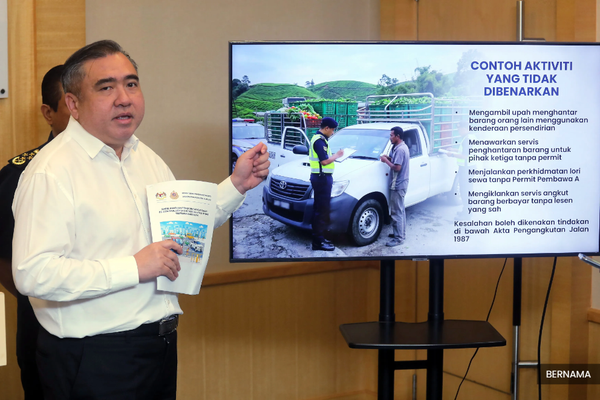
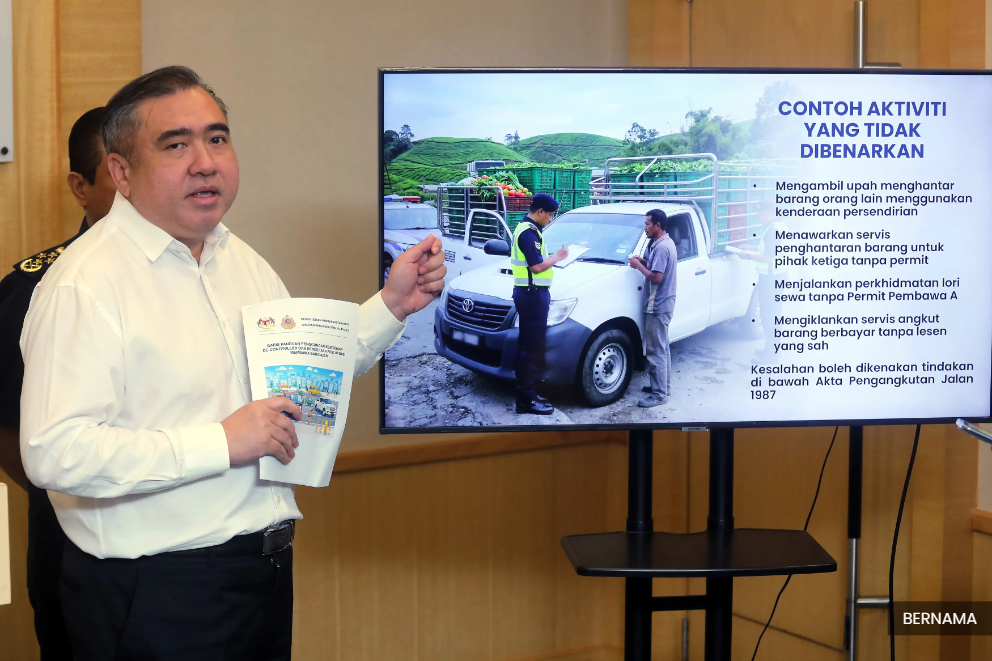
PUTRAJAYA, March 16 — The Transport Ministry (MOT), via the Road Transport Department (JPJ), today issued the guidelines on the use of de-controlled vehicles and pick-ups for transporting goods.
Its minister Anthony Loke said the guidelines, which will take effect on April 1, are aimed at avoiding confusion among road users regarding the use of vehicles for transporting goods.
They will also help ensure more consistent enforcement by the relevant authorities.
“Through these guidelines, the government clarifies that goods vehicles with a gross vehicle weight not exceeding 7,500kg are categorised as de-controlled vehicles and may be used by individuals or companies.
“They can be used to transport goods belonging to the owner that are related to their business activities without the need to obtain an operator’s permit from the Land Public Transport Agency (APAD),” he said during a media conference today.
However, if the vehicle is used to transport third-party goods for a fee, the activity is deemed a commercial goods transport service, and the operator must obtain a Carrier Permit A from APAD in accordance with the Land Public Transport Act 2010.
Owners of privately owned pick-up trucks may transport their own goods provided the items are carried safely, remain within the vehicle’s load limit and do not pose a danger to other road users.
The guidelines were issued following confusion in current governance and regulatory practices at the enforcement level, particularly in relation to Section 23 of the Road Transport Act 1987.
Loke added that the government will also maintain administrative flexibility, allowing holders of a Class D driving licence to operate de-controlled vehicles with an unladen weight of up to 4,000kg, even though the original limit for the licence is 3,500kg.
“This flexibility takes into account the increase in weight resulting from the installation of cargo bodies or additional structures on the vehicle,” he said.