
BEIJING, Jan 12 — China's record run of exports, driven by diversification in shipment destinations, is expected to have slowed in the final month of 2025, and the outlook for the coming year depends on manufacturers' ability to expand further into new markets.
Beijing's resilience to renewed tariff tensions since United States (US) President Donald Trump returned to the White House last January has emboldened Chinese firms to shift their focus to Southeast Asia, Africa, and Latin America to offset US duties, despite resistance from import markets concerned about Chinese overcapacity.
Outbound shipments were expected to have risen 3.0 per cent in value terms year-on-year, according to the median forecast of 34 economists in a Reuters poll. That was down from a 5.9 per cent increase in November from a high base in December 2024 when firms front-loaded US-bound orders ahead of Trump's inauguration.
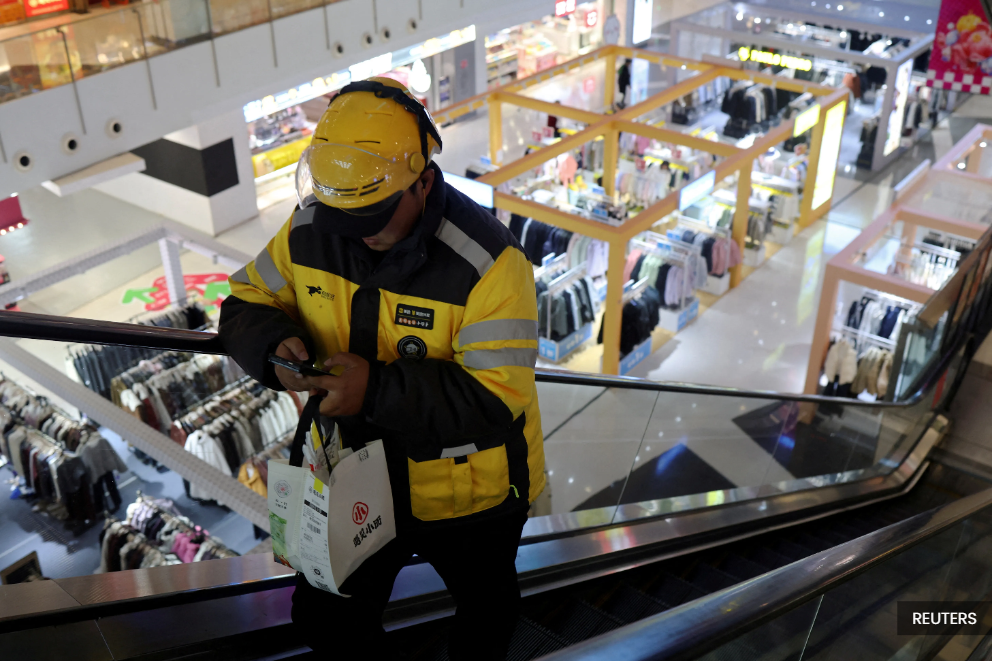
China's first US$1 trillion trade surplus
After China posted a US$1 trillion (RM4.06 trillion) trade surplus for the first time in November, economists were divided over whether Chinese firms had managed to sustain their push into new markets last month. Huatai Securities forecast 6.5 per cent, the highest reading, while economists at China's top-ranking Peking University projected a 3.7 per cent decline, the lowest forecast.
The Economist Intelligence Unit, Deutsche Bank, and JP Morgan's forecasts hovered at 4.1 per cent, 4.0 per cent, and 3.7 per cent, respectively, while Nomura and Citigroup were more downcast at 2.0 per cent.
Imports likely grew by 0.9 per cent, down from 1.9 per cent a month prior, as a persistent property-sector downturn, job insecurity, and a fading consumer-focused stimulus subdued domestic demand. The data will be released on Wednesday (January 14).
Economists expect China to continue gaining global market share next year, helped by Chinese firms setting up overseas production hubs that provide lower‑tariff access to the United States and the European Union, as well as by strong demand for lower‑grade chips and other electronics.
The International Monetary Fund estimates that exports added 1.1 percentage points to China's forecast five-per-cent growth last year and accounted for 30 per cent of global growth, with that share expected to remain around one‑third of the global total over the next few years.
China's December trade surplus is forecast at US$113.6 billion (RM461.5 billion). If the pollsters are right, export monthly surpluses exceeded US$100 billion (RM406.2 billion) eight times last year, up from just twice in 2024, which underscores that Trump has done little to dent China's trade with the wider world, even if he has curbed US-bound shipments.
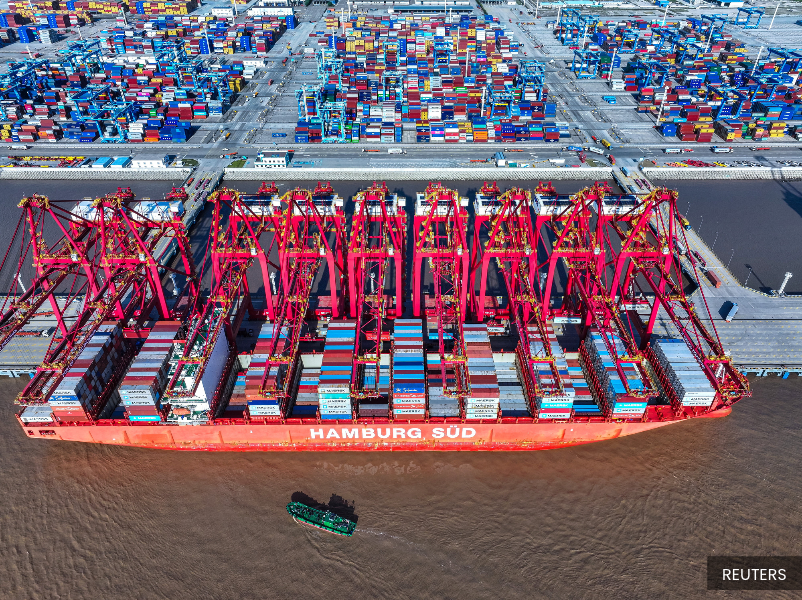
Trump's world impact on China trade?
In October, China overtook the US as Germany's largest trading partner.
However, the European Union's (EU) largest economy is considering steps to reduce its reliance on China, the world's second-largest economy, after Beijing's curbs on rare-earth exports left German industry exposed to supply-chain disruption.
Yet China has shown signs of recognising it must moderate its industrial exports if it is to sustain its success.
Last week, it scrapped subsidy-like export tax rebates for its solar industry, a long-standing point of friction with EU states. Last month, lawmakers passed revisions to the Foreign Trade Law after two, rather than the usual three, readings, as a signal to members of a major trans‑Pacific trade pact that China is prepared to shift from industrial subsidies to freer, more open trade.
Despite the year-long truce on tariffs that Trump and Chinese President Xi Jinping struck in late October last year, US duties of 47.5 per cent on Chinese goods are well above the roughly 35 per cent level analysts say enables Chinese firms to export to the US at a profit.