
KUALA LUMPUR, Dec 19 — Malaysia has shown notable resilience against global trade tensions and policy uncertainty, with its economy growing at a healthy pace this year, supported by strong domestic consumption and investment, solid employment growth, and a global tech-sector upcycle.
“The strong performance in part reflects sound economic policies; the authorities have maintained prudent macroeconomic and financial policies,” the International Monetary Fund’s (IMF) Mission Chief for Malaysia Masahiro Nozaki said after consultation with the authorities and other stakeholders.
The October 2025 Malaysia-United States (US) trade deal has helped to reduce uncertainty for businesses and consumers in Malaysia. Nonetheless, the global landscape has shifted, with global uncertainty becoming a new normal.
Against this backdrop, rebuilding Malaysia's macroeconomic buffers remains critical.
“Malaysia’s economic resilience is expected to continue in the near term, supported by strong domestic demand. IMF staff projects growth to slow marginally from 4.6 per cent in 2025 to 4.3 per cent in 2026, mainly reflecting the impact of higher US tariffs on Malaysia,” he said in a statement today.
The fund notes that risks to growth are tilted to the downside, mainly stemming from external factors.
“As a highly open economy, Malaysia could be affected by a slowdown in external demand in case of an escalation of protectionist trade measures, global financial market volatility, and a potential bust of the artificial intelligence (AI) boom,” Nozaki said.
However, upside risks can also materialise, including breakthroughs in global trade negotiations, stronger-than-expected tourism activities, and faster implementation of structural reforms.

Prudent fiscal management
“Malaysia’s commitment to prudent fiscal management has been demonstrated by the passage of the landmark Public Finance and Fiscal Responsibility Act in 2023 and a steady reduction in the fiscal deficit since 2022,” he said.
The IMF welcomes the authorities’ plan to further reduce the fiscal deficit to 3.5 per cent of gross domestic product (GDP) in 2026 and to three per cent of GDP by 2028.
“Continuing to rebuild fiscal buffers through further high-quality and sustainable revenue and expenditure measures remains critical, as Federal government debt, standing at 64.6 per cent of GDP at end-2024, is still above pre-pandemic levels.
“The IMF welcomes ongoing efforts to strengthen fiscal transparency and spending efficiency, including the passage of the new Government Procurement Act. Inflation, averaging 1.4 per cent during January-October 2025, is projected to remain stable and gradually return to its long-term average of 2 per cent," Nozaki said.
In this context, the IMF assesses the current monetary policy stance as appropriate.
Monetary policy should stay data-dependent
Going forward, monetary policy should remain data-dependent to anchor inflation expectations and preserve growth amid heightened global uncertainty, with the IMF also welcoming the authorities’ continued commitment to exchange rate flexibility and ongoing efforts to deepen the foreign exchange market.
“Systemic financial sector risks remain contained. Malaysian banks maintain ample capital and liquidity buffers, corporate and household balance sheets are healthy, and the housing market remains stable," he said.
Continued vigilance is vital against pockets of vulnerabilities, including highly leveraged households, banks’ exposure to firms affected by US tariffs, and the linkages between banks and non-bank financial institutions.
“Banks’ external funding risks remain contained and mitigated by their holding of ample foreign currency assets, though continued monitoring is warranted given elevated global financial market risks," Nozaki said.
Swift implementation of structural reforms under the 13th Malaysia Plan (13MP) for 2026-30 is key to further domestic-driven, inclusive growth. Labour market reforms aimed at increasing private sector wages, reducing skill-related underemployment, and raising female labour force participation can help achieve the ambitious development goals under the 13MP.
Deeper trade and financial integration within Asean can boost long-run growth potential in Malaysia.
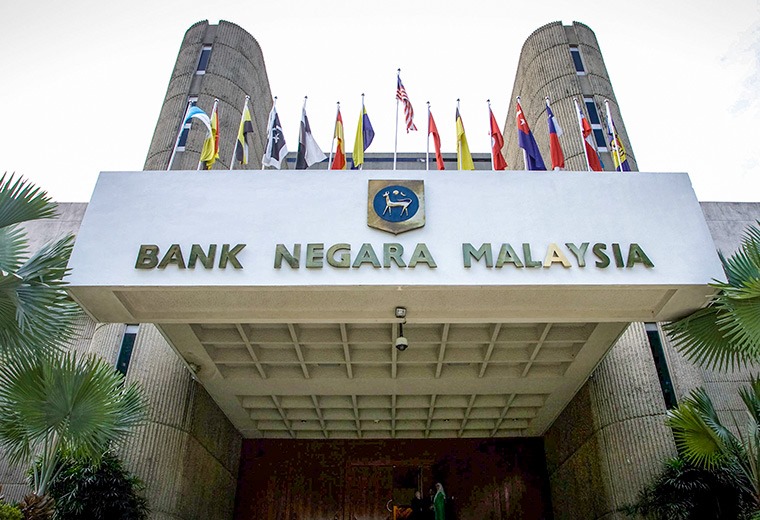
The IMF team also thanked the officials of the government of Malaysia and Bank Negara Malaysia, as well as other public institutions and private-sector representatives, for the productive discussions.