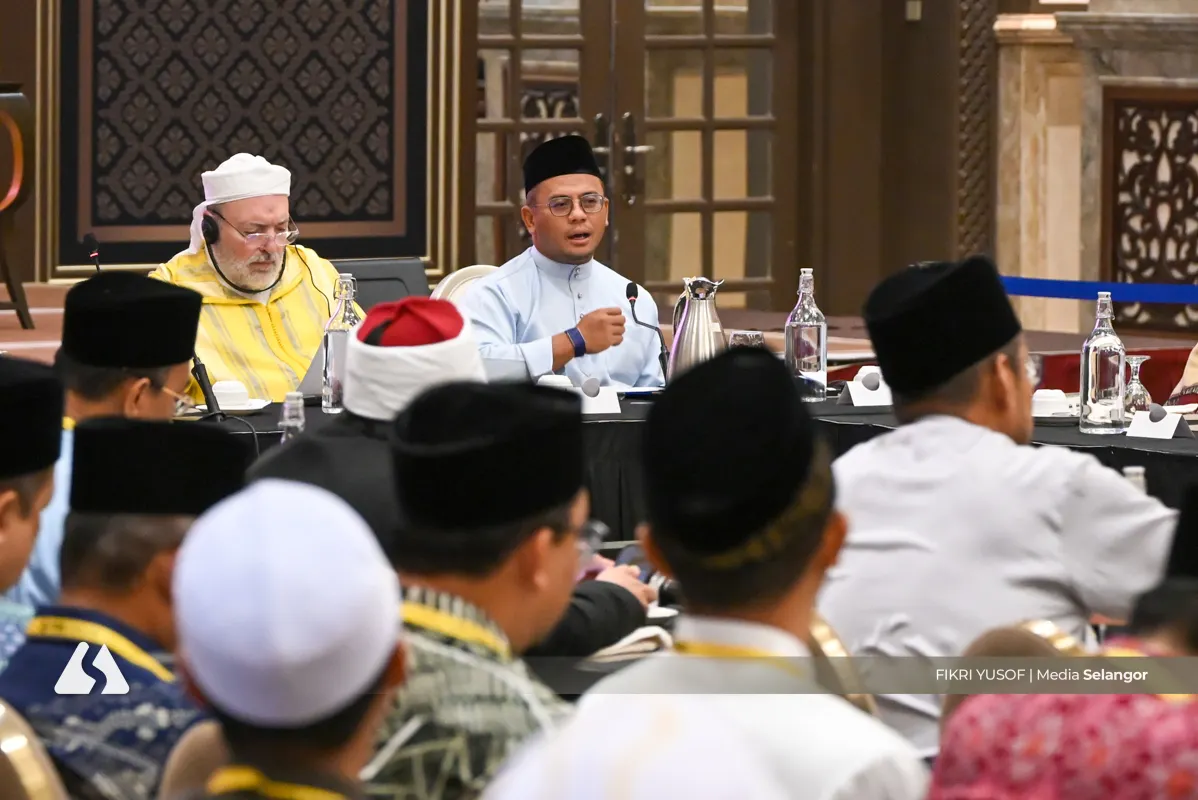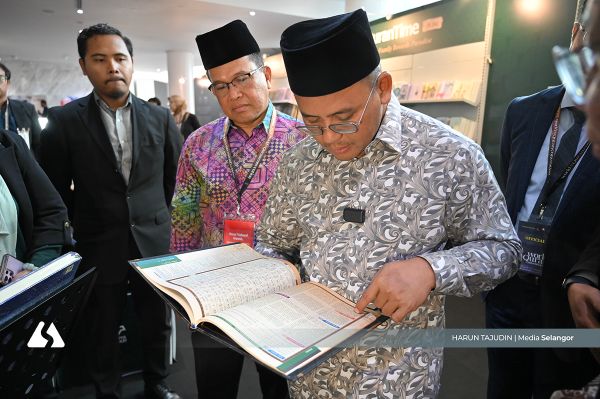
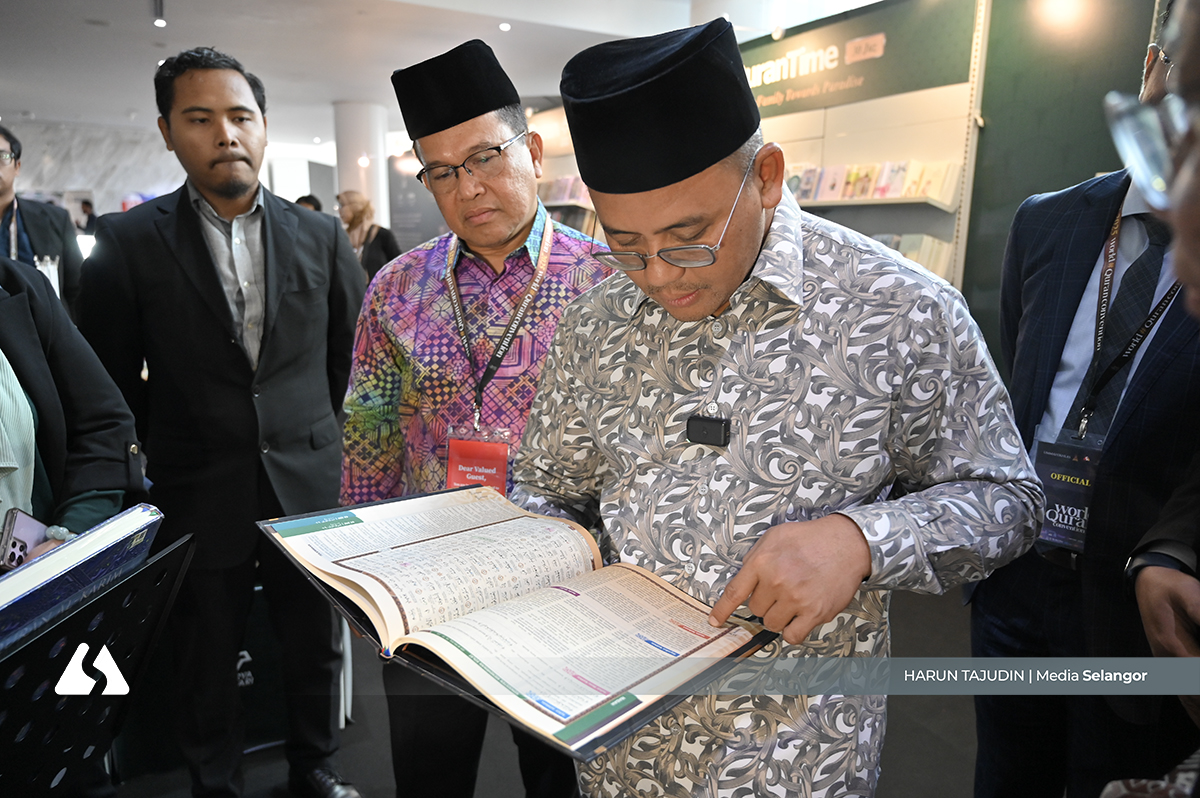
KUALA LUMPUR, Dec 6 — Selangor remains the most active state in driving the development of the nation’s halal ecosystem, with hundreds of companies certified through a supervisory system that has clarity, integrity and accountability, said Menteri Besar Dato’ Seri Amirudin Shari.
He said Selangor’s commitment to strengthen halal governance has been ongoing for over 50 years, and remains a significant responsibility thanks to cooperation between the government, industry, and community.
“Among the most clear efforts are halal governance; for instance, how Quranic values can be translated into policies and the system.
“This not only improves user confidence, but strengthens economic opportunities,” he said at the World Quran Convention here today.
Amirudin added that Selangor’s successful halal sector proves Quranic values can be institutionalised in modern administration, but said Quran-based economic scopes cast a wider net than that.
“Halal is not the only Quranic economic manifestation; it is just a clear example.
“Our mission is bigger — to ensure each policy, programme and collaboration reflects the principles of fairness, excellence, and responsibility demanded by the Quran,” he said.
Amirudin added that Selangor has launched various initiatives to improve the people’s well-being, including by empowering micro and small entrepreneurs and facilitating financing access through state financial institutions and strategic partners.
“This all moves along the same flow, ensuring the Quran’s messages are translated into well-being, economic opportunities, and prosperity for the people,” he said.
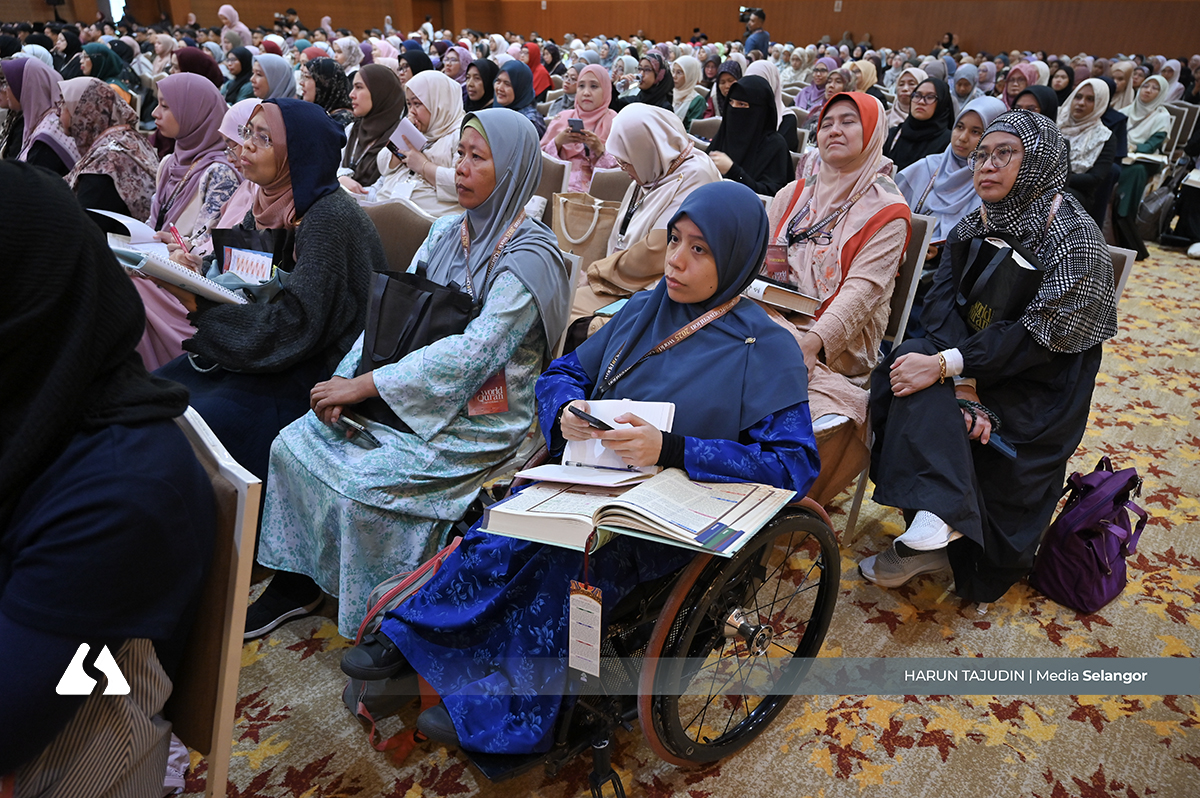
The convention, held by Warisan Ummah Ikhlas Foundation (WUIF), is in its fifth year, and carries the theme “Surah Al-Saff: Quranic Solutions for Global Economic Challenges”.
Held at Menara MITI here, the event is an international platform that gathers global economic leaders, ulama, and community activists.
It involves 20 countries including Brunei, Indonesia, Iran, Germany, France, and the United States, and discusses how Quranic values can be applied in contemporary economics, including in business ethics, sustainable investment, social responsibility, and community development.
The World Quran Convention is also an international networking space to explore policies, social collaborations, and economic initiatives centred on moral and spiritual values.