
BANGKOK, July 29 — Military commanders from Thailand and Cambodia held talks today as calm returned to their disputed border and displaced residents began trickling back, following the Southeast Asian neighbours' announcement of a truce to end five days of fighting.
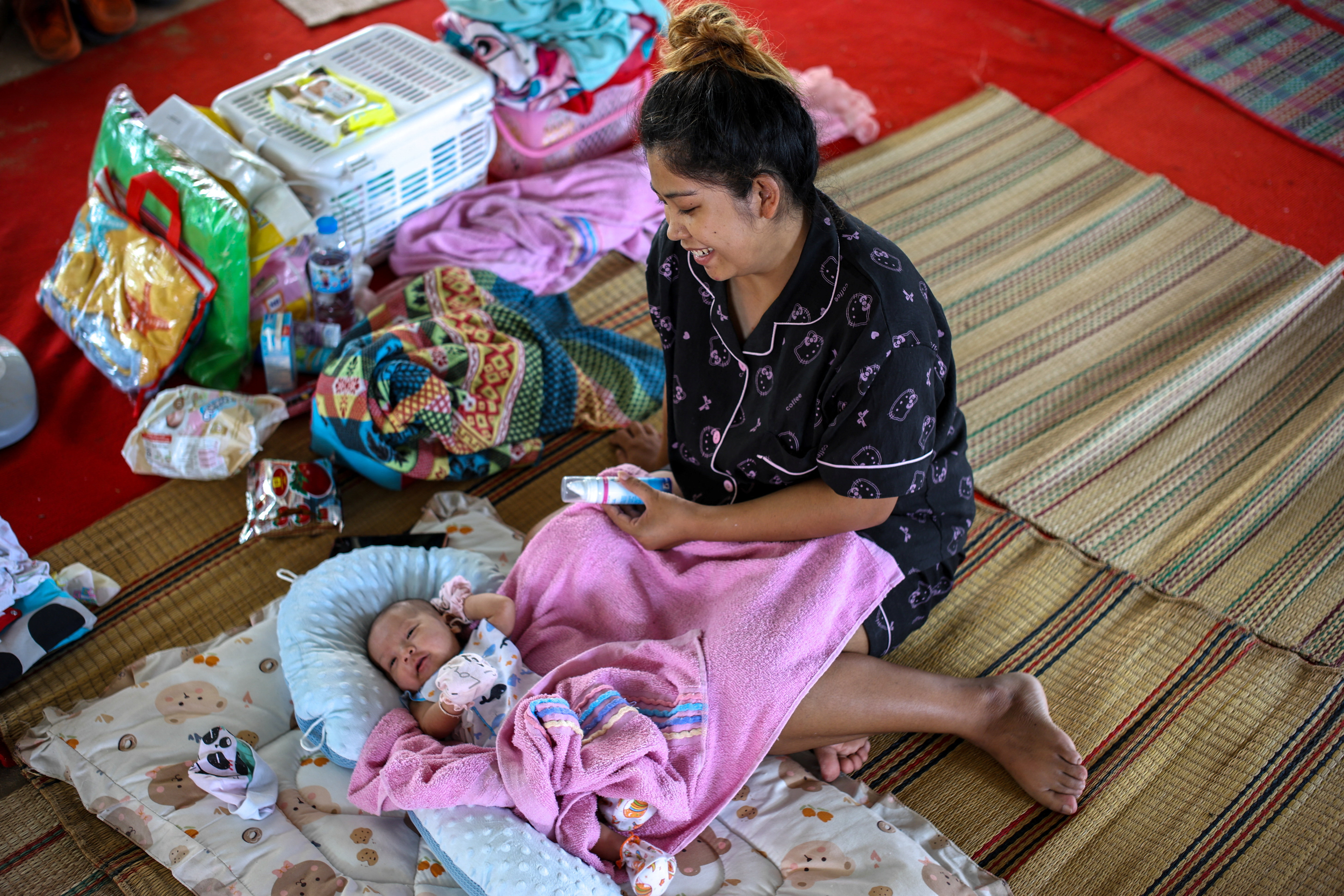
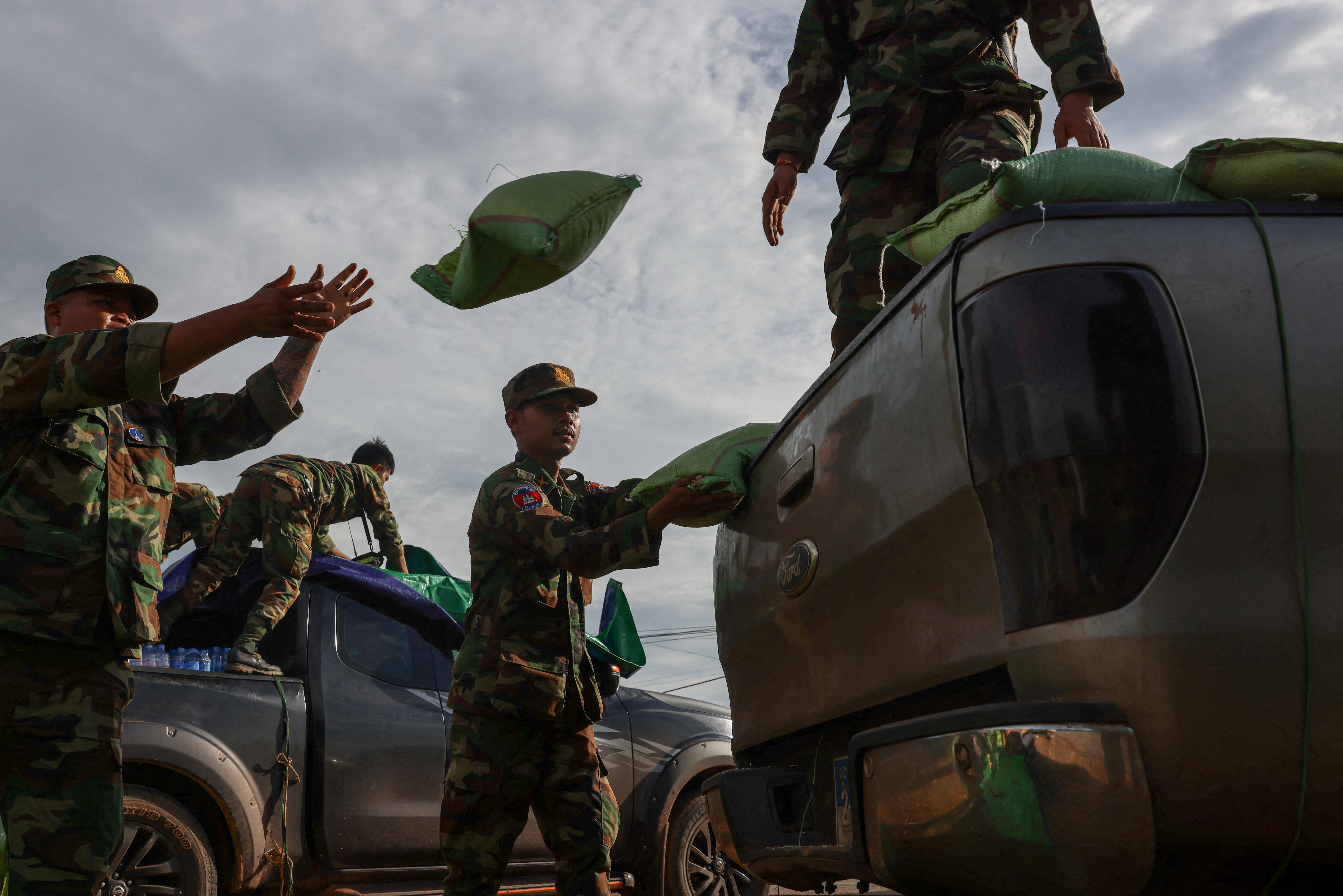
Thai and Cambodian leaders met in Malaysia yesterday and agreed to a ceasefire deal to halt their deadliest conflict in over a decade that has killed at least 40 people, mostly civilians, and displaced over 300,000 in both countries.
Although Thailand's military said that there had been attacks by Cambodian troops in at least five locations early today, violating the ceasefire that had come into effect from midnight, commanders from both sides met and held talks, a Thai Army spokesperson said.
Cambodia denied the charge, insisting that its troops have strictly abided by the ceasefire since midnight and continue to uphold it, according to a statement by Defence Minister Tea Seiha.
Negotiations so far include those between Thailand's 2nd Region Army chief Thai Major Gen. Winthai Suvaree and his Cambodian counterpart.
The commanders, who met at the border, agreed to maintain the ceasefire, stop any troop movement, and facilitate the return of the wounded and dead bodies.
"Each side will establish a coordinating team of four to resolve any problems," Gen. Winthai told the press.
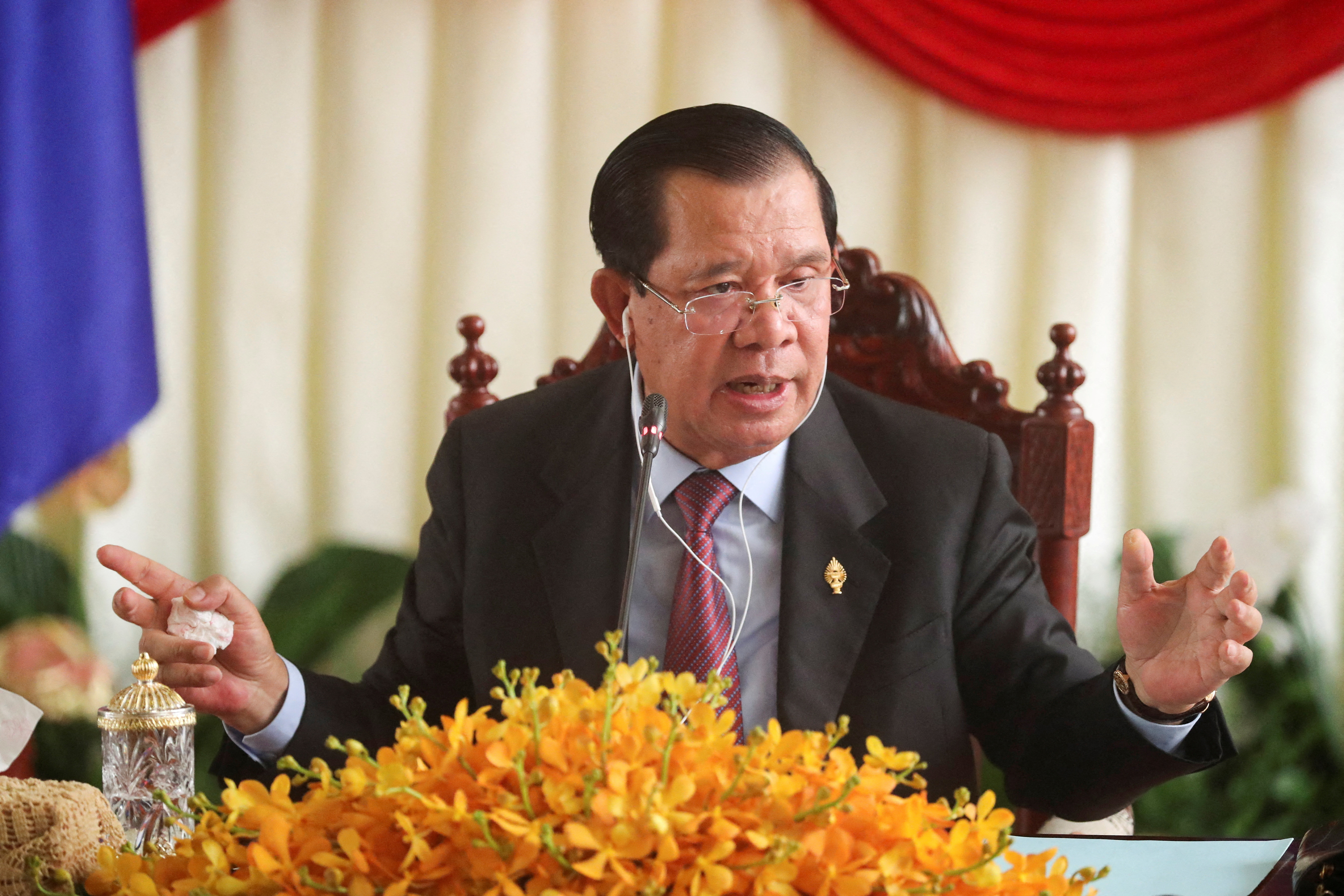
The National Assembly of Cambodia's Commission on Foreign Affairs and International Cooperation Director-General Lim Menghour said that both militaries have agreed not to deploy more troops along their disputed border.
He also underlined the need for international observers to monitor the ceasefire.
"That is the key to monitor all the terms and agreements from the meeting yesterday," Lim told Reuters.
In Bangkok, Acting Prime Minister Phumtham Wechayachai said his government had filed complaints with Malaysia, the United States (US), and China regarding Cambodia's alleged ceasefire violations. However, calm had returned to the border areas.
Vehicular traffic and daily activities resumed in the Kantharalak district of Thailand's Sisaket province on Tuesday, approximately 30 km from the frontlines, where Thai and Cambodian troops remain stationed.
Chaiya Phumjaroen, 51, said he returned to town to reopen his shop early today, after hearing of the ceasefire deal on the news.
"I am very happy that a ceasefire happened. If they continue to fight, we have no opportunity to make money," he said.
In Cambodia's Oddar Meanchey province, 63-year-old Ly Kim Eng sat in front of a makeshift tarpaulin shelter, waiting for directions after hearing of the ceasefire deal.
"So, if the authorities announce it is safe for all of the refugees to return home, I would immediately return," he said.
 A view of an empty street in Samraong, the capital of Oddar Meanchey province in Cambodia, some 20 km from the Thai-Cambodian border, on July 28, 2025. — Picture by REUTERS
Talks and trade
The Southeast Asian neighbours have wrangled for decades over their disputed frontier and have been on a conflict footing since the killing of a Cambodian soldier in a skirmish late in May, which led to a troop buildup on both sides and a full-blown diplomatic crisis.
Yesterday's peace talks came after a sustained push by Malaysian Prime Minister Datuk Seri Anwar Ibrahim and US President Donald Trump, with the latter warning Thai and Cambodian leaders that trade negotiations would not progress if fighting continued.
Thailand and Cambodia face a tariff of 36 per cent on their goods in the US, their biggest export market, unless a reduction can be negotiated. After the ceasefire deal was reached, Trump said he had spoken to both leaders and instructed his trade team to restart tariff talks.
Earlier today, Thailand's Finance Minister Pichai Chunhavajira said that trade talks with Washington are expected to be concluded before August 1, and that US tariffs on the country are not expected to be as high as 36 per cent.
Bangkok's Chulalongkorn University political scientist Thitinan Pongsudhirak noted that the ceasefire deal reflected a rare convergence of interest between the US and China, which also pushed for the talks, but the agreement itself remained fragile and third-party monitoring was essential to keep it in place.
"The ceasefire agreement has to be enforced. It cannot be left to Thailand and Cambodia to implement because the hostilities are running so deep now," he said.
— Reuters
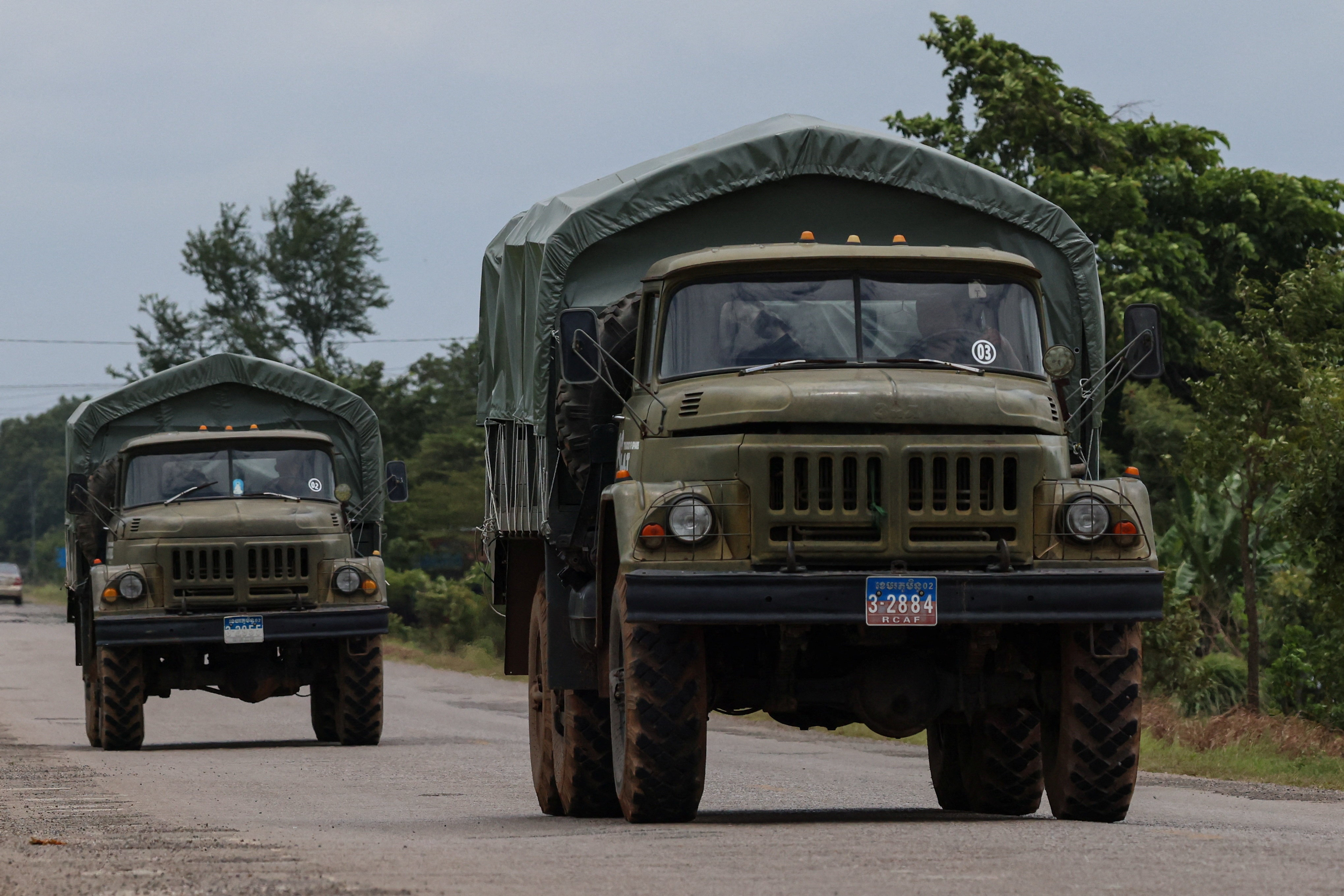
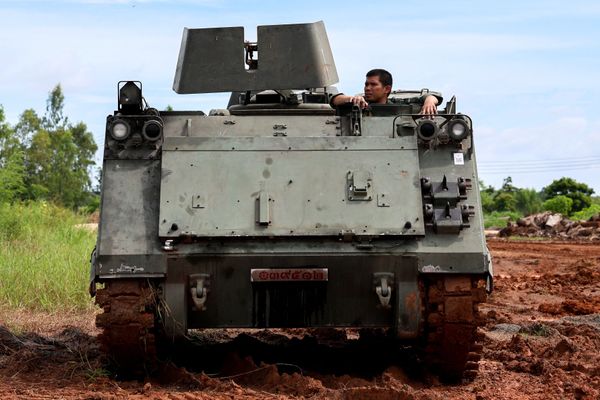
 Soldiers and Armoured Personnel Carriers on a road near the Thai-Cambodian border in Sisaket province, Thailand, on July 29, 2025. — Picture by REUTERS