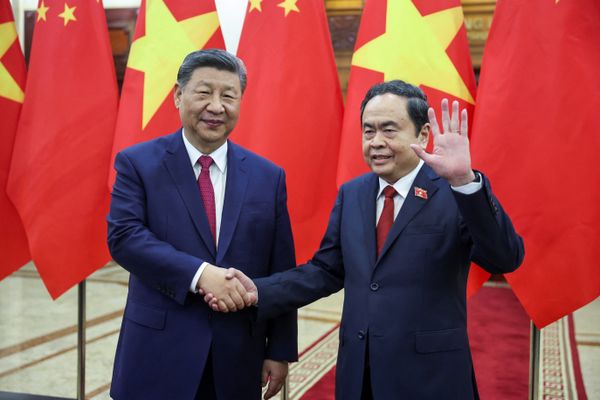

HANOI, April 15 — China's President Xi Jinping called for stronger ties with Vietnam on trade and supply chains amid disruptions caused by United States (US) tariffs, as he attended the signing in Hanoi of dozens of cooperation agreements between the two communist-run nations.
The visit, planned for weeks and part of a wider trip in Southeast Asia, comes as Beijing faces 145 per cent US duties, while Vietnam is negotiating a reduction of threatened US tariffs of 46 per cent that would otherwise apply in July after a global moratorium expires.
"The two sides should strengthen cooperation in production and supply chains," he said in an article in Nhandan, the newspaper of Vietnam's Communist Party, posted ahead of his arrival yesterday.
Xi also urged more trade and stronger ties with Hanoi on artificial intelligence and the green economy.
After he met Vietnam's top leader Tô Lâm, the two countries signed dozens of cooperation agreements, including deals on enhancing supply chains and on cooperation over railways, footage of the documents reviewed by Reuters showed.
Later in the day, Chinese and Vietnamese state media reported that 45 agreements were signed.
The agreements' content was not disclosed, and it was unclear whether they involved any financial or binding commitments.
Under pressure from Washington, Vietnam is tightening controls on some trade with China to make sure goods exported to the US with a 'Made in Vietnam' label have sufficient added value in the country to justify that.
"There are no winners in trade wars and tariff wars," Xi said in his article, without mentioning the US.
Later, in a meeting with Vietnam's Prime Minister Phạm Minh Chính, he said the two countries should oppose unilateral bullying, according to Chinese state media Xinhua.
One memorandum of understanding signed is to boost cooperation between the China Council for the Promotion of International Trade and the Vietnam Chamber of Commerce and Industry, which issues certificates on the origins of goods.
Vietnam is a major industrial and assembly hub in Southeast Asia. Most of its imports are from China, while the US is its main export market. The country is a crucial source of electronics, shoes and apparel for the US.
In the first three months of this year, Hanoi imported goods worth about US$30 billion (RM132.2 billion) from Beijing, while its exports to Washington amounted to US$31.4 billion (RM138.41 billion), Vietnam's customs data show, confirming a long-term trend in which imports from China closely match the value and swings of exports to the US.
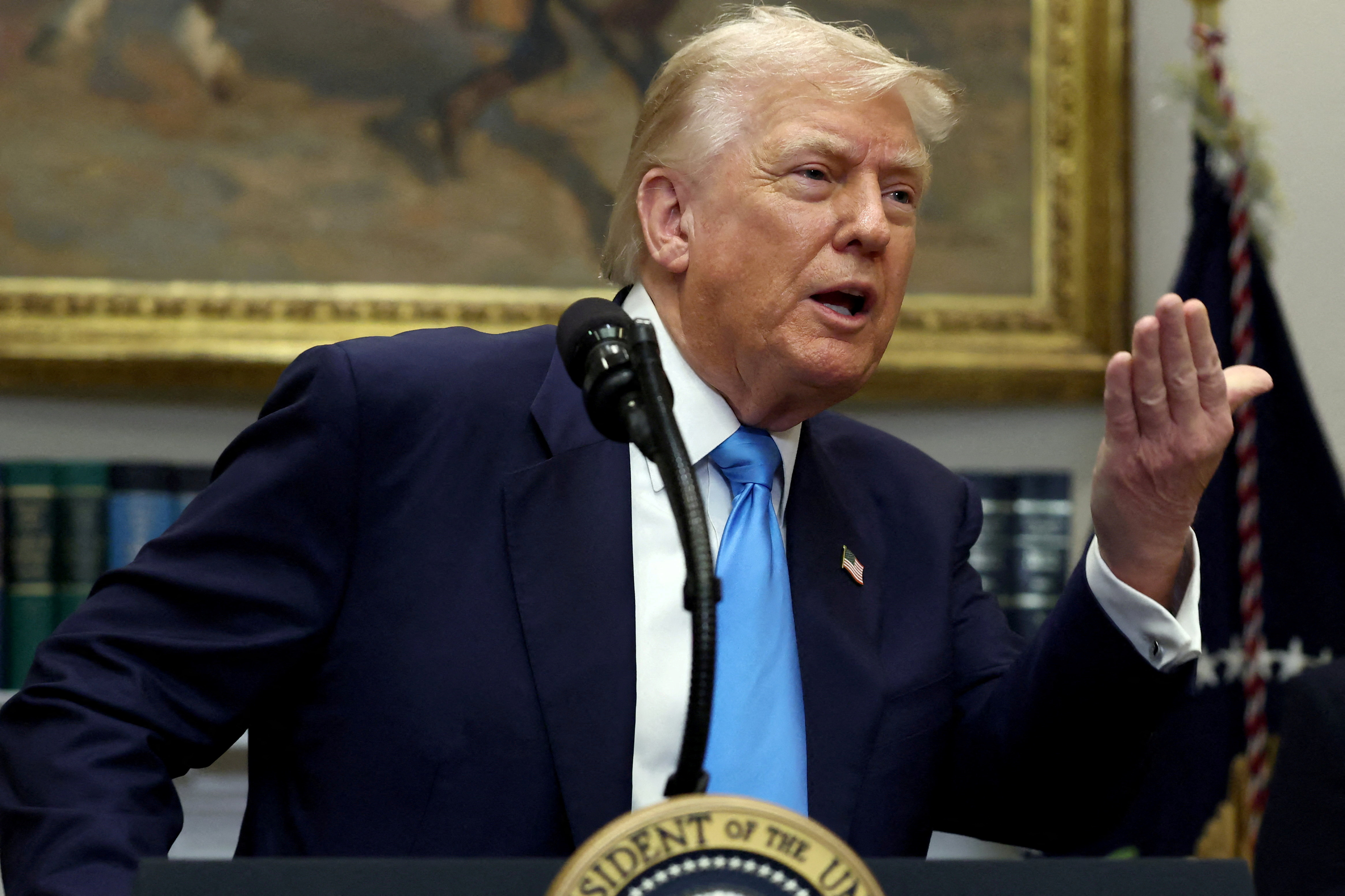
On Monday, US President Donald Trump said the two countries' discussions were focused on how to harm the US, but that he did not blame them for holding such talks.
"I do not blame China; I do not blame Vietnam. That is a lovely meeting. Meeting like, trying to figure out, 'how do we screw the United States of America?'" he told the press at the White House.
A Trump administration official said the Republican president and Vietnam's Lâm "earlier this month agreed to work to reduce reciprocal tariffs and looked forward to an in-person meeting in the near future."
 Chinese President Xi Jinping (front, fourth from left) and Foreign Minister Wang Yi (front, fifth from right) attend a meeting with Vietnam's National Assembly Chairman Trần Thanh Mẫn (not pictured) during a two-day state visit, in Hanoi, Vietnam, on April 14, 2025. — Picture by REUTERS
Rail links, planes
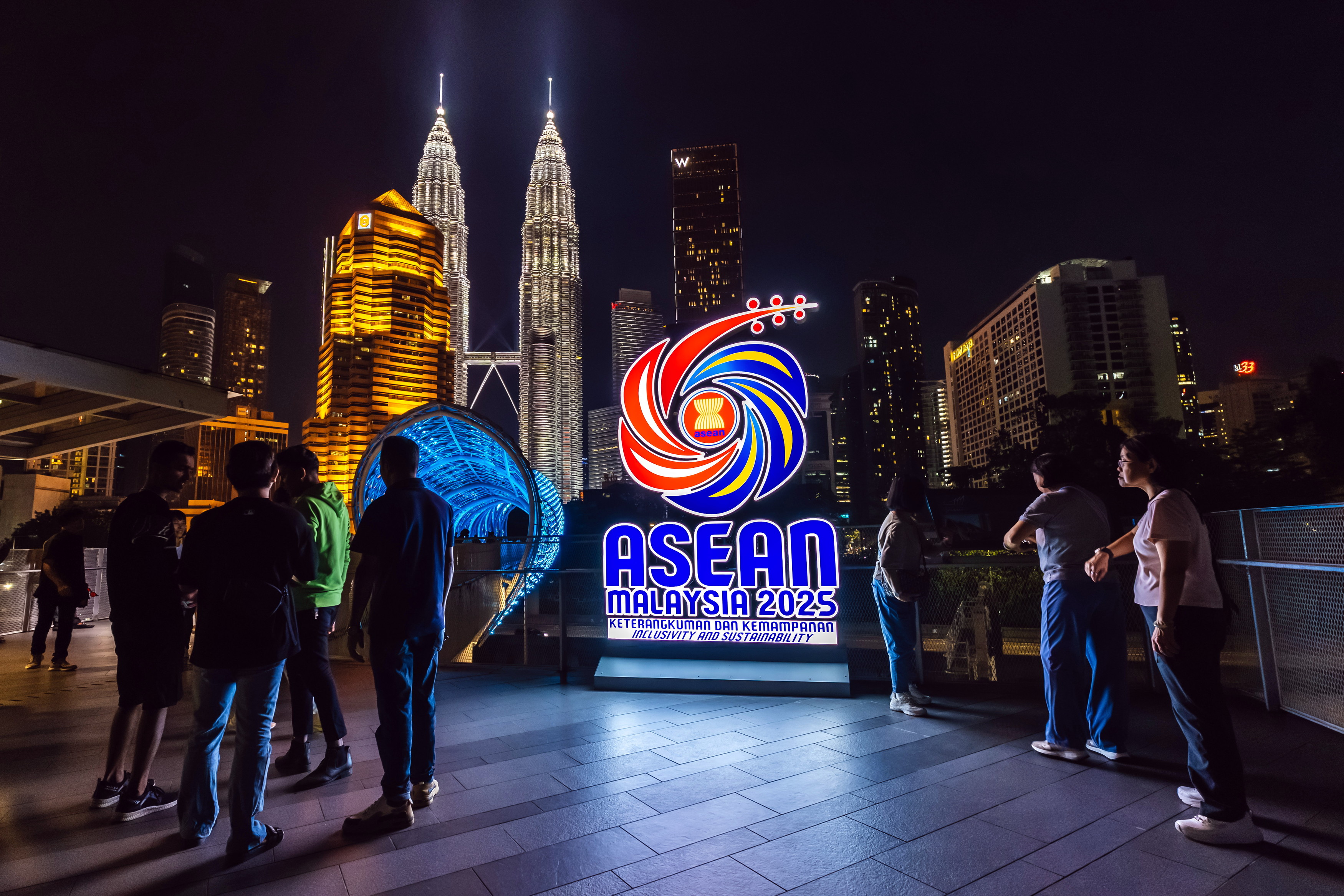
After a two-day stop in Hanoi, Xi will continue his Southeast Asian trip by visiting Malaysia and Cambodia from today to Friday (April 18). He last visited Cambodia and Malaysia nine and 12 years ago, respectively.
Xi's trip to Hanoi, his second in less than 18 months, aims to consolidate relations with a neighbour that has received billions of dollars of Chinese investments in recent years as China-based manufacturers moved south to avoid tariffs imposed by the first Trump administration.
In an article published yesterday in Chinese state media, Vietnam's Lâm said Hanoi wanted to boost cooperation in defence, security and infrastructure, especially on rail links.
Vietnam has agreed to use Chinese loans to build new railways between the two countries in a major confidence-building step that would boost bilateral trade and connections.
However, no credit agreement has yet been announced. Later, Lâm encouraged China to offer concessional loans, according to Vietnamese state media.
After prolonged pressure, Beijing obtained Vietnam's approval for planes authorised by the Chinese aviation regulator, which paves the way for the use of China-made COMAC passenger jets in the Southeast Asian nation.
COMAC planes are operated by several Chinese companies but have so far struggled to find foreign buyers or be approved abroad.
On Sunday (April 13), Vietnam's budget airline Vietjet and COMAC signed a memorandum of understanding in Hanoi, according to an invitation to the event seen by Reuters.
The agreement's content has not been announced yet, but Reuters reported in past weeks that under a draft deal, Vietjet would lease two COMAC C909 planes, operated by crew from Chengdu Airlines, on two domestic routes.
Despite strong economic ties, tensions frequently surface between the two countries over contested boundaries in the South China Sea.
Vietnam's concessions to the US to avoid tariffs may also irritate Beijing. These include the deployment of Elon Musk's Starlink satellite communication service in the Southeast Asian nation and the crackdown on some trade with China over possible fraud on rules of origin.
Vietnam has also imposed anti-dumping duties on several Chinese steel products and ended a tax waiver for low-value parcels in recent months, a move that government officials described as aimed at reducing the inflow of cheap Chinese goods.
— Reuters
 People wave Chinese flags as the plane carrying Chinese President Xi Jinping arrives for his two-day state visit at Hanoi's Noi Bai International Airport, Vietnam, on April 14, 2025. — Picture by REUTERS