
KHAN YOUNIS, Oct 6 — In the ruins of his two-storey home, 11-year-old Mohammed gathers chunks of the fallen roof into a broken pail and pounds them into gravel which his father will use to make gravestones for victims of the Gaza war.
"We get the rubble not to build houses, no, but for tombstones and graves — from one misery to another," his father, former construction worker Jihad Shamali, 42, says as he cuts through metal salvaged from their home in the southern city of Khan Younis, damaged during an Israeli raid in April.
The work is hard, and at times grim. In March, the family built a tomb for one of Shamali's sons, Ismail, killed while running household errands.
But it is also a tiny part of the efforts starting to take shape to deal with the rubble left by Israel's military campaign to eliminate Palestinian militant group Hamas.
The United Nations (UN) estimates there are over 42 million tonnes of debris, including both shattered edifices that are still standing and flattened buildings.
It said this is 14 times the amount of rubble accumulated in Gaza between 2008 and the war's start a year ago, and over five times the amount left by the 2016-17 Battle of Mosul in Iraq.
Piled up, it would fill the Great Pyramid of Giza — Egypt's largest — 11 times. And it is growing daily.
The UN is trying to help as Gazan authorities consider how to deal with the rubble, three of its officials said.
A UN-led Debris Management Working Group plans a pilot project with Palestinian authorities in Khan Younis and the central Gazan city of Deir El-Balah to start clearing roadside debris this month.
"The challenges are huge. It is going to be a massive operation, but at the same time, it is important that we start now," said the UN Development Programme (UNDP) Gaza Office head Alessandro Mrakic, whose organisation is co-chairing the working group.
Israel's military has said Hamas fighters hide among civilians and that it will strike them wherever they emerge, while also trying to avoid harming civilians.
Asked about the debris, Israel's military unit Coordination of Government Activities in the Territories (Cogat) said it aimed to improve waste handling and would work with the UN to expand those efforts. Mrakic said coordination with Israel was excellent but detailed discussions on future plans were yet to take place.
 Palestinians walk past destroyed houses, amid the ongoing conflict between Israel and Hamas, in the Jabalia refugee camp, the northern Gaza Strip, Palestine, on February 22, 2024. — Picture by REUTERS
Tents amid the ruins
Israel began its offensive after Hamas militants entered Israel on October 7 last year, killed about 1,200 Israelis and took over 250 people hostage.
Nearly 42,000 Palestinians have been killed in a year of conflict, Palestinian health authorities say.
On the ground, wreckage is piled high above pedestrians and donkey carts on dusty narrow paths that were once busy roads.
"Who is going to come here and clear the rubble for us? No-one. Therefore, we did that ourselves," taxi driver Yusri Abu Shabab said, having cleared enough debris from his Khan Younis home to erect a tent.
Two-thirds of Gaza's pre-war structures — over 163,000 buildings — have been damaged or flattened, according to UN satellite data. Around a third were high-rise buildings.
After a seven-week war in Gaza in 2014, UNDP and its partners cleared 3 million tonnes of debris — seven per cent of the total now. Mrakic cited an unpublished preliminary estimate that it would cost US$280 million (RM1.18 billion) to clear 10 million tonnes, implying around US$1.2 billion (RM5.06 billion) if the war stopped now.
A UN estimate from April suggested it would take 14 years to clear the rubble.
 Palestinian students sit on the rubble after attending a class in a tent set up on the ruins of the house of teacher Israa Abu Mustafa, as war disrupts a new school year, amid the Israel-Hamas conflict, in Khan Younis, the southern Gaza Strip, Palestine, on September 4, 2024. — Picture by REUTERS
Concealed bodies
The debris contains unrecovered bodies, as many as 10,000 according to the Palestinian health ministry, and unexploded bombs, Mrakic said.
The International Committee of the Red Cross says the threat is "pervasive" and UN officials say some of the debris poses a big injury risk.
Nizar Zurub, from Khan Younis, lives with his son in a home where only a roof remains, hanging at a precarious angle.
The UN Environment Programme (UNEP) said an estimated 2.3 million tonnes of debris might be contaminated, citing an assessment of Gaza's eight refugee camps, some of which have been hit.
Asbestos fibres can cause larynx, ovarian and lung cancer when inhaled.
The World Health Organisation has recorded nearly a million cases of acute respiratory infections in Gaza in the past year, without saying how many are linked to dust.
Its spokesperson Bisma Akbar said dust was a "significant concern", and could contaminate water and soil and lead to lung disease.
Doctors fear a rise in cancers and birth defects from leaking metals in coming decades. Snake and scorpion bites and skin infections from sandflies are a concern, a UNEP spokesperson said.
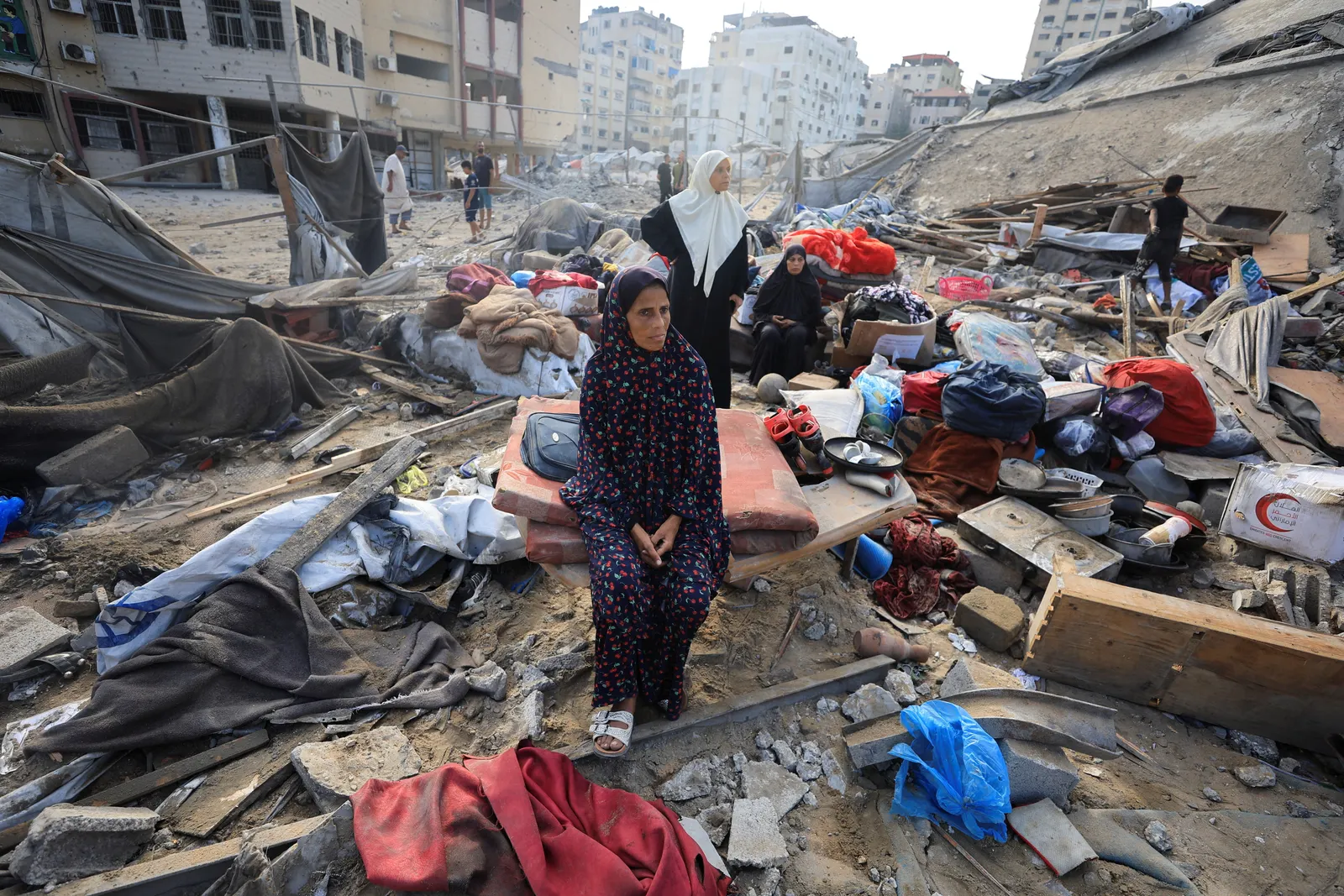
 A woman sits on the rubble of a destroyed building, after Israeli forces withdrew from a part of Jabalia refugee camp, following a raid, in the northern Gaza Strip, Palestine, on May 30, 2024. — Picture by REUTERS
Land and equipment shortages
Gaza's rubble has previously been used to help build seaports. The UN hopes now to recycle a portion for road networks and bolster the shoreline.
Gaza, which had a pre-war population of 2.3 million crammed into an area 45km long and 10km wide, lacks the space needed for disposal, the UNDP says.
Landfills are now in an Israeli military zone. Israel's Cogat said they were in a restricted area but that access would be granted.
More recycling means more money to fund equipment such as industrial crushers, Mrakic said. They would have to enter via crossing points controlled by Israel.
Government officials report fuel and machinery shortages because of Israeli restrictions that slow clear-up efforts. The UNEP spokesperson said prolonged approval processes were a "major bottleneck".
Israel did not specifically comment on allegations it was restricting machinery.
The UNEP says it needs owners' permission to remove debris, yet the scale of destruction has blurred property boundaries, and some property records have been lost during the war.
Several donors have expressed interest in helping since a Palestinian government-hosted meeting in the West Bank on August 12, Mrakic said, without naming them.
A UN official, requesting anonymity to avoid undermining ongoing efforts, said: "Everybody's concerned whether to invest in rebuilding Gaza if there is no political solution in place."
— Reuters
 Palestinians rest under the rubble of a house destroyed in Israeli strikes, amid the Israel-Hamas conflict, in Khan Younis, the southern Gaza Strip, Palestine, on September 26, 2024. — Picture by REUTERS