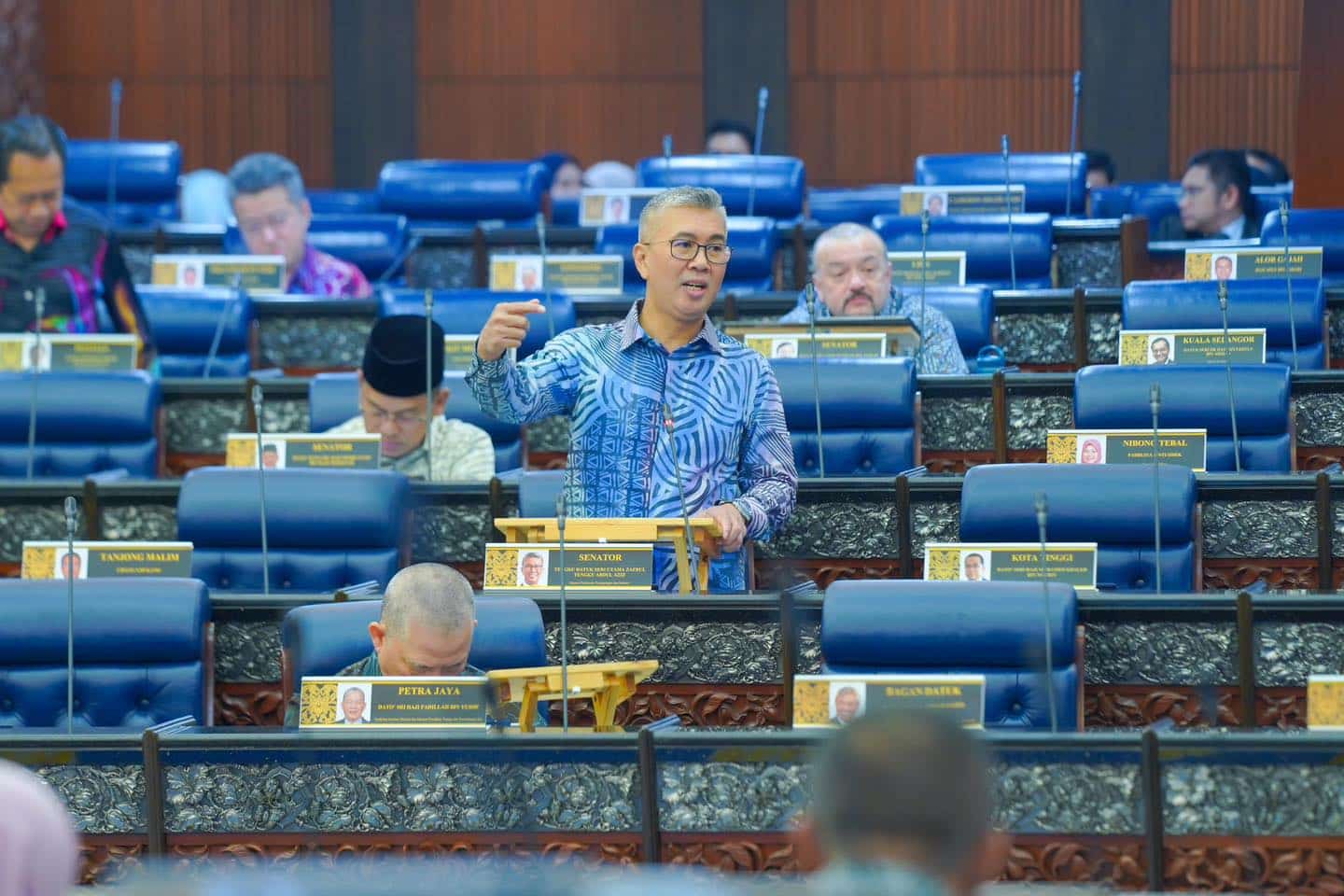

KUALA LUMPUR, Sept 13 — Investment, Trade, and Industry Minister Tengku Datuk Seri Zafrul Tengku Abdul Aziz has said that Malaysia expects no major change in the chip industry post-United States (US) presidential election on November 5.
“Even during the change from (Donald) Trump to (Joe) Biden, we did not see major changes in this sector for Malaysia, for Malaysian companies, and also for the international companies based in Malaysia.”
“I do not foresee that (will) change if there is a policy change in the new US administration," he said.
Tengku Zafrul was responding to Bloomberg TV's query as to whether Malaysia expects the semiconductor industry to be impacted by the US presidential election.
The race to secure the top post is between former President Donald Trump, 78, a Republican nominee and Vice President Kamala Harris, a Democratic nominee.
Trump was elected as the 45th President on November 8, 2016, after the billionaire defeated Democrat Hillary Clinton.
Biden endorsed Harris, 59, for the post after withdrawing from the race on July 21.
On the US' decision to step up curbs on Chinese chip makers, the minister said Malaysia has not been affected thus far and Putrajaya will continue to engage with both China and Washington.
“Malaysia is a very open economy. We are parties to many multilateral and bilateral FTAs (free trade agreements) with nations around the world. So the key is to continue to engage (with them).
"To date, we have not seen any tariff imposed on companies based in Malaysia, in the chip or the semiconductor sector," he said.
Tengku Zafrul reiterated that Malaysia has hugely benefitted from the technology war and has attracted substantial investments as companies realign and redesign their supply chain.
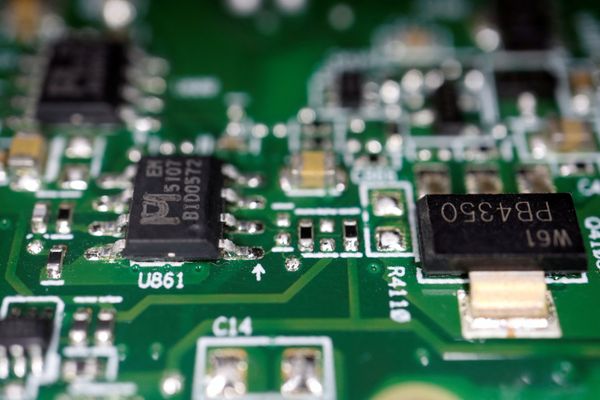
“Malaysia has been a net beneficiary and has been in this industry for more than 50 years. We have built a strong ecosystem around the semiconductor industry, which has been a major part of our exports.
“Malaysian companies and international companies in Malaysia are seeing better results as a result of the realigning,” he said.
However, a major global challenge facing the fast-growing semiconductor industry, including Malaysia, is the talent pool.
“We have been working closely with the industry. We have work-based learning programmes within industries in which the industry and the academia work closely to upgrade skill sets and to re-skill and get permanent jobs with the companies.
"What is important is that we are reskilling people according to the needs of the industry," Tengku Zafrul said.
In efforts to continuously attract investments, Malaysia is trying to attract companies to invest in five key sectors: the digital economy, chemical and petrochemicals, healthcare, especially medical devices; as well as the pharmaceutical and aerospace industry.
Tengku Zafrul is currently in Hong Kong for Bursa Malaysia’s Invest Malaysia-HK event, the Belt and Road Summit and the SCMP HK-Asean Summit.
— Bernama