

KUALA LUMPUR, April 6 — A Federation of Malaysian Manufacturers (FMM) survey found that 90 per cent of over 200 respondents expect supply chain disruptions within the next two weeks due to the West Asia conflict.
Its president Jacob Lee Chor Kok said that some key materials needed for manufacturing are expected to be in short supply or unavailable, alongside rising prices.
The West Asia conflict has affected the sector in three key areas: logistical disruptions, higher energy and fuel costs, and material disruptions.
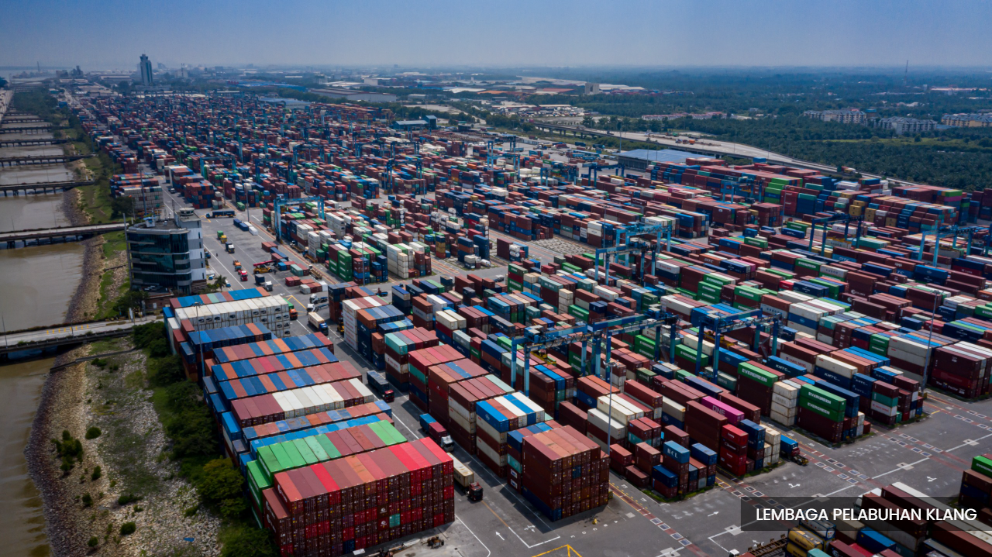
“On logistical disruptions, companies need to reroute shipments at much higher freight costs, while also paying premium insurance and higher port storage charges.
“The other issue affecting every rakyat is the increase in energy and fuel costs. As such, FMM is appealing to the government to consider extending the diesel subsidy to the sector.
“Thirdly, there are material disruptions, especially in petrochemical derivative products such as polyvinyl chloride, polypropylene, polyethylene, and other plastic resins,” he said as a guest on Bernama TV's 'The Nation' programme today, titled 'Impact of the West Asia Conflict on Malaysia’s Manufacturing Sector'.
Lee added that as most Malaysian industries are involved in conventional manufacturing, they are highly sensitive to cost increases due to their thin margins, posing a significant threat to business sustainability.
“We do hope that the government could come up with measures or interventions to help cushion cost increases so that companies will not need to pass on too much of the increase to consumers, which could in turn drive inflation,” he said.
Lee noted that the Malaysian manufacturing sector contributes significantly to the national gross domestic product (GDP), accounting for 23 per cent of GDP and employing 2.3 million people.
“We (the manufacturing sector) are probably the second-largest taxpayer in the country. Meanwhile, 86 per cent of Malaysia’s exports are manufactured goods.
"However, I would also like to highlight that 44 per cent of our exports come from the electrical and electronics sector, or emerging technology manufacturing,” he said.
Similarly, yhe the Purchasing Managers’ Index (PMI), which indicates the contraction or expansion of the manufacturing sector, shows that the sector is recovering but remains unstable, with the PMI rising to 50.2 in January before declining to 49.3 in February.
The PMI is an indicator with a threshold of 50 — readings above 50 indicate expansion, while those below 50 signal contraction.
Currently, oil prices remain above US$100 per barrel. At 5.18pm, Brent crude fell 1.54 per cent to US$107.30 per barrel.