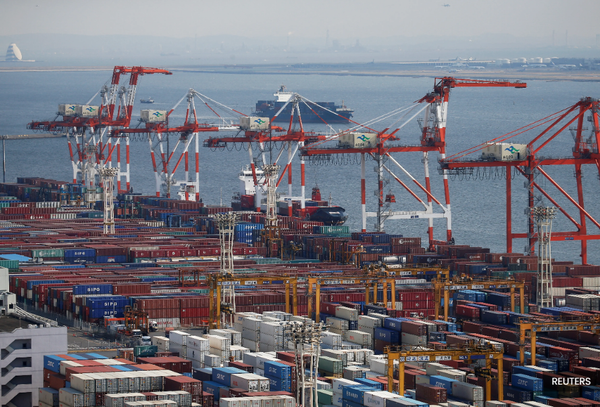
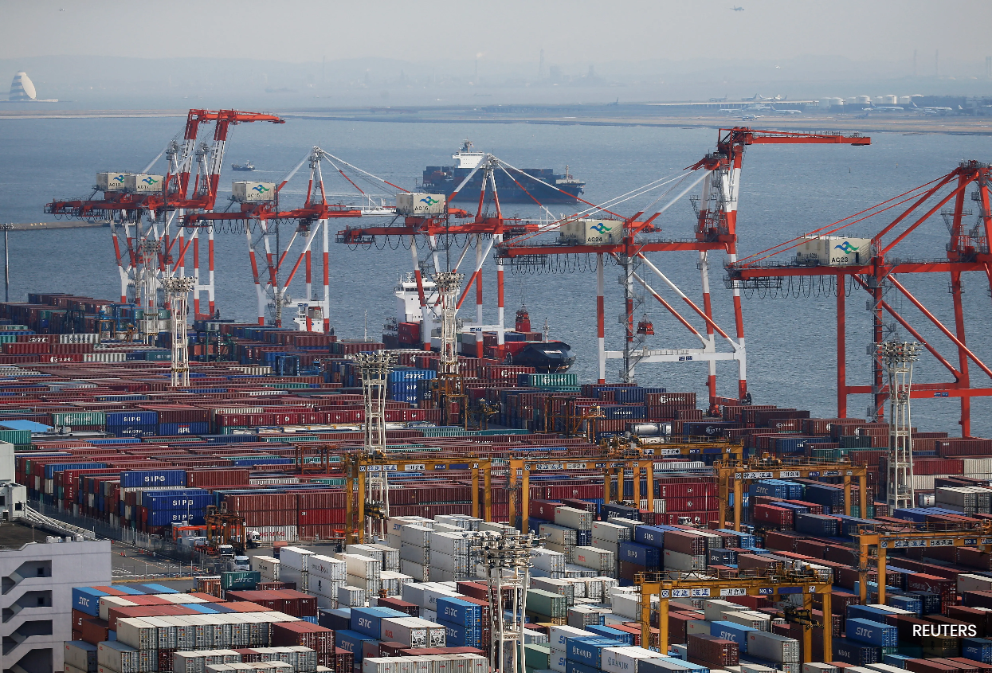
TOKYO, Feb 24 — Japan has asked the United States (US) to ensure its treatment under a new tariff regime would be as favourable as in an existing agreement, treading carefully to avoid rocking the boat before the Prime Minister's visit to the US next month.
While US President Donald Trump's latest measures could increase tariff costs for some Japanese export items, the Trade Ministry said its minister Ryosei Akazawa and US Commerce Secretary Howard Lutnick affirmed on a call yesterday that the two countries would implement the trade deal struck last year "in good faith and without delay".
Trump, following the US Supreme Court's decision on Friday to strike down his tariffs under the International Emergency Economic Powers Act (IEEPA), imposed a temporary 15 per cent duty on imports from all countries, the maximum allowed under a separate law.
He also warned countries that if they backed away from their trade deals with the US, he would hit them with higher duties under different trade laws.
Speaking at a briefing today, Akazawa said that some Japanese exports, which are currently subject to reduced tariffs under the deal, may face higher levies if the new tariffs are "stacked" on top of the existing levies. A Trade Ministry official said items that could theoretically face higher tariffs under Trump's new policy were those that had tariffs below 15 per cent under the most favoured nation status.
Akazawa added that Japan requested treatment that is equally favourable to the trade deal that was agreed last year.
In July 2024, the US and Japan agreed on a deal to cut tariffs on autos and other goods to 15 per cent, while Japan agreed to a US$550 billion (RM2.14 trillion) package of US-bound loans and investment.
Akazawa and other officials refrained from commenting on the US Supreme Court decision, only saying they would closely examine its details.
The Yomiuri newspaper reported Keidanren's head Yoshinobu Tsutsui, whose organisation is Japan's biggest business lobby, as saying that the US court ruling "proved checks and balances are in effect" and was "positive for the economy overall", while adding that Trump's new tariffs increased risks for corporate investments.
Japan financing US projects
Nomura Research Institute economist Takahide Kiuchi has estimated that if the US does not implement permanent tariffs to replace the IEEPA-based levies, it would boost Japan's real gross domestic product by 0.375 per cent annually.
Last week, both nations unveiled the first three US projects — valued at US$36 billion (RM140.18 billion) — to be financed by Japan, including an oil export facility, an industrial diamonds plant, and a gas power plant.
"It is not that Japan was forced into a loss-making agreement," Akazawa said, noting that the tariffs-and-investment agreement is a "win-win deal" amid shared economic security threats such as dependency on Chinese rare earths. He said he has no plans to visit the US for more trade talks.
Japanese government sources familiar with the matter said Tokyo will not seek to review the agreement for fear of provoking Trump into imposing harsher, sector-specific tariffs unaffected by the Supreme Court's IEEPA ruling, particularly in the all-important auto industry.
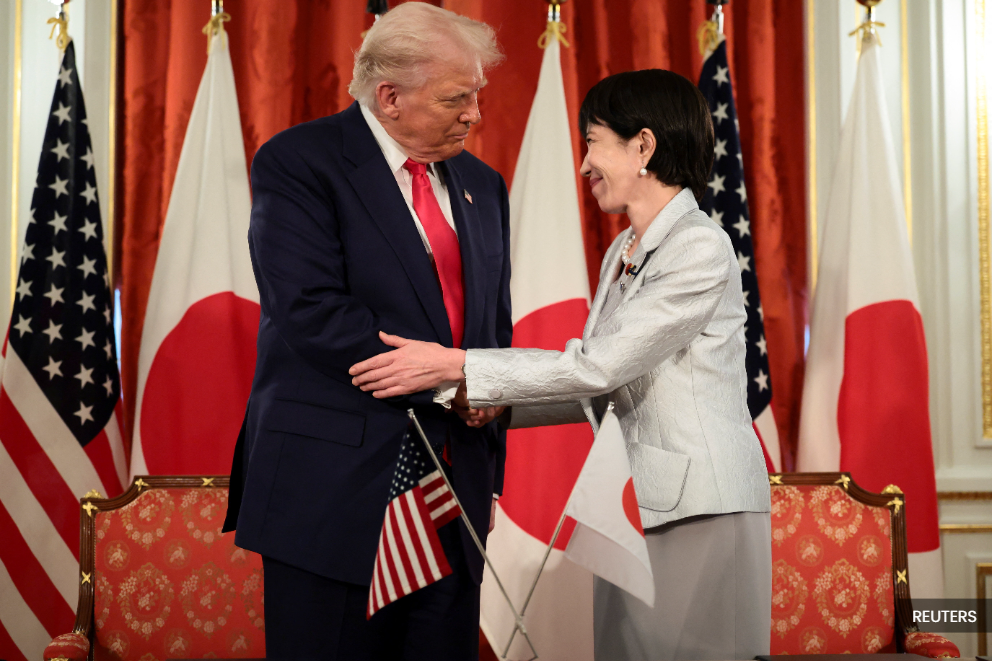
They added that ahead of Prime Minister Sanae Takaichi's visit to Washington in late March, which Tokyo deems crucial to its security amid concerns such as China's export controls, Japan will continue with the existing deal to maintain stable ties with the US.