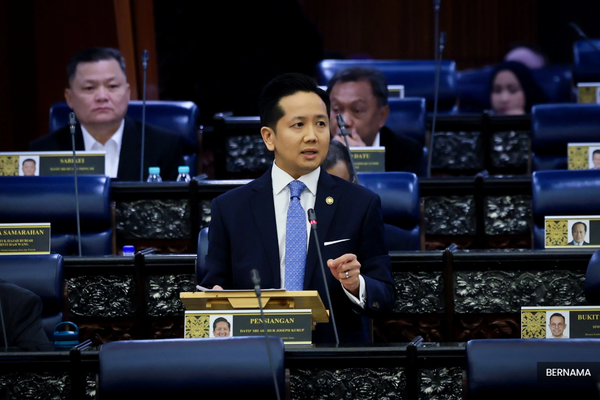
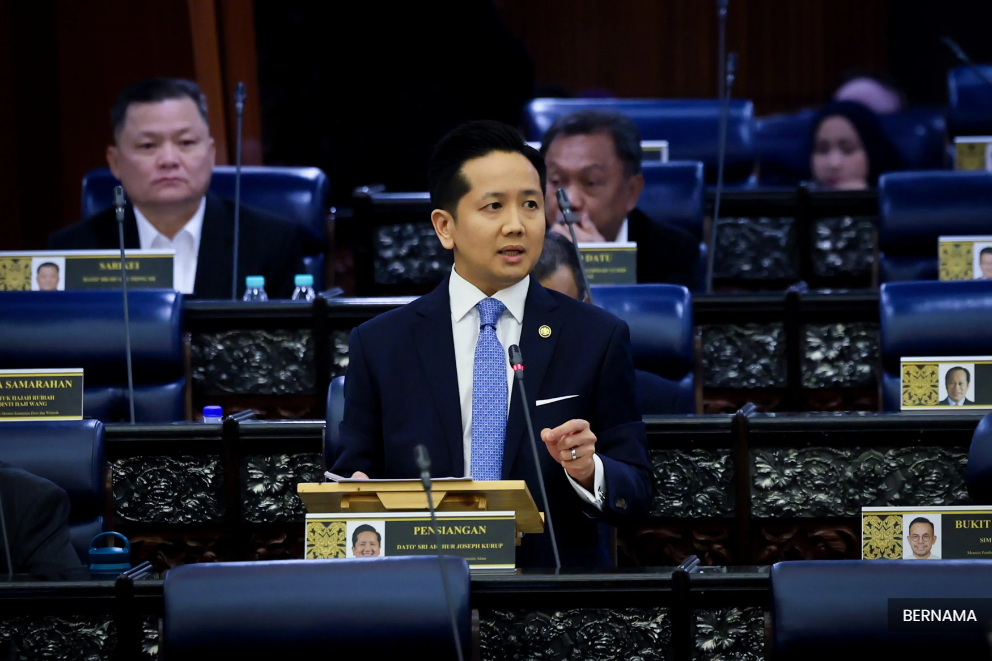
KUALA LUMPUR, Feb 12 — The Natural Resources and Environmental Sustainability Ministry (NRES) is set to establish 200 low-carbon zones nationwide by 2030 to address the global climate crisis, said minister Datuk Seri Arthur Joseph Kurup.
He said it is a proactive step to position urban areas as catalysts for green economic growth and to enhance the people’s climate resilience and well-being.
“This effort began with the introduction of the Low-Carbon Cities Framework in 2011 and was strengthened through the National Low-Carbon Cities Masterplan in 2021. To date, 146 out of 156 local authorities have received relevant training.
“Seventy local authorities have already begun implementing low-carbon solutions in their respective areas,” he said in his speech at the Low-Carbon Cities Awards Ceremony 2025 here today.
He also emphasised the crucial role of cities in climate change mitigation, noting that over 70 per cent of global greenhouse gas (GHG) emissions are concentrated in urban areas, which are hubs of economic activity, mobility and energy consumption.
Arthur said Malaysia put forward a more progressive national GHG emission reduction target under the Paris Agreement via its Third Nationally Determined Contributions (NDC 3.0) on October 24 last year.
“Through NDC 3.0, Malaysia has committed to reducing GHG emissions by 15 to 30 million tonnes of carbon dioxide equivalent by 2035. Of this amount, 20 million tonnes will be achieved through domestic efforts without any preconditions.
“While the remaining 10 million tonnes are subject to international support in terms of financing and technology transfer. This sends a clear signal to the world that Malaysia is serious about playing its role as a responsible global partner,” he said.
Arthur said that to ensure the target is not just rhetorical, NRES was in the final stages of drafting the Climate Change Bill and the National Climate Change Authority Bill.
He said the legislation would further strengthen the country’s climate change governance and facilitate the implementation of the National Carbon Market Policy to promote a transparent carbon credit ecosystem.
“Based on an audit from the Malaysian Green Technology and Climate Change Corporation (MGTC), the low-carbon city initiative throughout 2025 has yielded impressive results, with a reduction in emissions of 324,073.84 tonnes of carbon dioxide equivalent.
“The total carbon absorption, meanwhile, reached 80,837.06 tonnes, which is symbolically equivalent to planting 10.12 million mature trees or taking 87,650 cars off the road per year,” he said
Meanwhile, Arthur expressed his appreciation to the local governments of Selangor, Johor, Melaka, Pahang and Kedah for their consistent efforts in reducing GHG emissions and urged wider participation from other states, including Sabah and Sarawak, to achieve a comprehensive sustainability agenda by 2030.
At the event, 164 Diamond Recognitions were awarded to local authorities and partners in recognition of their outstanding efforts to reduce GHG emissions.