
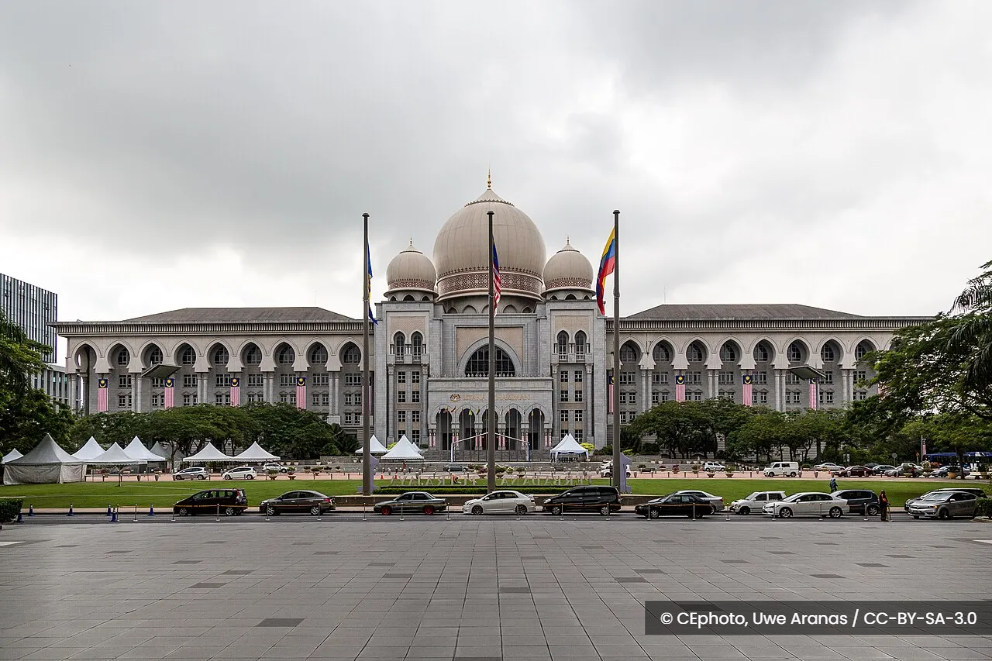
PUTRAJAYA, Feb 6 — The government has succeeded in its appeal to reinstate the words “offensive” and “annoy” under Section 233 of the Communications and Multimedia Act (CMA) 1998, after the Federal Court ruled that the terms are constitutional.
Section 233 criminalises the use of network facilities or services to transmit any communication that is obscene, indecent, false, menacing, or offensive in character, with intent to annoy, abuse, threaten, or harass another person.
A five-member Federal Court bench comprising Chief Justice Datuk Seri Wan Ahmad Farid Wan Salleh, and judges Tan Sri Nallini Pathmanathan, Datuk Che Mohd Ruzima Ghazali, Datuk Mohd Nazlan Mohd Ghazali, and Datuk Collin Lawrence Sequerah, partly allowed the government’s appeal to overturn the Court of Appeal’s earlier ruling, which had declared the two words unconstitutional.
Delivering the tribunal's unanimous decision, Justice Nallini said the purpose of Section 233(1)(a) of the Act is to regulate the improper use of network facilities and services to ensure a safe online environment.
The provision protects individuals and communities from harm arising from such misuse, and it targets communications that fall outside the scope of the constitutionally protected right to freedom of speech and expression.
However, in the case involving activist Heidy Quah, the court is of the view that the prosecution should not have been initiated, as the content of her Facebook post fell within the protection of Article 10(1)(a) of the Federal Constitution on the right to freedom of speech and expression, and could not form the basis of a charge under Section 233(1)(a) of the CMA.
Last year, the Court of Appeal struck down the words “offensive” and “annoy” in Section 233 after allowing Quah’s appeal against the High Court’s 2023 decision, which had dismissed her constitutional challenge.
In July 2021, Quah, 31, was charged in the Kuala Lumpur Sessions Court for allegedly posting “offensive” content on Facebook.
However, in April 2022, the Sessions Court granted her a discharge not amounting to an acquittal (DNAA) after finding that the charge under Section 233(1)(a) was defective.