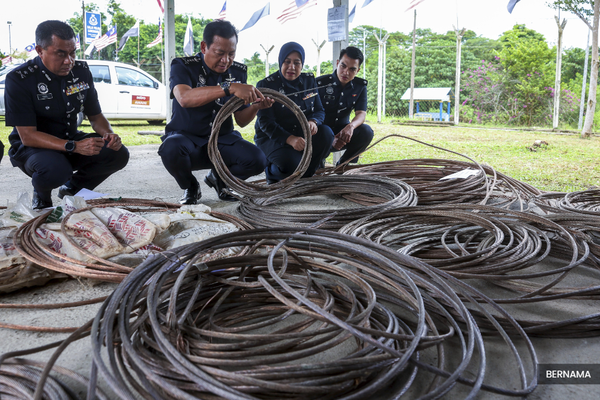
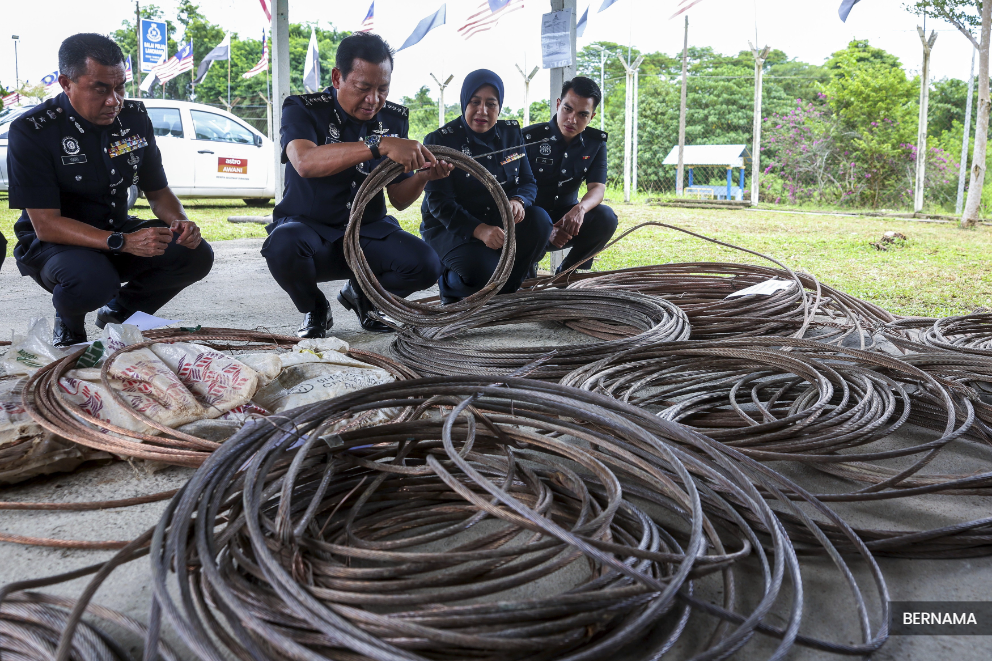
KUALA LUMPUR, Feb 5 — Harsher penalties should be imposed on thieves who steal public transport cables, as such acts are not just crimes, but sabotages against public order, said Transport Minister Anthony Loke.
He said the Transport Ministry supports Home Minister Datuk Seri Saifuddin Nasution Ismail’s proposal to review amendments to existing legal provisions for heavier penalties for rail cable theft.
According to Loke, every incident of cable theft results in significant losses for public transport operators and the government, while also affecting the safety and reliability of public transport services.
“Sometimes they (thieves) are fined only RM1,000 or RM2,000 and then released. This does not send a strong message, although the impact of cable theft is extremely serious.
“Cable theft is an act of sabotage against public order, not merely a theft offence. Every time cable theft occurs, operations are disrupted and the losses are very significant,” he said at a press conference on the introduction of the My50 savings tracker and the digitalisation of Rapid Kota and Rapid Kembara passes here today.
Loke said cable theft is believed to be driven by the high market value of copper, prompting thieves to risk their lives for profit despite knowing that the cables are electrified.
On Tuesday, Saifuddin Nasution said the government would examine the need to amend legal provisions to increase penalties for cable theft cases, particularly those involving strategic projects such as the East Coast Rail Link (ECRL) and Keretapi Tanah Melayu Bhd (KTMB).
The media had earlier reported that Prasarana Malaysia Bhd has suffered losses of RM20.6 million due to cable theft since 2023, with a sharp increase in cases in 2024.
On the issue of drug abuse among heavy vehicle drivers, Loke said integrated operations involving the Road Transport Department (JPJ), police, and the National Anti-Drug Agency (AADK) have been intensified since last year.
“Some heavy vehicle drivers were indeed involved in drug abuse, and we take this matter very seriously. This is extremely dangerous to other road users,” he said.
He added that heavy vehicle operators must also take action or plan strategies to ensure their drivers are drug-free.
Loke was commenting on reports that 261 heavy vehicle drivers tested positive for drugs over the past five years during inspections by authorities.