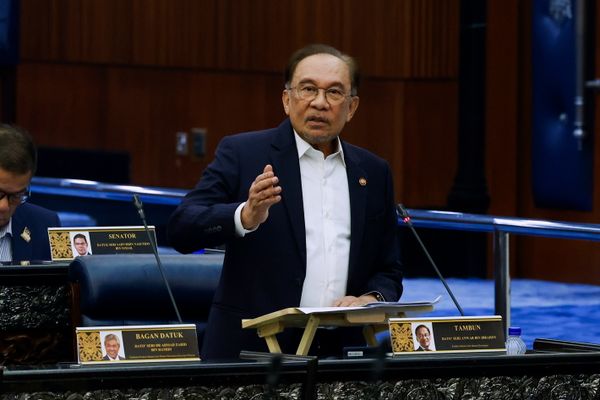
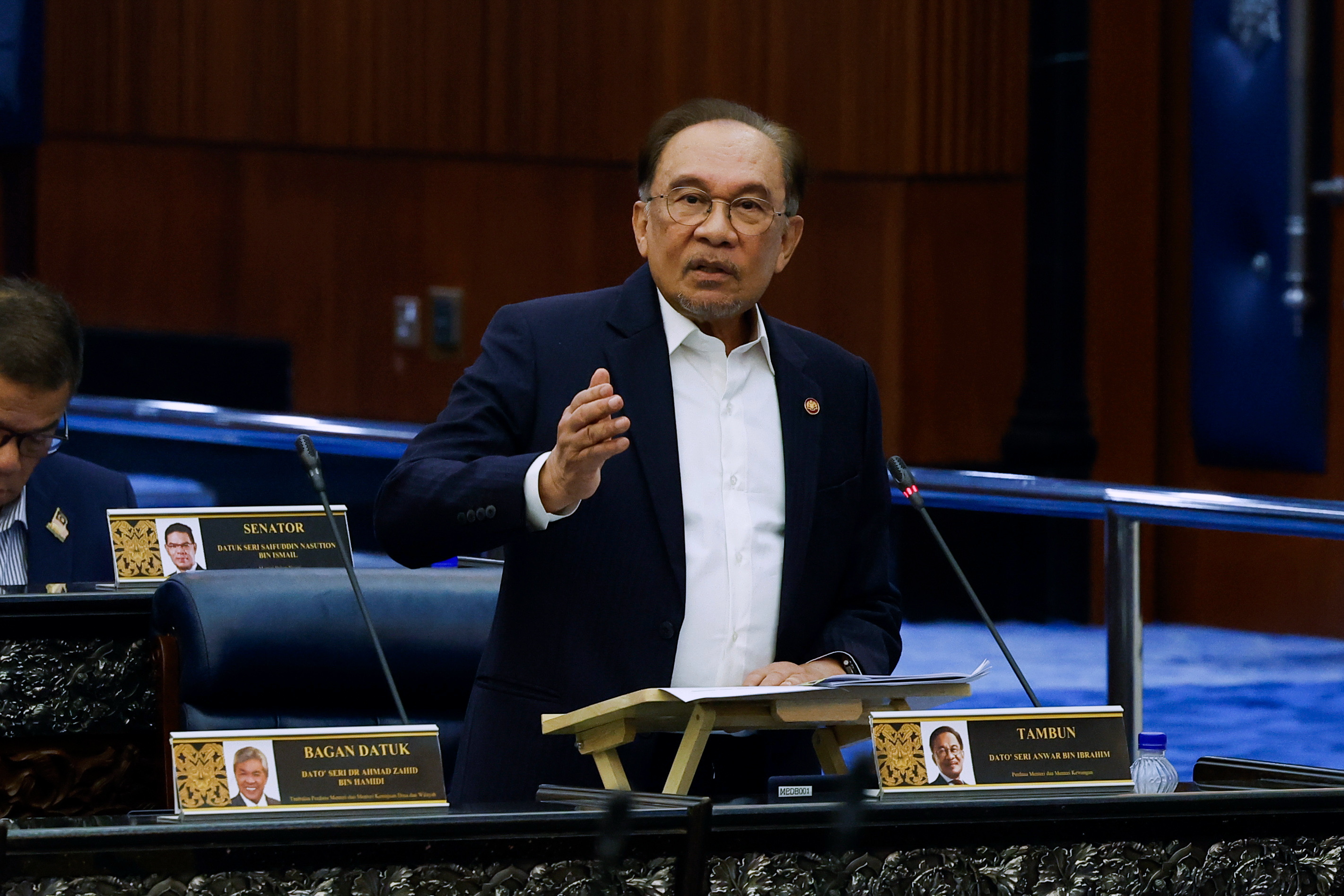
KUALA LUMPUR, Feb 4 — The ongoing Malaysia-Indonesia border demarcation is based on existing conventions and agreements, not as compensation to either country, the Dewan Rakyat heard today.
Prime Minister Datuk Seri Anwar Ibrahim also stressed the process be expedited to maintain strong bilateral relations between both nations.
During his explanation on negotiations over the Outstanding Boundary Problem (OBP) between Malaysia and Indonesia, Anwar explained that any border determinations follow two conventions and one agreement dating back to the colonial era — the 1891 Boundary Convention, the 1915 Boundary Agreement, and the 1928 Boundary Convention.
“I want to emphasise that the border determination is not based on the principles of compensation, reciprocity, or gains and losses, as has been alleged.
“Instead, the border demarcation between Malaysia and Indonesia is guided by conventions and agreements, as I explained earlier,” he said in Parliament here today.
Anwar was commenting on the proposed border demarcation between Malaysia and Indonesia, involving land boundaries in Kalimantan that affect Sabah and Sarawak.
Previously, the media reported that three villages in Nunukan, North Kalimantan, are now claimed to be Malaysian territory following a border adjustment.
The villages — Kampung Kabulangalor, Kampung Lepaga, and Kampung Tetagas — are located near the Malaysian border in Tawau, Sabah.
“The claim that Malaysia handed over 5,207ha to Indonesia as compensation for the three villages in the Nunukan area is untrue and misleading, even if not made with malicious intent,” Anwar said. “These villages are partly in Sabah, and all decisions are bound by existing agreements. Areas outside the agreed maps have never been claimed as Malaysia territory.”
Anwar also clarified that all negotiations involving Sabah and Sarawak would include representatives from the state governments, including the chief ministers’ offices, state attorneys, and land and survey departments.
“Each piece of land was negotiated and agreed upon by the state governments before finalisation with the federal government and Indonesia.”
He warned against politicising the issue, noting long-standing diplomatic ties between both nations.
“Our relations with Indonesia have been very good since 1974. Negotiations continue at all levels, up to the chief ministers and prime minister, with both governments cooperating closely.
“We can have differences, but we should not pass judgment or offend our friends in Indonesia who are working to maintain strong and cordial relations,” Anwar said.