
SHAH ALAM, Jan 31 — Menteri Besar Dato’ Seri Amirudin Shari’s call for stronger fiscal federalism, including the proposal to redirect five per cent of corporate tax revenue to states, is economically sound and could help stabilise state finances, according to economists.
Nevertheless, they cautioned that any such plan would require careful design to avoid fiscal and financial risks.
Speaking to Media Selangor, Bank Muamalat Malaysia chief economist Mohd Afzanizam Abdul Rashid said it is reasonable for states to have greater autonomy in economic development.
“(The proposal) does make sense. That would also mean some sharing of revenue between the state and Federal governments,” he said.
However, Afzanizam noted that implementing such a mechanism would not be straightforward and would require extensive negotiation, as both Federal and state governments answer to different stakeholders and policy priorities.
The Federal government, in particular, must be cognisant of the broader fiscal implications, as sovereign credit ratings assessed by agencies like Moody’s, Standard and Poor’s (S&P), and Fitch have systemic effects on the currency and capital markets.

“Therefore, the Federal government would need to be mindful of the repercussions of revenue sharing as it carries implications for credit risk,” he said.
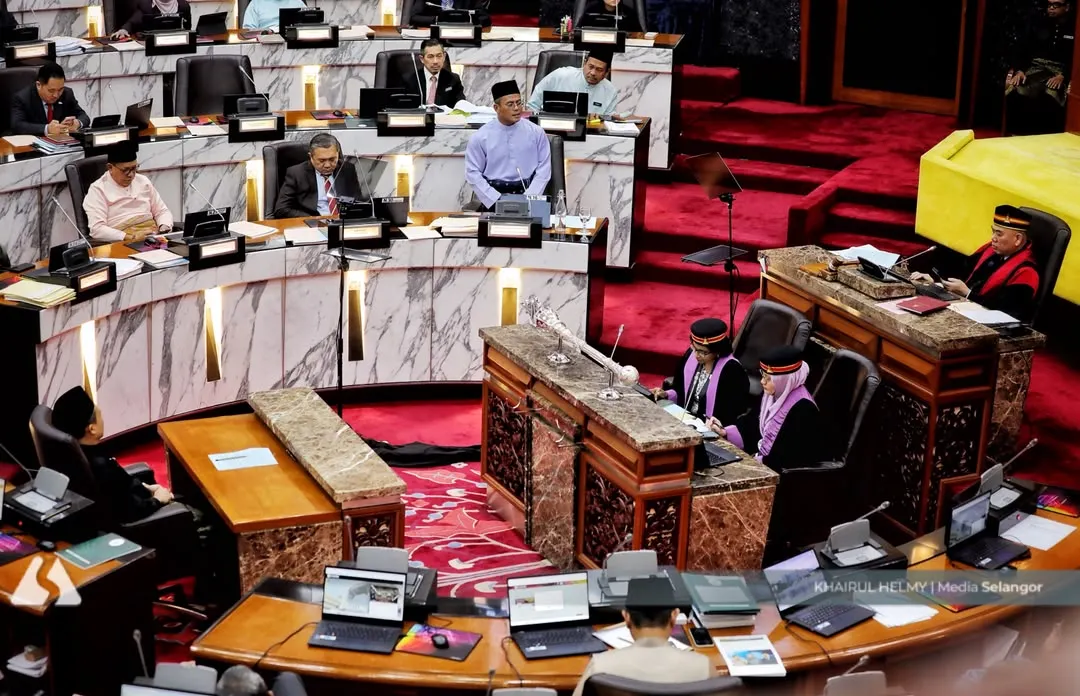
Previously, during the Dewan Rakyat debate on the royal address on January 28, Amirudin renewed his call for the Federal government to redirect a portion of its corporate tax revenue to the states, starting at around five per cent.
He argued that stronger fiscal federalism is needed to ensure long-term financial sustainability and infrastructure development in each state.
The Gombak MP added that Selangor cannot rely on land-based revenue indefinitely, as land is finite and overdependence could undermine the state’s ability to maintain its infrastructure and deliver essential services.
Rules-based revenue sharing
Echoing Amirudin’s view, Universiti Teknologi Petronas (UTP) adjunct lecturer and economist Samirul Ariff Othman said the proposal to share corporate tax revenue addresses a long-standing weakness in state finances, which currently rely heavily on land-based revenue that is both finite and volatile.
“A modest share of corporate tax would give states a more stable, growth-linked revenue base and reduce pressure to excessively monetise land,” he said, adding that the proposal is technically feasible.
Nonetheless Samirul cautioned that poor design could lead to unintended consequences, including widening inter-state inequality if richer, more corporate-dense states benefit disproportionately. It would also reduce federal fiscal flexibility in responding to national economic shocks.
“It is doable, but it must be formula-based, transparent, and tied to development and service delivery,” he said.
Samirul emphasised the need for equalisation mechanisms that ensure fair distribution, along with clear spending rules to ensure funds are channelled into infrastructure and human capital rather than recurrent expenditure.

If corporate tax sharing proves politically difficult, the government could also consider stronger formula-based Federal grants, partial sharing of broad-based consumption taxes, and dedicated state infrastructure and maintenance funds.
“The objective should not be simply about giving more money to states, but more predictable, rules-based financing,” he said.
Stronger fiscal federalism is increasingly crucial, as an over-reliance on land premiums encourages short-term, asset-driven fiscal behaviour that is unsustainable for a mature economy.
The economist cited countries like Australia, Germany, and Canada as strong examples of how structured, rule-based revenue sharing and equalisation systems enable subnational governments to deliver comparable services while maintaining national cohesion.
“Malaysia does not need to copy them wholesale, but it does need to move away from discretionary transfers towards a clearer, rules-based fiscal Federal framework,” Samirul said.