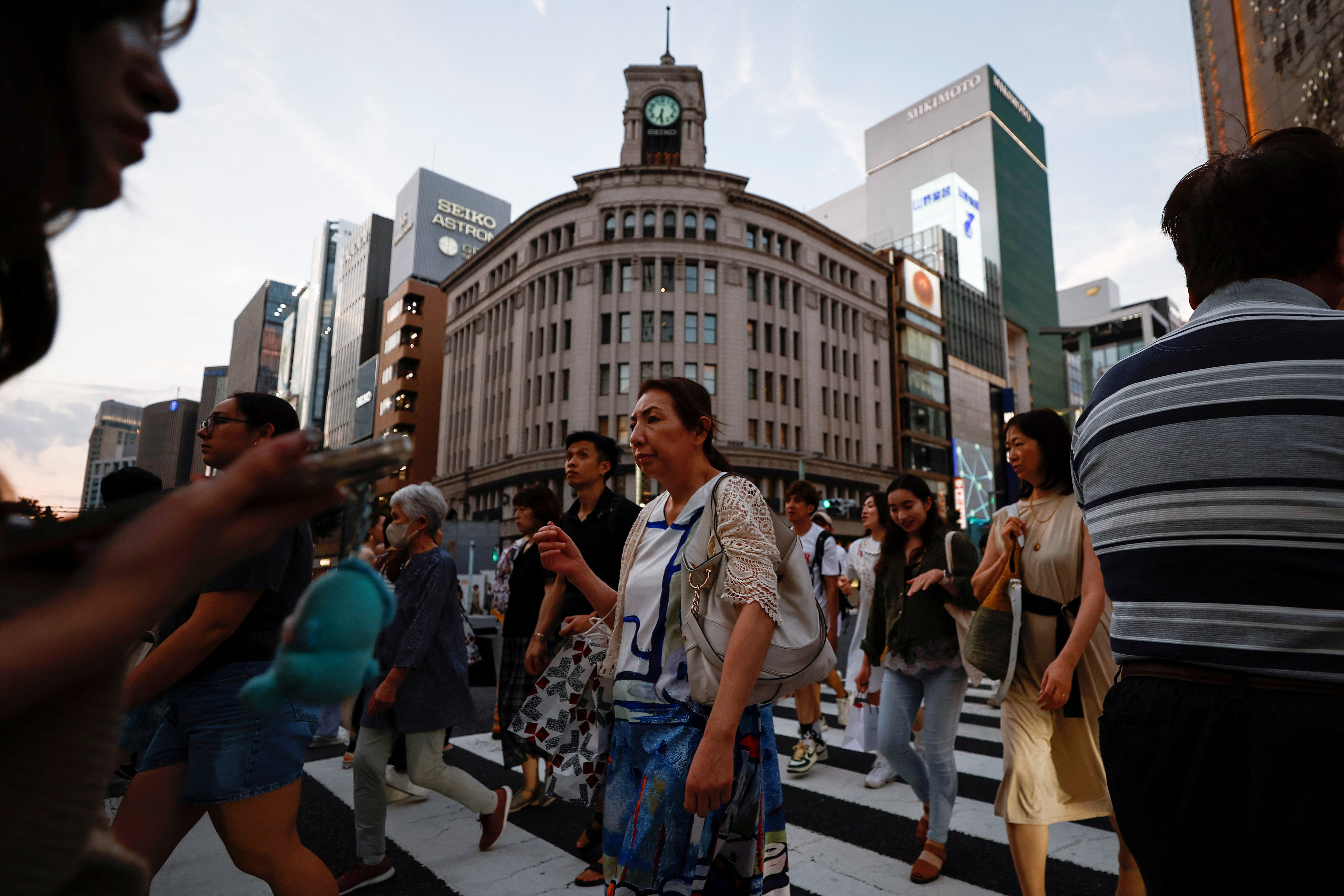
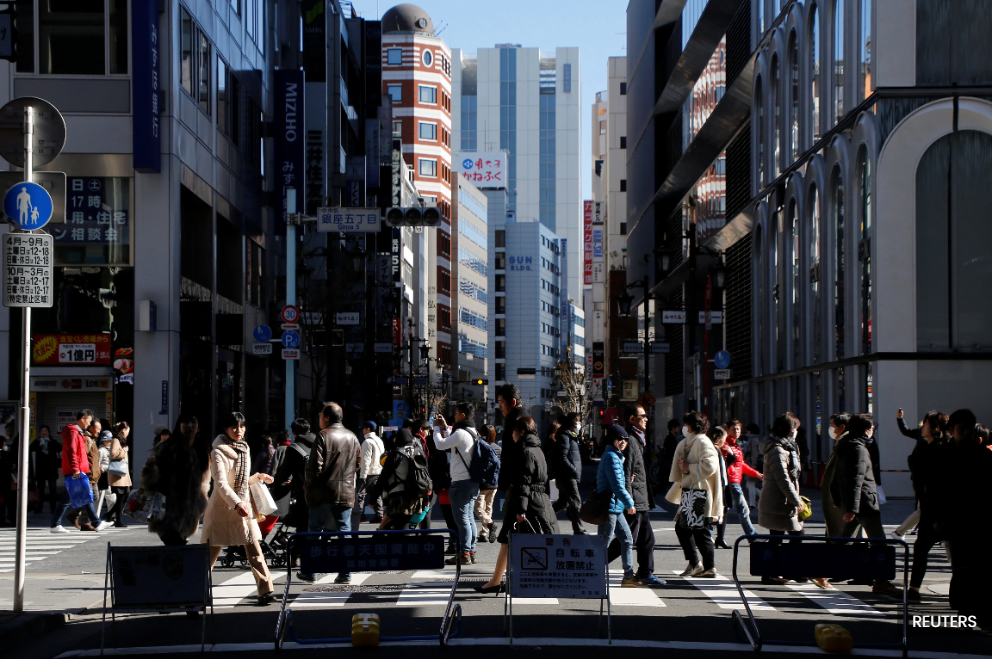

TOKYO, Jan 19 — A snap general election expected in Japan is increasingly likely to bring a cut in the consumption tax rate, as ruling and Opposition party executives stress the need for efforts to protect households from rising living costs.
The growing prospect of such a cut, which would cause a huge hole in state revenues and worsen Japan's already precarious finances, sent the yield on the 10-year Japanese government bond to a 27-year high of 2.275 per cent today.
Japan levies an eight per cent consumption tax on food and a 10 per cent rate on other goods and services, key sources of funding for rising social welfare costs among a rapidly ageing population.
The ruling Liberal Democratic Party's (LDP) secretary-general, Shunichi Suzuki, pointed to its earlier agreement with its coalition partner, Ishin, to scrap the eight per cent levy on food sales for two years.
"It is our basic stance to sincerely achieve what is written in the agreement," he told a television programme yesterday.
Prime Minister Sanae Takaichi is set to hold a news conference at 6pm (0900 GMT) today to say she intends to call a snap election in February, capitalising on her strong approval ratings.
Yesterday, the Mainichi newspaper reported that she may pledge to temporarily scrap the eight per cent levy on food sales when calling a general election.
A cut in the consumption tax "is not ruled out as an option", top government spokesman Minoru Kihara said today.
A new political party, formed last week from two major opposition parties, went further, pledging to abolish the eight per cent tax on food sales.
During its campaign policy platform today, it said that Japan could create a new sovereign wealth fund to generate revenue for the permanent cut.
"People of all generations talk about their worries and struggles from inflation caused by a weak yen. It is something we strongly feel needs addressing," said the new party's executive Mitsunari Okamoto at a media conference.
A weak yen has become a headache for policymakers, pushing up import costs and broader inflation.
Other major opposition parties, including the Democratic Party for the People, have also called for lowering or eliminating the consumption tax.
Blow to coffers
For nearly four years, inflation has exceeded the Bank of Japan's two per cent target, largely driven by stubbornly high food prices, prompting more politicians to call for major spending and tax cuts to cushion the blow for households.
The LDP has long pushed back against opposition calls for a consumption tax cut, saying that doing so would erode market trust in Japan's resolve to get its fiscal house in order.
Since taking office in October, the Prime Minister has ruled out a cut, believing it would take too long to pass necessary legislation, while payouts and subsidies would deliver benefits to households more quickly.
But Takaichi, known as an advocate of aggressive fiscal spending, once said she would prefer cutting taxes if the government could find sufficient sources of revenue.
A cut in the eight per cent food sales levy would reduce government revenue by an estimated ¥5 trillion (RM128.4 billion) a year, according to government data, roughly equivalent to Japan's annual education expenditure.
A permanent cut would strain Japan's already shaky finances and heighten the risk of a bond selloff as investors focus on Takaichi's expansionary fiscal policy, analysts say.
Her government has compiled a record US$783 billion (RM3.17 trillion) budget for the next fiscal year, on top of a stimulus package focused on easing the pain from rising living costs.
"I cannot see why Japan needs a consumption tax cut after compiling a significant stimulus package to counter rising inflation. I am worried these steps could accelerate inflation and lead to further rises in bond yields," said Daiwa Institute of Research senior economist Keiji Kanda.