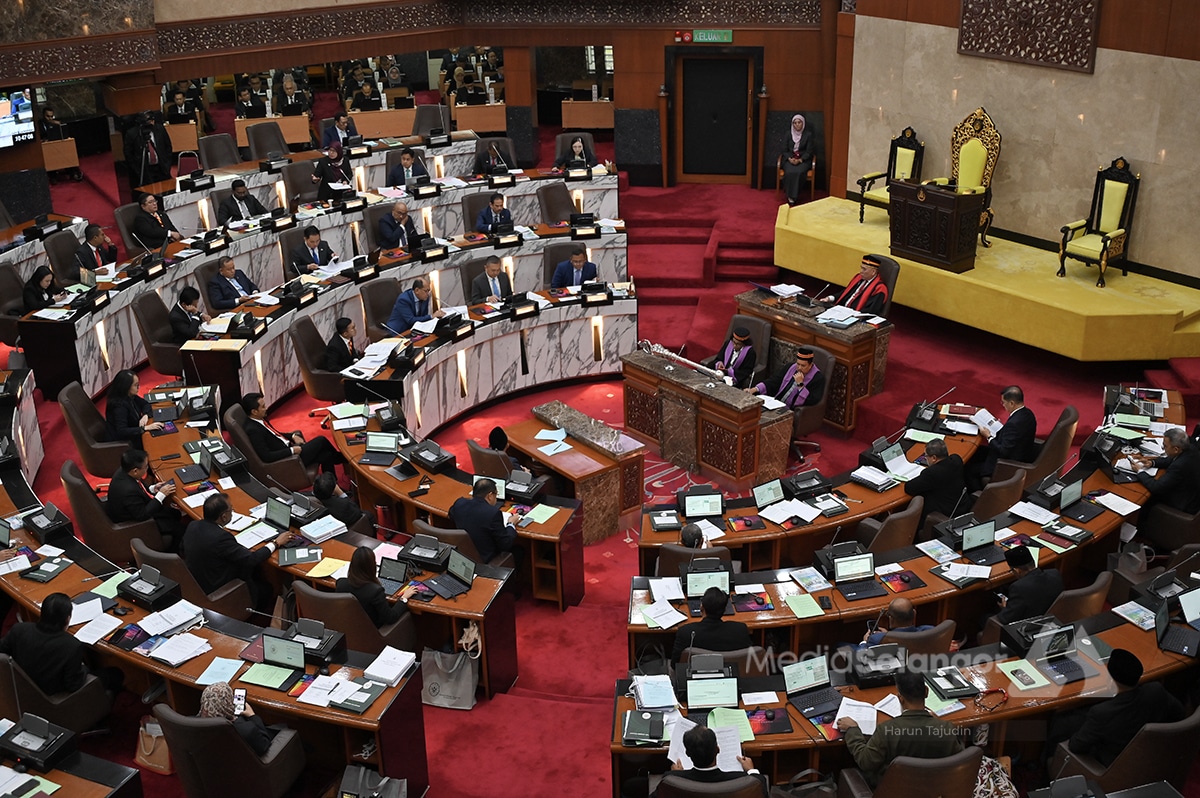
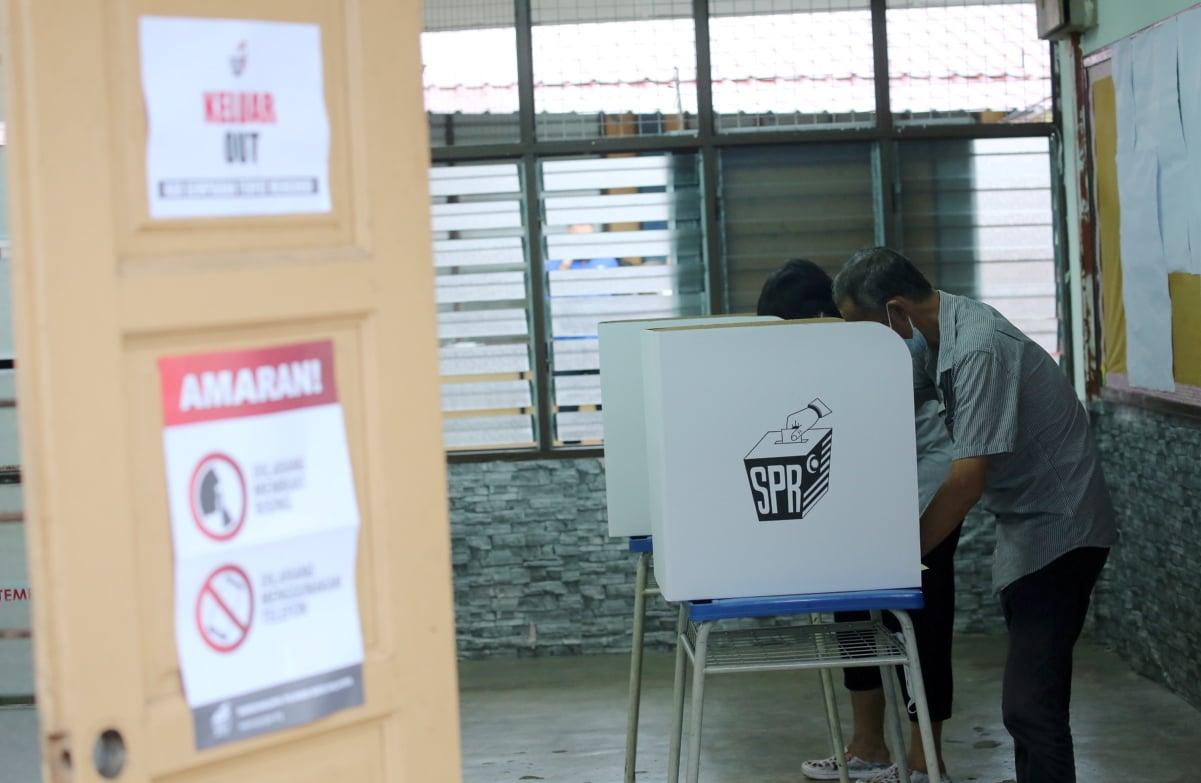
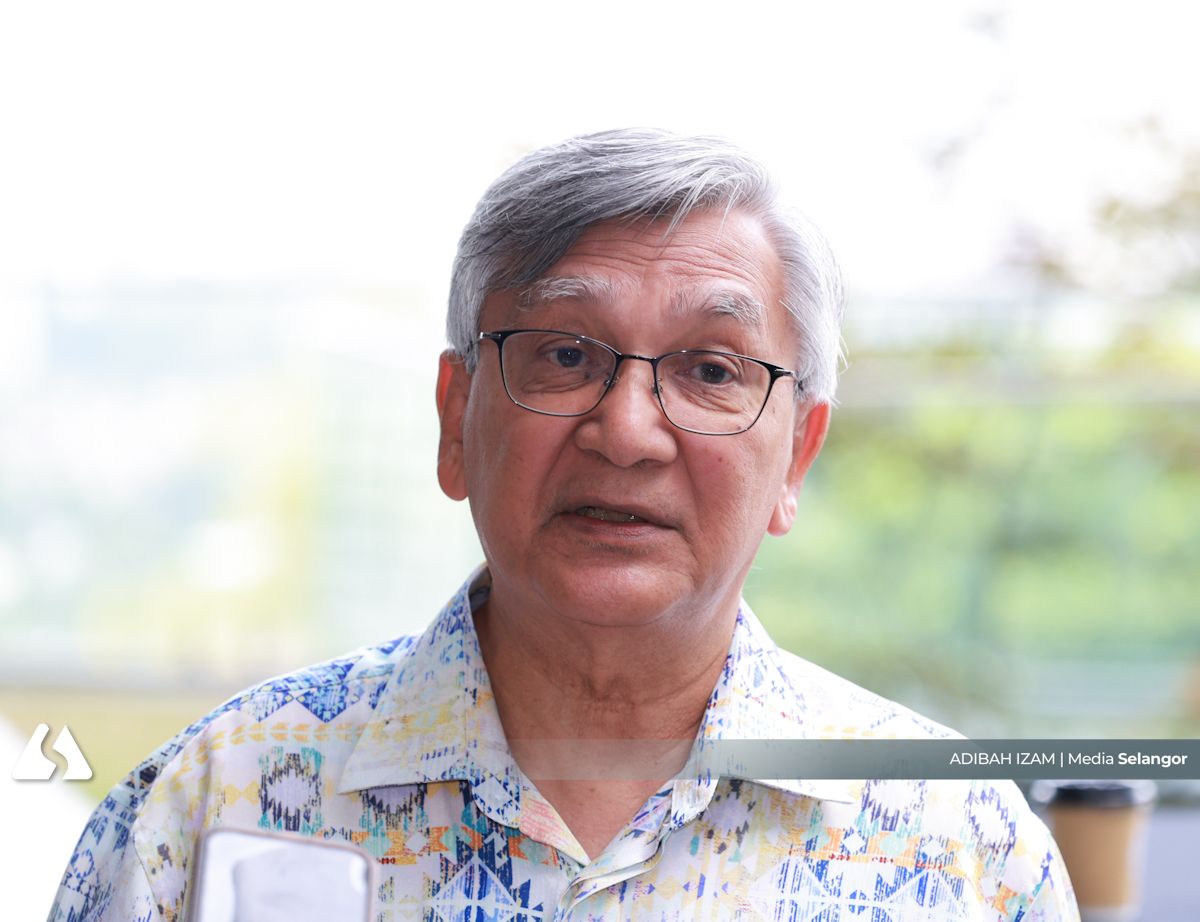
KUALA LUMPUR, Jan 17 – Redelineation exercises should ensure constituencies are a manageable size, ideally between 60,000 and 100,000 voters, to allow elected representatives to effectively serve their constituents, said former Dewan Rakyat speaker Tan Sri Mohammad Ariff Md Yusof.
Commenting on proposals for redelineation as the current eight-year term near its end, Ariff said decades of poor voter balancing has resulted in excessively large, difficult-to-manage constituencies.
This includes areas with rural communities, Orang Asli, and lower-income groups that require more focused attention and resources.
“Ideally, a constituency should have max 60,000. Because beyond that, it’s very difficult for them (lawmakers) to offer the services required. You can push it maybe 100,000, let’s say 100,000,” he told Media Selangor at the launch of a book titled Putting Everything in Its Proper Place by Kamarudin Abu Bakar at Zezz Residence in Country Heights Damansara here on Thursday.
“Even here (Bukit Lanjan), I’m sure there are still remnants, Orang Asli settlements and all that,” Ariff said, referring to constituencies with Orang Asli communities that need greater support and oversight.
“You must find a figure, you know, for the larger ones. Make sure you demarcate it properly. Forget about the idea that, ‘Oh, if we demarcated this way, there’ll be more Chinese’ … that is not how democracy should work. Not now, anyway. I hope they (government) do it constitutionally,” he said.
Previously, multiple redelineation exercises in Malaysia have been linked to ethnic gerrymandering through documented shifts in constituency demographics that favoured Malay-majority seats to strengthen UMNO and Barisan Nasional (BN), which resulted in heavy criticism.
On October 28 last year, Deputy Minister in the Prime Minister’s Department (Law and Institutional Reform) Kulasegaran Murugeson said the Election Commission (EC) may consider reviewing the delineation of boundaries in Peninsular Malaysia after the end of the current eight-year period in March.
Kulasegaran said demarcation principles include ensuring a balance between the number of voters, the efficiency of the election administration, and voter convenience, adding that the EC considers various other factors such as voter density and growth, area geography and topography, space for development, infrastructure facilities, and access to elected representatives’ services.
When constituency boundaries change through redelineation, lawmakers need adequate and equal funding to manage new voter numbers and local needs, making automatic allocations an important part of a fair redelineation process.
Ariff said while the Constitution already provides a framework for voter balancing, its application over the years has deviated, resulting in constituencies with disproportionately large voter numbers.
“You aim for equalisation, but through the years it’s gone way out of hand,” he said.
Ariff said redelineation should prioritise service delivery rather than political considerations, and pointed out that representatives in oversized constituencies struggle to meet constituents’ needs.
“People might want to have a say so we don’t have this terrible position now where there is a huge (number) of constituents to look after,” he said.
He also said past redelineation exercises had weak procedures and inadequate public consultation, saying public hearings were often rushed and conducted more as a formality than as a meaningful opportunity for input.
Ariff called for improvements in the upcoming redelineation exercise, urging authorities to allow enough time to obtain public input.