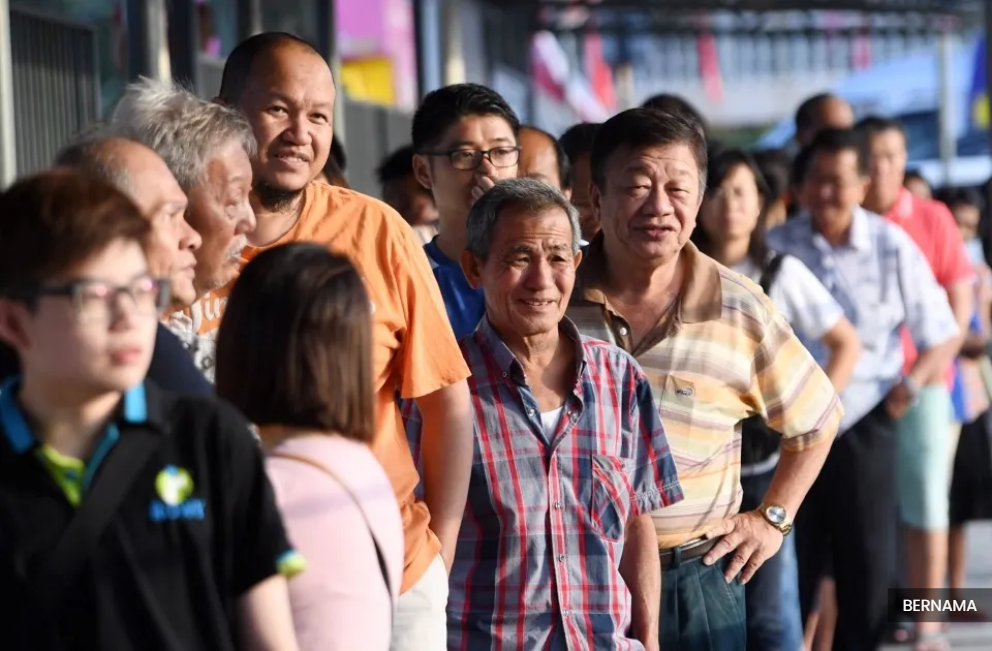
SHAH ALAM, Jan 18 — Voters in populous constituencies with large Chinese electorates are calling for a fairer and more transparent redelineation exercise to address wide disparities in voter numbers between constituencies, and to ensure that the democratic principle of ‘one person, one vote, equal value’ is genuinely upheld.
They told Media Selangor that they would support a redelineation, provided it is carried out based on objective considerations such as geographical conditions, community ties and voting accessibility.
Their main concern is the persistence of inequities even after redelineation, noting that some state constituencies today only have about 10,000 voters, while others exceed 100,000 electorates, creating a stark imbalance that undermines the principle of equal vote value.
Some suggested that constituency boundaries should be determined primarily by population structure and community connections, with the entire process grounded in scientific data and transparent mechanisms, while rejecting any form of gerrymandering. This, they said, would enable MPs and state assemblymen to serve voters more effectively and facilitate more rational planning of constituency allocations.
Other voters noted how previous redelineation exercises had led to uneven distribution of electorates, with voter numbers increasing significantly in some constituencies, forcing elected representatives and local authorities to shoulder heavier administrative burdens while affecting residents’ quality of life and the efficiency of public services.
Funding based on needs, not politics
Bangi parliamentary voter and business owner Winnie Low said the core purpose of electoral redelineation is to respond to population movement and structural changes, while ensuring the implementation of the principle of “one person, one vote, equal value”.
She said the four main public concerns regarding redelineation today are the risk of political manipulation, erosion of voter identity and community attachment, intensified competition for resources, and weak oversight mechanisms.
“If constituency boundaries are deliberately adjusted by merging urban areas into neighbouring rural constituencies, voter composition may be altered, weakening the original community’s development direction and diluting key issues such as transport planning, resource allocation and local development.”

In areas experiencing rapid population growth, she said a fair redelineation can prevent excessive burdens on individual lawmakers and enhance political representation for minority groups or underdeveloped areas.
“Malaysia has previously been criticised for redelineation exercises that marginalised urban constituencies, resulting in urban voters having lower vote value than their rural counterparts. Such situations must not recur.”
Low stressed that constituency boundaries must be strictly drawn based on population data, geographical factors and community linkages, and that effective safeguards must be put in place to prevent political interference.
On constituency funding, given the lack of a clear and institutionalised allocation formula under the current system, she said the government should legislate a fair mechanism and disclose allocation information to strengthen public oversight.
“Allocations should be based on objective needs such as population size, infrastructure gaps and poverty rates, rather than political affiliation.” She urged the Election Commission (EC) to hold public hearings prior to any redelineation exercise, involve civil society and local organisations in oversight, and disclose population, geographical and community-structure data to ensure boundaries are drawn based on evidence.
Urban voters feel neglected
On October 28 last year, Deputy Minister in the Prime Minister’s Department (Law and Institutional Reform) Kulasegaran Murugeson said the EC may consider reviewing the delineation of electoral boundaries in the peninsula after the end of the current eight-year period in March.
Hulu Selangor parliamentary voter Lee Wai Seng, 36, an insurance agent, said he would support redelineation as long as decisions are made after carefully considering geographical conditions, distances between central and peripheral areas, and voter convenience.
He noted that voters in fringe areas are often neglected, leading to uncertainty about which elected representative to approach when problems arise.
Citing the Kuala Kubu Baharu constituency as an example, he said its vast geographical size has objectively affected administrative efficiency and problem resolution.

“If redelineation can better address the needs of voters in peripheral areas and strengthen support mechanisms through additional service centres, it would significantly improve access to public services,” he said.
He acknowledged that disparities in population size between constituencies have indeed resulted in imbalanced allocation of resources. “My greatest concern is that areas already marginalised may become even more marginalised after redelineation, making local issues harder to surface and resolve.”
Meanwhile, Bukit Lanjan voter Wong Siao Yinn, 37, said many electorates are concerned about being reassigned to new constituencies, noting how in previous redelineation exercises, sudden increases in voter numbers had negatively affected service delivery and quality of life.
She said funding should also be assessed based on actual needs rather than applied uniformly.