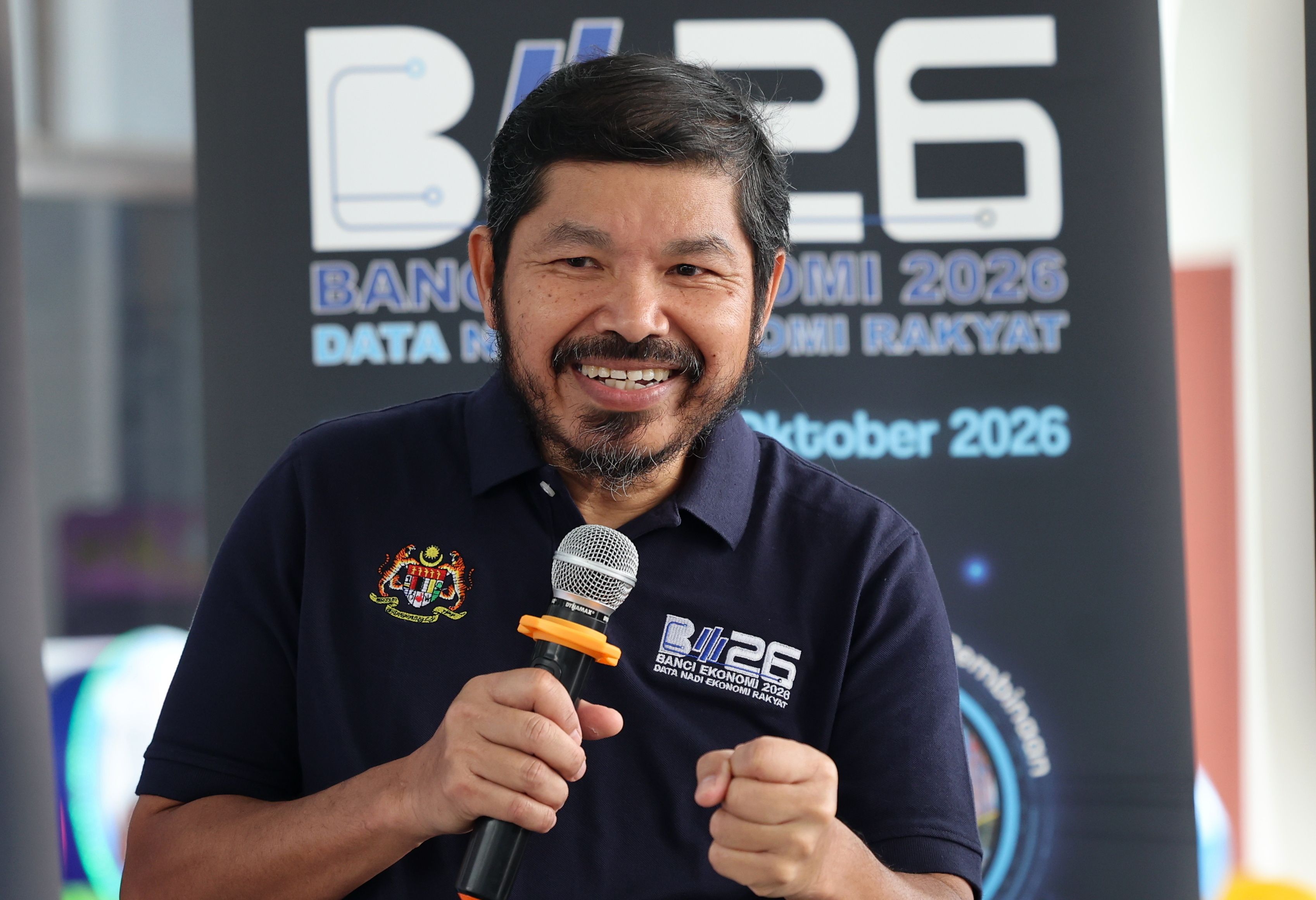
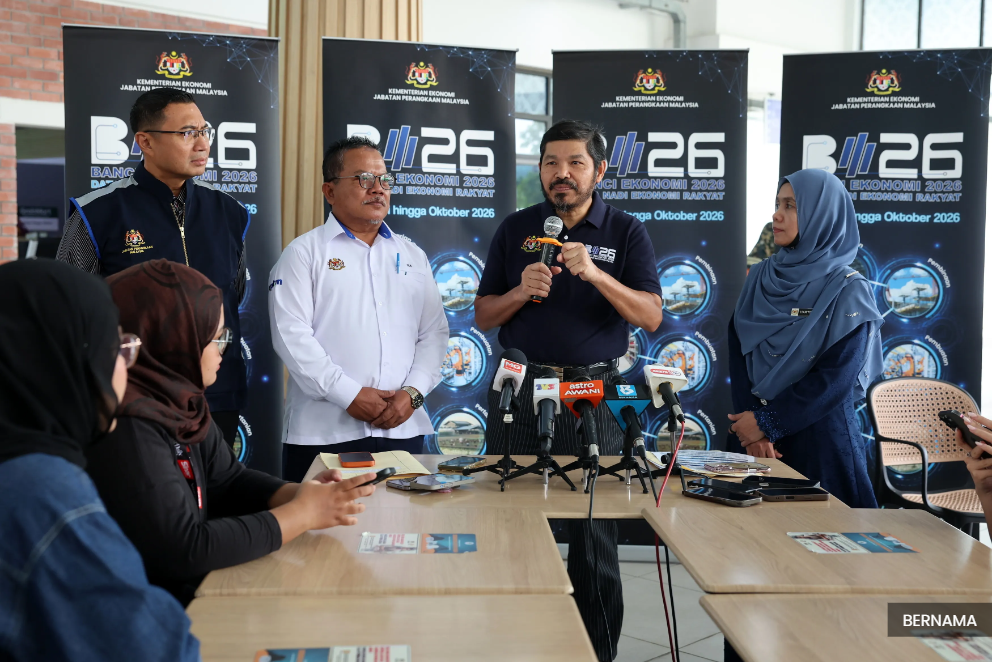
PUTRAJAYA, Jan 5 — Approximately 1.34 million business entities nationwide, including micro businesses, small and medium-sized enterprises (SMEs), and large companies, are involved in the 2026 Economic Census (BE2026), which began today and will run until October 31, 2026.
Chief Statistician Datuk Seri Mohd Uzir Mahidin said BE2026, conducted every five years, is one of the largest projects by the Malaysian Statistics Department (DOSM) this year, to provide comprehensive economic data that accurately reflects the post-Covid-19 economic landscape.
"BE2026 will be conducted in three phases: the first phase, from today until February 28, focuses on collecting data from informal and micro businesses; the second phase, from March 1 to June 30, targets micro, small, and medium-sized enterprises (SMEs); and the third phase, from June 1 to October 31, will involve medium and large businesses," he said during a media briefing at the BE2026 kick-off session today.
Data collection in Phase One will involve face-to-face interviews using a questionnaire form and the e-Mikro system.
For Phases Two and Three, data will be gathered through online forms (e-BE), mail submissions, email or phone communications, and in-person interviews.
With the theme 'Data, the Heartbeat of the People's Economy', BE2026 will be carried out nationwide, covering all business entities and non-profit organisations in Malaysia, across all economic sectors, including agriculture, manufacturing, construction, mining, quarrying, and services.
According to the latest DOSM records, in 2025 micro businesses will account for the largest share at 74.3 per cent, followed by small businesses at 20.8 per cent, large businesses at 3.8 per cent, and medium-sized businesses at 1.1 per cent.
Uzir added that the DOSM will introduce a new base year for economic data in 2025, replacing the current 2015 base year. This change is expected to take effect from 2028.
"With this new data, all economic data will be updated to reflect the base year of 2025. The International Monetary Fund (IMF) has recommended that many countries shift to using the most recent base years for economic data assessments.
"The year 2025 is expected to be more stable, as the country’s economy will have fully recovered from the pandemic and returned to a more normal state, making it a suitable base year," he said.
BE2026 will be the sixth census of its kind since 2001.
The BE2026 coverage will use the 2025 Malaysia Standard Industrial Classification (MSIC), which includes five sectors, 17 sections, and 1,216 industries. This updated classification reflects changes in the economy, including the rise of innovation-based industries, sustainable energy, information technology, and the digital economy.
In line with national development goals, BE2026 supports the implementation of key national policies, including the 13th Malaysia Plan (13MP), the New Industrial Master Plan 2030 (NIMP 2030), the Digital Economy Agenda, Industry 4.0, the SDG 2030, and the Bumiputera Economic Strategic Plan 2035.
For the first time, the census will also include the informal sector, like food vendors, market traders, small retail shops, transport operators, homestays, tuition centres, mobile micro-businesses, and various support activities that significantly contribute to the local economy, especially in planned urban areas like Putrajaya.