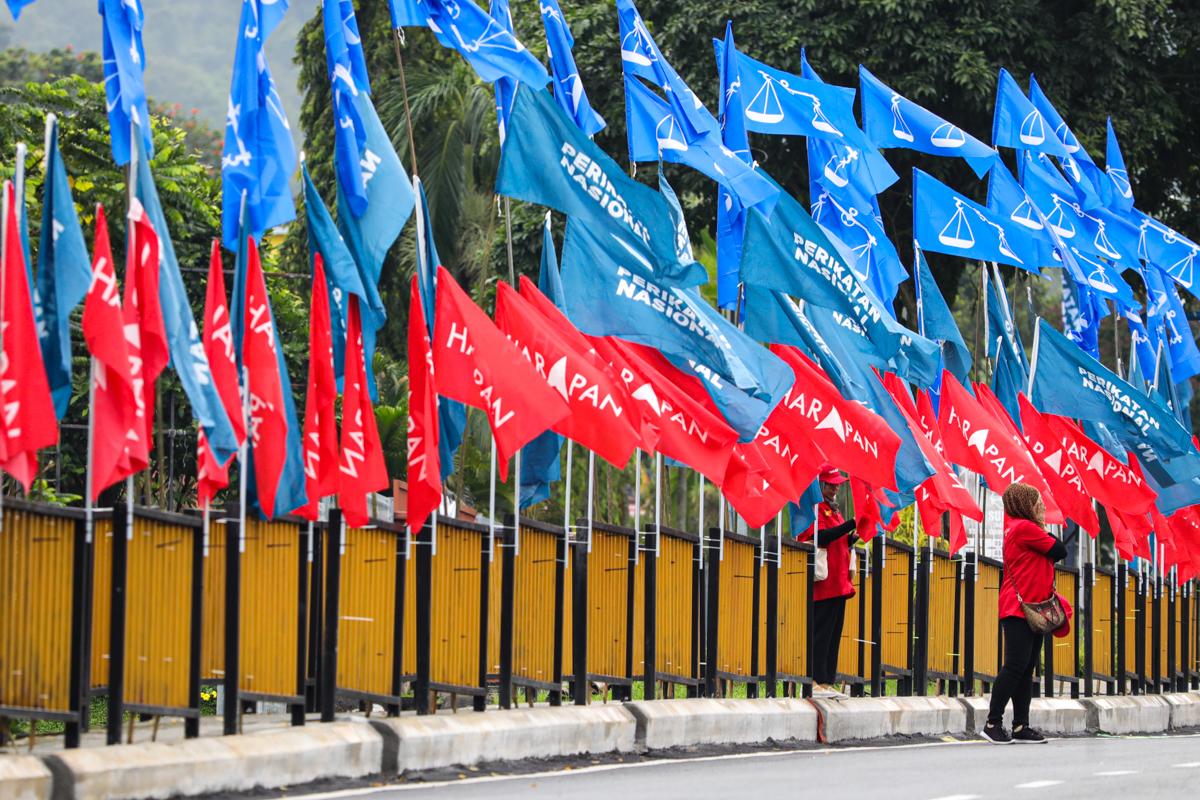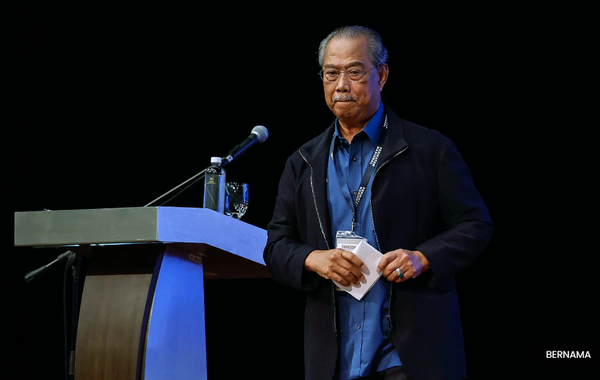

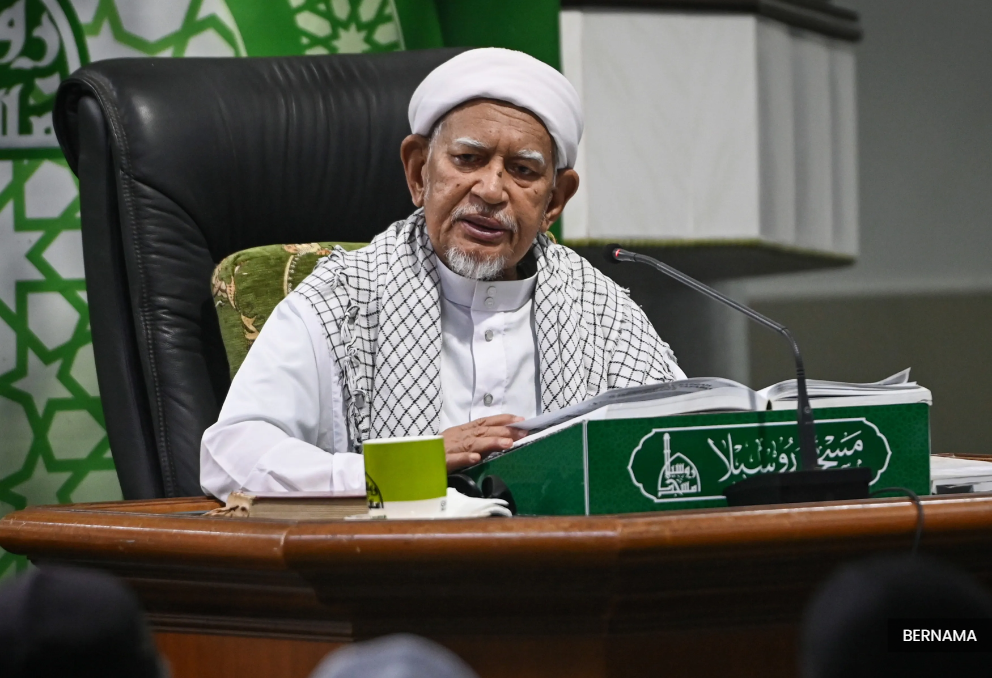
KUALA LUMPUR, Dec 30 — The resignation of Tan Sri Muhyiddin Yassin and several senior Bersatu leaders at both national and state levels from Perikatan Nasional (PN) signals that the coalition is on the brink of its most serious political crisis since its formation five years ago.
Often described as a crack waiting to split, tensions within the coalition comprising Bersatu, PAS, Gerakan, and the Malaysian Indian People’s Party (MIPP) have clearly intensified with the mass resignations of Bersatu leaders today in protest over unresolved issues plaguing their political cooperation within PN.
The crisis erupted amid turmoil in the Perlis state administration, with the Menteri Besar’s post shifting from PAS to Bersatu.
The move, labelled a “backstab” by various quarters, fuelled dissatisfaction within PAS, prompting calls for Muhyiddin, who is also Bersatu's president, to step down and for PAS to take the helm of PN.
Universiti Malaya sociopolitical analyst Prof Datuk Awang Azman Awang Pawi said the drastic steps taken by Bersatu leaders clearly reflect fractures in trust and coordination between PN’s two main pillars, PAS and Bersatu.
“Differences in approaches to power-sharing, state leadership and political survival strategies have exposed misaligned interests between the two parties, especially when crises demand swift decisions and consensus,” he said.
Such developments have eroded public confidence, particularly among fence-sitters and young voters who value stability and clarity of leadership.
“PN risks being seen as a coalition losing influence and trapped in internal conflict, rather than one ready to govern,” Awang said.
PN currently governs four states: Kelantan, Terengganu, Kedah, and Perlis.
Geostrategist Assoc Prof Azmi Hassan said that if Muhyiddin’s resignation stemmed from pressure from PAS, the PN chairmanship would likely fall to a PAS leader, as the party holds the most significant number of elected representatives in the coalition.
“Should PAS lead PN, perceptions among neutral supporters may shift, as PAS is often viewed as more hardline and has yet to prove its ability to lead the coalition as a whole,” he told Bernama.
Even though PAS has prominent figures, including Terengganu Menteri Besar Datuk Seri Ahmad Samsuri Mokhtar, Kelantan Menteri Besar Datuk Mohd Nassuruddin Daud, and party deputy president Datuk Seri Tuan Ibrahim Tuan Man, they have yet to demonstrate the capacity to manage complex national-level politics.
Nevertheless, Azmi said the crisis could worsen if the PN chairmanship is not handed to PAS but instead to another figure, such as Bersatu deputy president Datuk Seri Hamzah Zainuddin.
Meanwhile, Universiti Teknologi Malaysia’s Faculty of Social Sciences and Humanities director Assoc Prof Mazlan Ali said Muhyiddin’s resignation was not unexpected, given mounting pressure within Bersatu itself, including calls for Hamzah to replace him as party president.
“The key question now is who is capable of leading PN,” he said.
Mazlan noted that tensions between PAS and Bersatu have also been driven by disputes over major issues such as the prime ministerial candidate, political positioning in Sabah, and developments in Perlis, which have deepened PAS’s dissatisfaction with its ally.
The situation has fuelled speculation that PAS may eventually leave the coalition, raising the risk of PN’s collapse.
“PAS' decision not to take up posts in the Perlis State Cabinet also suggests deep frustration, especially as Bersatu has yet to act against the five assemblymen accused of ‘orchestrating a coup d’etat’ in the state,” he said.
Earlier today, Muhyiddin, also the Pagoh MP, announced his resignation, effective Thursday (January 1, 2026), after leading the coalition for five years since its official registration on August 7, 2020.
This was followed by a series of resignation announcements by other PN leaders, including Datuk Seri Mohamed Azmin Ali as PN secretary-general and Selangor PN chairman; Bukit Kepong assemblyman Datuk Sahruddin Jamal as Johor PN chairman; Datuk Seri Ahmad Faizal Azumu as Perak PN chairman, and Labu state assemblyman Mohamad Hanifah Abu Baker as Negeri Sembilan PN chairman.
In a related development, Tuan Ibrahim confirmed that PAS will submit several names for consideration as the new PN chairman, with discussions expected at an upcoming PN Supreme Council meeting.
Meanwhile, PAS secretary-general Datuk Seri Takiyuddin Hassan said the party has offered to lead PN in strengthening its organisation and preparing for the upcoming state election and the 16th General Election.
Grassroots pressure has also surfaced, with Selangor PAS Youth urging the party to reassess its political cooperation with Bersatu.
Its chief Mohamed Sukri Omar said PAS must undertake a bold and rational evaluation based on political realities and long-term interests, rather than emotion.
He claimed that Bersatu’s declining performance in recent elections shows its reliance on PAS’s strength, while its demands for seats and influence appear disproportionate to its actual contribution.
Meanwhile, Johor Parti Keadilan Rakyat Youth chief Faezuddin Puad described the resignations of PN top leaders at both the national and state levels as clear evidence of the coalition’s political direction's fragility.
“Politics that is continuously mired in internal conflict and power manoeuvring only adds to uncertainty and diverts attention from the people’s needs,” he said.
Faezuddin added that the internal crisis within PN strengthens confidence that only principled, united and stable leadership, as brought by the Madani government, can guarantee genuine development for the state and the country.