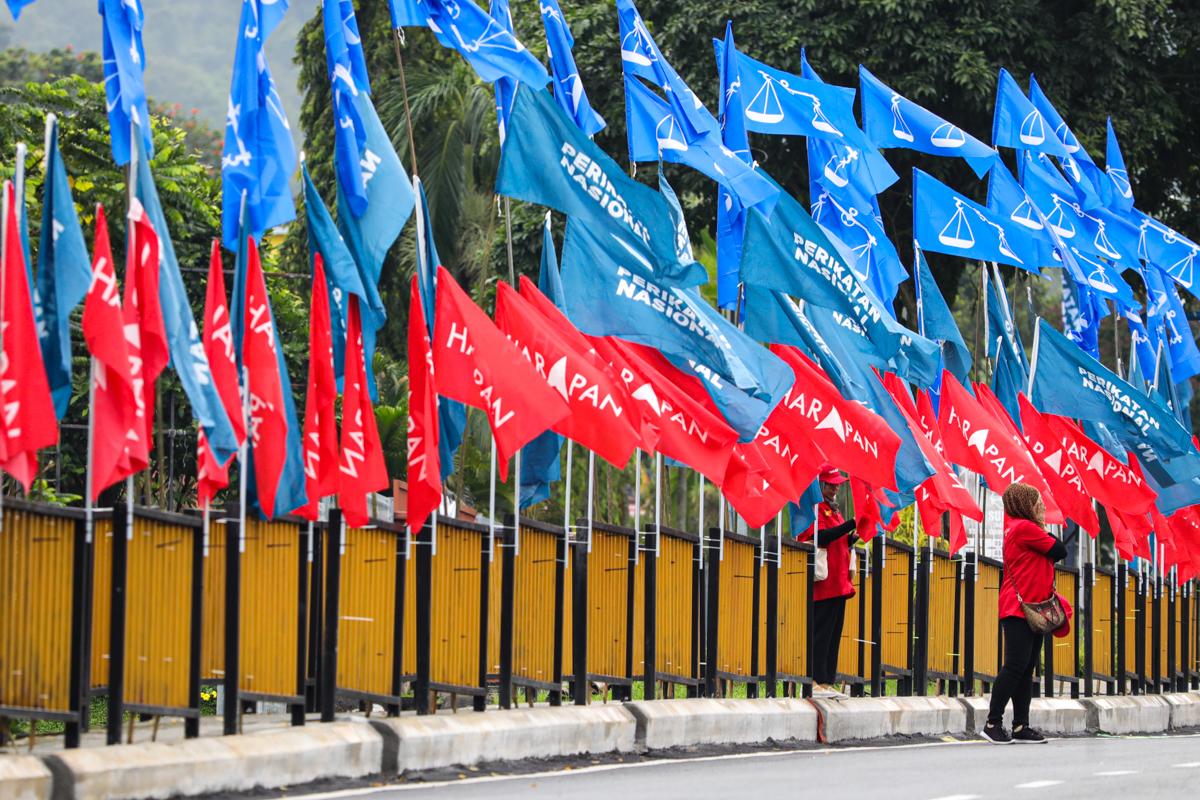

SHAH ALAM, Dec 30 — As the crisis within Perikatan Nasional (PN) deepens, with components Bersatu and PAS seemingly at loggerheads, questions are being raised over the coalition’s viability.
A political analyst even predicted that the political bloc could meet its demise soon.
“I see this as possibly the early signs of PN’s collapse,” Universiti Utara Malaysia’s Prof Mohd Azizuddin Mohd Sany told Media Selangor today.
Earlier today, Bersatu president Tan Sri Muhyiddin Yassin announced his resignation as PN chairman, effective January 1.
While no reason was given, the move comes amid growing discontent within the coalition, with the latest flashpoint being the political crisis in Perlis that led to a change in menteri besar.
Muhyiddin’s resignation was followed by that of several other Bersatu leaders, including Datuk Seri Mohamed Azmin Ali, who stepped down as PN secretary-general and Selangor PN chairman, and Datuk Seri Ahmad Faizal Azumu, who resigned as Perak PN chairman.
Azizuddin said that with no clear indication of who would take over as chairman and with several elections looming, including in Melaka and Johor, PN’s position has become increasingly shaky and awkward.
“I think PN is indeed (too) weak as a coalition to compete against either Barisan Nasional or Pakatan Harapan. If the unity government moves as a single unit, PN’s ability to compete against it will become even weaker.
“We do not know who will lead the coalition, and leadership is crucial because it determines the direction PN will take. The level of uncertainty is now very high.
“Based on past developments, it is possible that what we are seeing today is the start of a split in PN, which would make it difficult for the coalition to operate as a united force in elections,” Azizuddin said.
Even if the coalition is intact, Azizuddin said ongoing infighting would have a damaging impact on public perception, particularly among voters who previously viewed the coalition as a force that united Malays.

What’s next for PAS?
Azizuddin also questioned PAS’ ability to lead PN should Bersatu decide to leave, noting that the Islamist party has never “successfully” led a political coalition.
“Yes, it once led Gagasan Sejahtera ahead of the 2018 general election, but they were not strong and failed to garner support.”
Despite contesting 159 seats in the election then, the coalition — comprising PAS, Parti Ikatan Bangsa Malaysia and Barisan Jemaah Islamiah Se-Malaysia — only won 18.
“If PAS wants to play the leading role, I think they will need to find ways to cooperate with other parties or coalitions to strengthen their position,” Azizuddin said.
Conversely, Pacific Research Centre of Malaysia principal adviser Oh Ei Sun believes a PAS takeover of the PN chairmanship would strengthen the coalition, as the party would rightfully assume leadership, holding the largest number of parliamentary seats.
“This will further consolidate PN’s stranglehold over Malay voters, instead of being ‘distracted’ by Bersatu’s various antics, such as mounting a coup in Perlis.
“If Bersatu is unhappy, it is always welcome to leave PN, with its many seats to be easily picked up by PAS in the coming general election,” Oh said.
He added that with Azmin stepping down as Selangor PN chairman, and PAS holding the most state seats in the coalition, the Islamist party should take the lead in mounting a bid to capture Selangor in the next state polls.
In the 2023 Selangor election, PN won 22 of the 56 seats — 12 by Bersatu and 10 by PAS.
Meanwhile, in the 15th general election in 2022, PAS won 49 seats while Bersatu took 25.