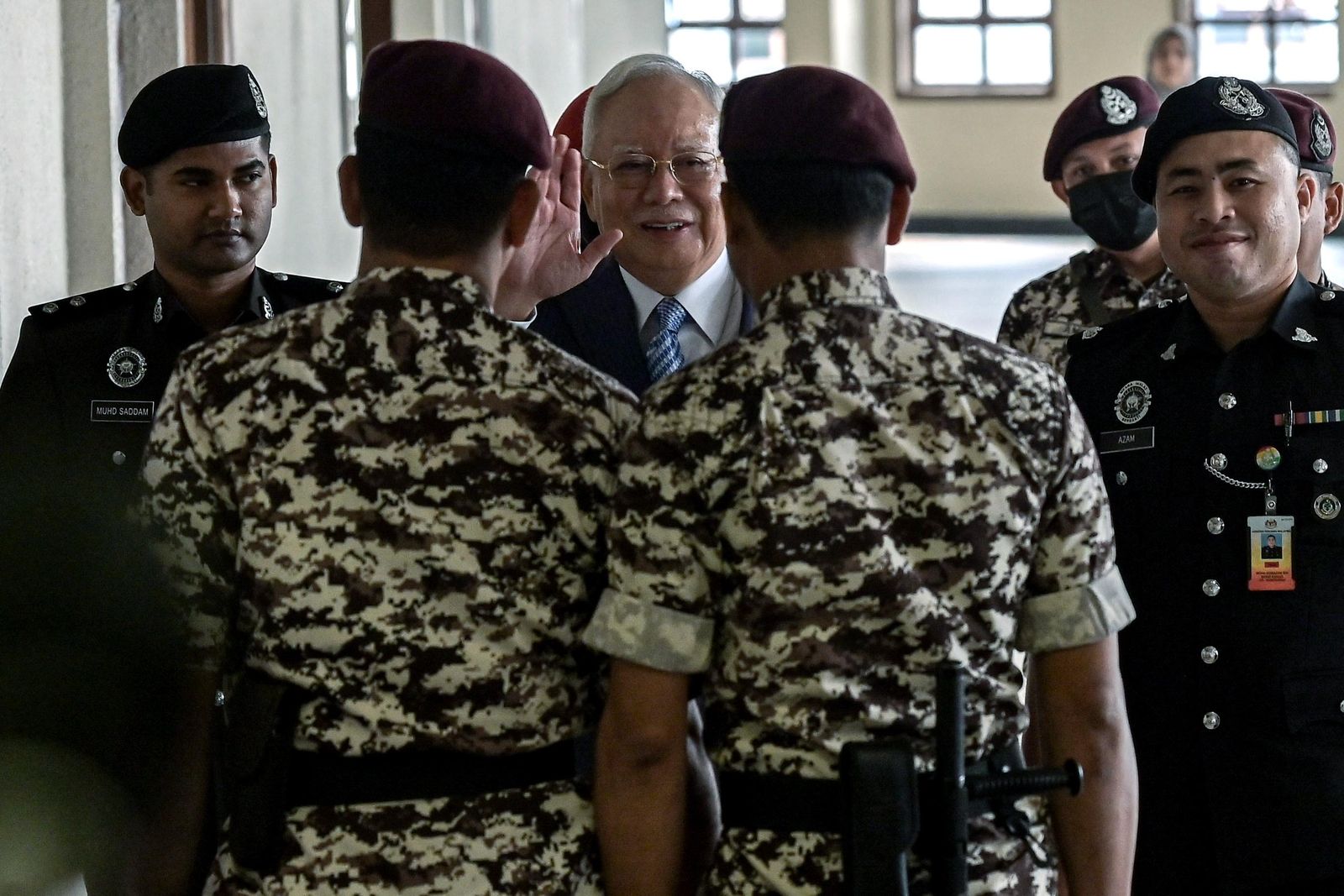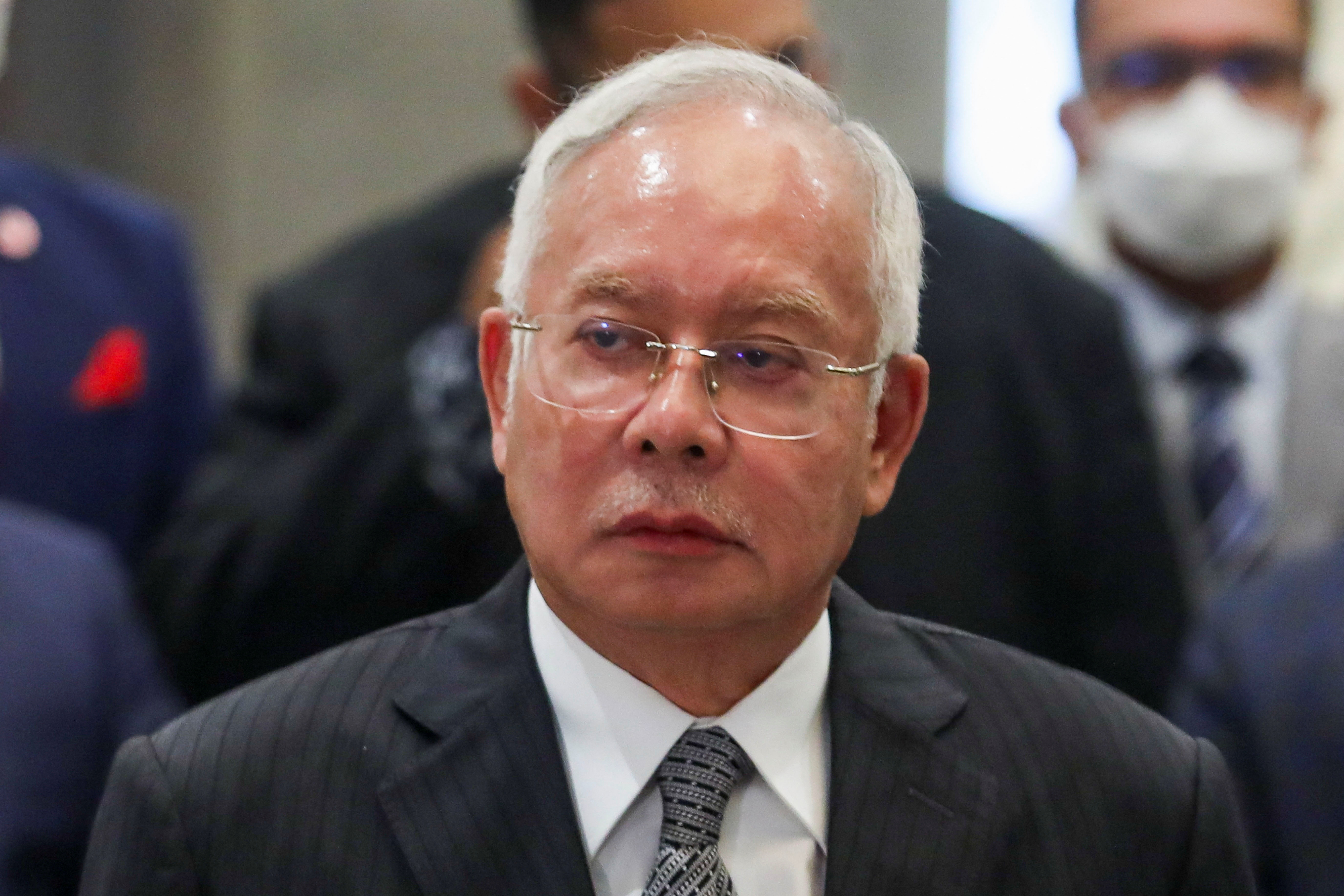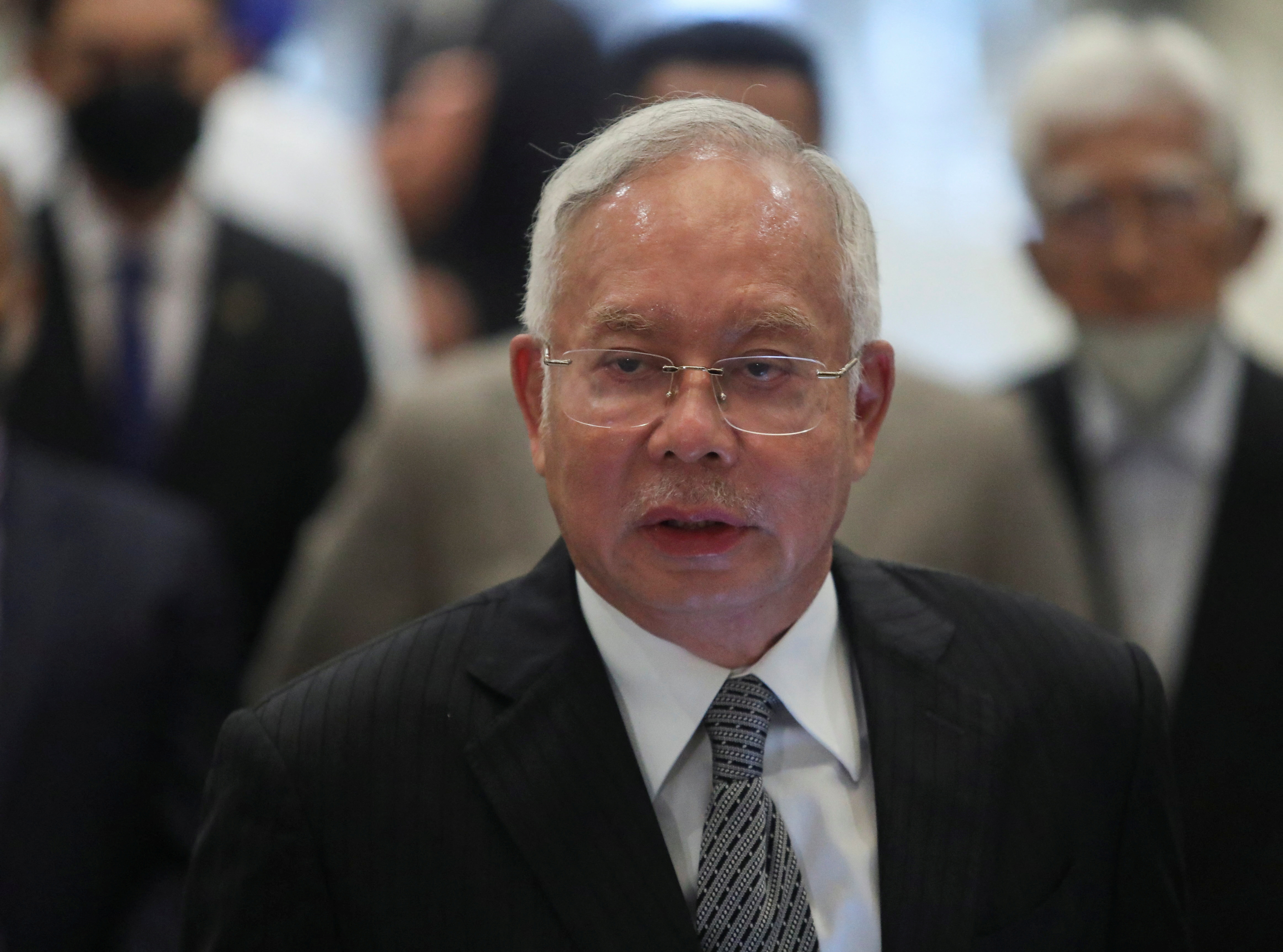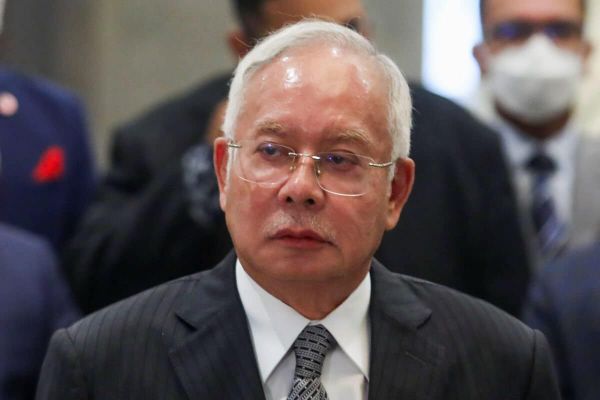
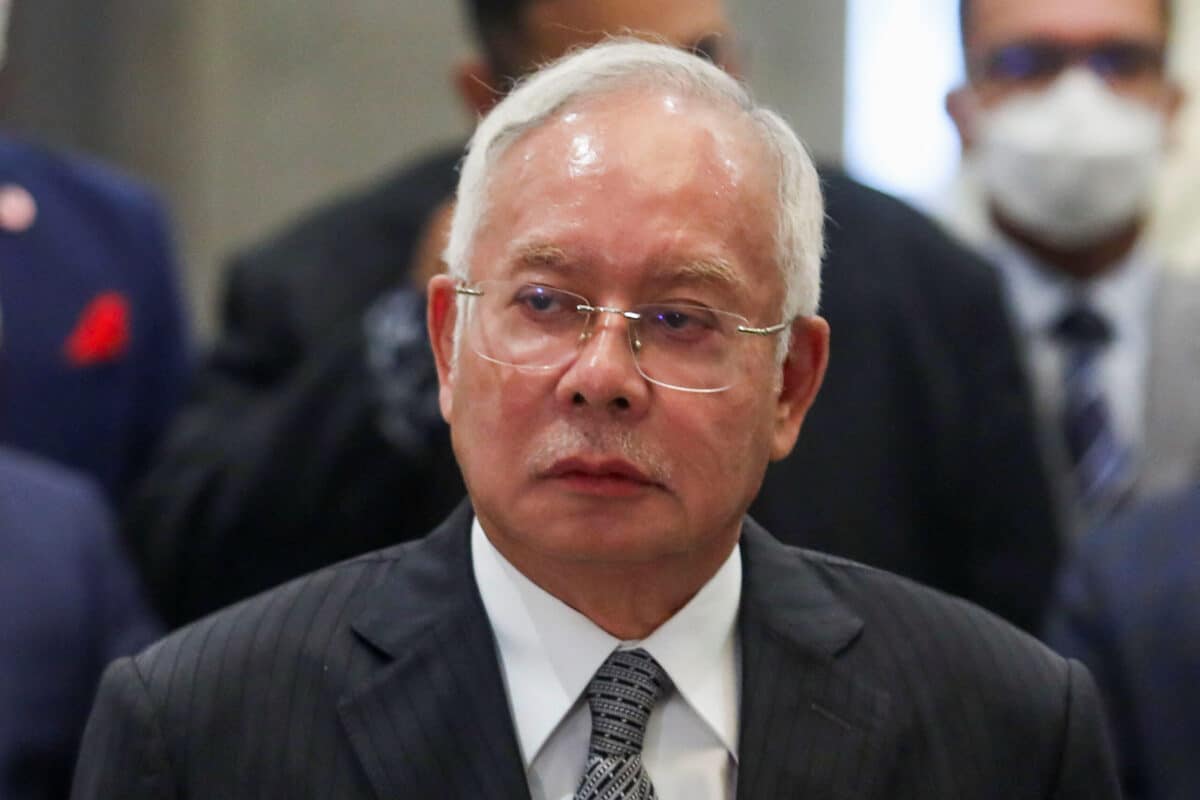
PUTRAJAYA, Dec 26 — The High Court ruled that Datuk Seri Najib Razak had a direct interest in 1Malaysia Development Bhd (1MDB), as early as when 1MDB was known as Terengganu Investment Authority Bhd (TIA).
TIA was incorporated in February 2009 as a state investment arm for Terengganu, before it was taken over by the Finance Ministry in July 2009. It was later renamed 1MDB on September 25, 2009.
Trial judge Datuk Collin Lawrence Sequerah, who is now a Federal Court Judge, said that towards the end of 2008, Najib’s former aide Datuk Amhari Efendi Nazaruddin testified he received a BlackBerry Messenger text from fugitive businessman Low Taek Jho, or Jho Low, saying the latter had obtained approval for Low to join a meeting regarding TIA.
“This shows the obvious interest of the accused with the organisation in relation to the first charge, where he testified he was merely a public servant who was misled by his subordinates.
“He also claimed the charges against him were politically motivated and claimed that he had no personal interest in the ventures of 1MDB, central to the defence of the accused that he believed the funds credited to his accounts were Arab donations,” Sequerah said.
The first charge against Najib was that he, as prime minister, finance minister and chairman of the 1MDB advisory board, was alleged to have used the positions to obtain gratification totalling RM60,629,839.43 by taking four actions between February 24, 2011, and June 14, 2011, at the Jalan Raja Chulan branch of AmIslamic Bank Bhd here.
The charge read that on April 1, 2009, at the Cabinet Ministers’ Meeting Room, 4th Floor, Prime Minister’s Department, Putrajaya, through a memorandum from the finance minister, Najib had obtained approval from the cabinet for the Malaysian government to be the guarantor for TIA to secure loans of up to RM5 billion from domestic and foreign markets through the Islamic Medium Term Notes Programme.
On the second charge, the judge held that Najib’s signature was pivotal and instrumental in the issuance of the US$1.75 billion bond raised by 1MDB, although Najib testified that he didn’t place his signature on the bond approval document.
“Najib sought to place reliance upon the expert evidence by handwriting expert Tay Eue Kam to bolster his contention. With regard to this, it can be said that the defence had never attempted to dispute the authenticity of the documents.
“It was disputed later at the defence stage, leaving it construed as an afterthought. The comparative examination also returned an inconclusive opinion. It does not do anything to substantiate the contention of the accused that he didn’t sign the document,” said the judge.
On the second count, the former prime minister was charged with using his position between October 31, 2012, and November 29, 2012, to obtain gratification amounting to RM90,899,927.28 by taking two actions.
The first action was on February 9, 2012, at the 1MDB office, as the Finance Minister, having approved 1MDB, in which he had direct interests through 1MDB Energy Sdn Bhd, which is a subsidiary of 1MDB, to offer a bid for the purpose of taking over Tanjong Energy Holdings Sdn Bhd at a bidding price of RM10.6 billion.
The second was on August 10, 2012, at the same place and in the same capacity, where Najib approved the takeover of Mastika Lagenda Sdn Bhd equities at an aggregate purchase price of up to RM2.75 billion, and further approved 1MDB to issue a 10-Year Structured Loan Note worth US$1.75 billion.
Meanwhile, in respect of the third charge, Sequerah held that there is actual and direct credible evidence to show the nexus and causal connection between Najib’s approval of the joint venture with Aabar Investment PJS or the Letter of Support to one guarantee letter to the gratification received in his AmIslamic bank.
On the third count, the former prime minister was charged with using his position between March 22, 2013 and April 10, 2013, to obtain gratification for himself amounting to RM2,081,476,926 through two actions.
The first was on February 25, 2013, at the 1MDB Office, as finance minister, having approved 1MDB, to enter a joint-venture agreement with Aabar Investment PJS.
Similarly, on March 14, 2013, Najib was accused of approving a Letter of Support to 1MDB Global Investment Ltd for the purpose of supporting the issuance of bonds totalling US$3 billion on behalf of 1MDB.
On the fourth charge for abuse of power, Sequerah held that when taken cumulatively, the evidence showed Najib had used his position to approve the loan facilities, which required approvals under Article 117 of 1MDB’s Memorandum and Articles of Association (M&A). However, the funds ended up in his personal accounts.
For the fourth charge, Najib as prime minister, finance minister and chairman of the 1MDB board of advisers, was charged with using his position to obtain gratification totalling RM49,930,985.70 by ordering the 1MDB board of directors to approve for 1MDB Energy Holdings Ltd to make loans through Term Loan Facility of up to US$975,000,000 from Deutsche Bank AG for the issuance of 1MDB Energy Group IPO.
For the 21 money laundering charges, the judge concluded Najib was guilty on all counts, having failed to verify the origin of large amounts of money entering his personal accounts.
“The defence advanced by the accused that although he admitted that such funds did enter his accounts by way of overdraft facility or by way of donations, it cannot go through in light of the evidence adduced by the prosecution and does not raise a reasonable doubt in the prosecution’s case,” the judge said.
The court is now hearing mitigation submissions from both the prosecution and the defence, following Sequerah’s ruling that Najib was today found guilty on four charges of abusing his power and 21 counts of money laundering involving RM2.3 billion in 1MDB funds.
Najib, 72, was charged with four counts of using his position to obtain RM2.3 billion in bribes from 1MDB funds through the AmIslamic Bank Bhd branch on Jalan Raja Chulan between February 24, 2011, and December 19, 2014.
These charges were brought under Section 23(1) of the Malaysian Anti-Corruption Commission Act 2009, which carries a penalty of up to 20 years’ imprisonment and a fine of not less than five times the sum or value of the gratification or RM10,000, whichever is higher, upon conviction.
As for the additional 21 counts of money laundering, he is accused of committing the offences at the same bank between March 22, 2013, and August 30, 2013.
These charges were framed under Section 4(1)(a) of the Anti-Money Laundering, Anti-Terrorism Financing and Proceeds of Unlawful Activities Act 2001, which carries a maximum penalty of five years’ imprisonment, a fine of up to RM5 million, or both.