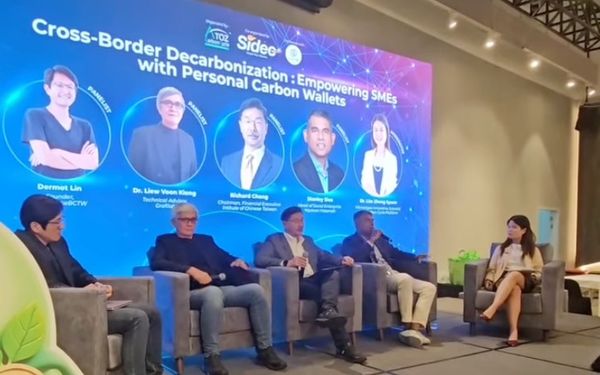
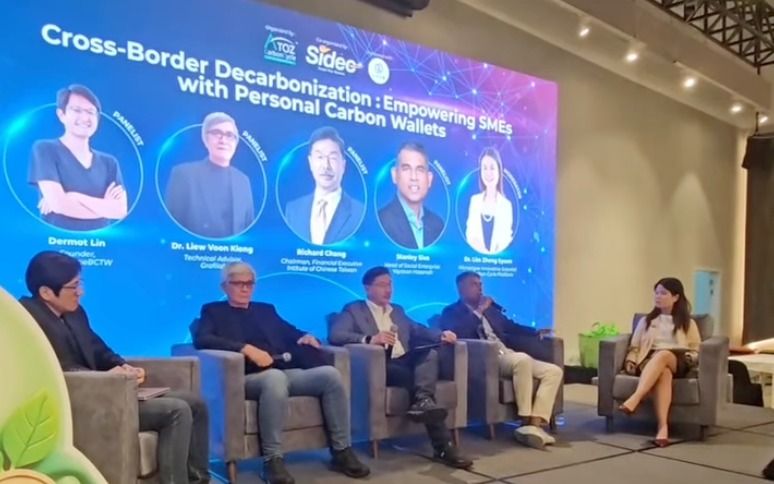
SHAH ALAM, Dec 17 — Southeast Asia should position itself as a regional hub for decarbonisation innovation, with small and medium enterprises (SMEs) integrated into cross-border ecosystems rather than operating in isolation, said Financial Executives Institute of Chinese Taiwan chairman Richard Chang.
“Cross-border decarbonisation works best when SMEs are connected regionally and supported collectively. Southeast Asia has the opportunity to become a transition hub where innovation, aggregation and shared platforms help SMEs stay competitive globally,” he said as a panelist at the Impact Wallet: Decarbonisation Blockchain Data event today.
He added that governments and cities play a critical role in accelerating adoption by providing funding, incentives and coordinated programmes, pointing to Taiwan’s citywide initiatives that support SMEs in meeting carbon requirements while lowering compliance costs.
Meanwhile, Yayasan Hasanah social enterprise head Stanley Siva said climate change and carbon risks do not respect national boundaries, which makes cross-border collaboration an economic necessity rather than a policy choice.
“For SMEs today, carbon performance is directly linked to contracts, payments and survival in global supply chains. Decarbonisation is no longer academic; it affects livelihoods.
“Successful cross-border decarbonisation depends on adoption at scale. That requires platforms that are easy to use, affordable and trusted by SMEs,” he said.
Stanley also noted that Southeast Asian SMEs stand to benefit significantly from cross-border digital ecosystems, citing growing adoption in Indonesia and the Philippines, and that blockchain technology enables near-real-time visibility and trust across borders, replacing slow, annual reporting cycles that many SMEs struggle to comply with.
Grafilab technical adviser Liew Voon Kiong meanwhile said individual behaviour can be digitally quantified and linked to cross-border carbon systems.
“Through digital platforms, daily actions such as using public transport, recycling and low-carbon consumption can be translated into measurable carbon reductions and recognised internationally,” Liew said.
However, GreenhopeBCTW founder Dermot Lin highlighted that cost and infrastructure remain the biggest barriers for SMEs, not their willingness to decarbonise.
“Without regional platforms for aggregation, verification and monetisation, SMEs face a double burden and rising decarbonisation costs while being pressured on Scope 1, 2 and 3 emissions by global customers,” Lin said.
Together, the speakers stressed that cross-border decarbonisation, supported by digital platforms, government coordination and regional collaboration, is key to ensuring Southeast Asian SMEs remain competitive in an increasingly carbon-conscious global economy.