
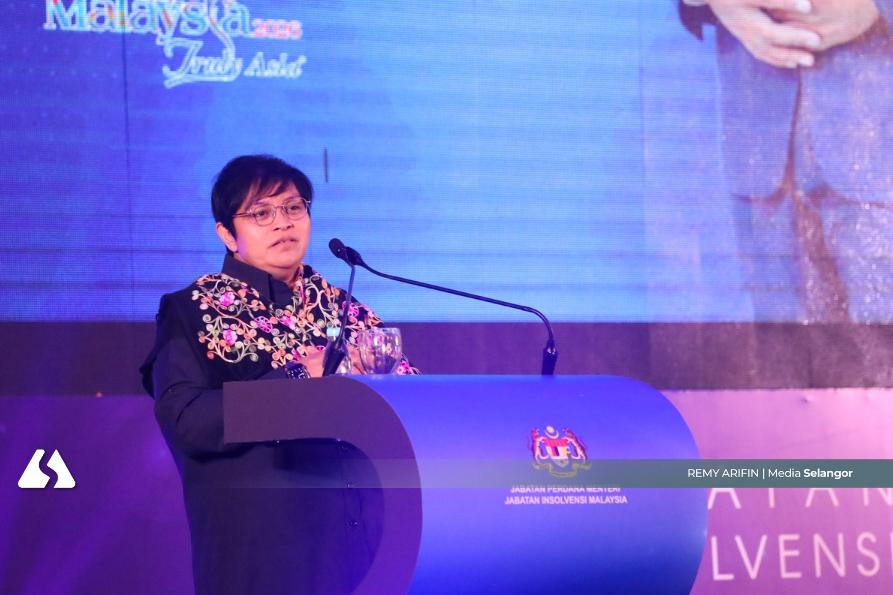
KUALA LUMPUR, Dec 16 — The landmark Anti-Bullying Bill 2025 was passed by the Dewan Negara today, enacting a legal mandate for some ministries to implement comprehensive anti-bullying guidelines across education institutions for students under 18.
Minister in the Prime Minister’s Department (Law and Institutional Reform) Datuk Seri Azalina Othman Said said these ministries are the Education Ministry (for primary, secondary and private schools), the Rural and Regional Development Ministry (MARA Junior Science Colleges), the Defence Ministry (Royal Military College), and Women, Family, and Community Development Ministry and Home Ministry (Henry Gurney Schools).
“These four institutions and their respective ministers must now fulfil a responsibility referred to as a guideline by making it part of the law.
“This is, I believe, a good approach because, from now on, no primary, secondary, or private school can claim they are unaware of having this responsibility,” she said during the winding-up debate on the bill, which was passed by a majority vote after being debated by 27 senators.
She clarified that the bill’s intent is to legally require education institutions to accept all bullying reports, including isolated incidents.
“Failing to act on any report, however minor, constitutes a violation,” she emphasised.
Meanwhile, the Dewan Negara also passed the National Skills Development (Amendment) Bill 2025 and the Skills Development Fund (Amendment) Bill 2025 under the Human Resources Ministry.
Deputy Human Resources Minister Datuk Seri Abdul Rahman Mohamad, when tabling the second reading of the National Skills Development Act 2006, said the amendments would neither affect nor cause an overlap in the skills recognition for local skilled workers with existing academic qualifications.
“We have held engagement sessions with the Higher Education Ministry, the Malaysian Qualifications Agency and Higher Education Department to ensure there is no overlap in skills recognition. Instead, the amendments aim to maintain compatibility and uniformity with existing academic qualifications.
“These amendments go beyond mere legislative changes; they represent a national transformation towards a more inclusive, progressive and high-impact skills training system, aligned with the increasingly dynamic and technology-driven demands of the job market,” he said.
He stressed that national skills training is based on the National Occupational Skills Standard, developed from real industry job analyses rather than being purely theoretical.
Meanwhile, assessments of graduate employability consider job compatibility and salary levels through graduate tracer studies and Social Security Organisation (Socso) contribution data.
Rahman said the Skills Development Fund (Amendment) Bill 2025 aims to amend the Skills Development Fund Act 2004 to expand the financing scope of the Skills Development Fund Corporation (PTPK).
He explained this was necessary as the act hasn’t been amended since it was gazetted on December 31, 2004, before coming into effect in January 2006.
Key amendments include broadening the scope for skills training loans and financial aid to other training programmes recognised by the Skills Development Department (JPK), as well as strengthening governance through more transparent approval, management, and control processes for financial assistance.
The Dewan Negara sitting resumes tomorrow.