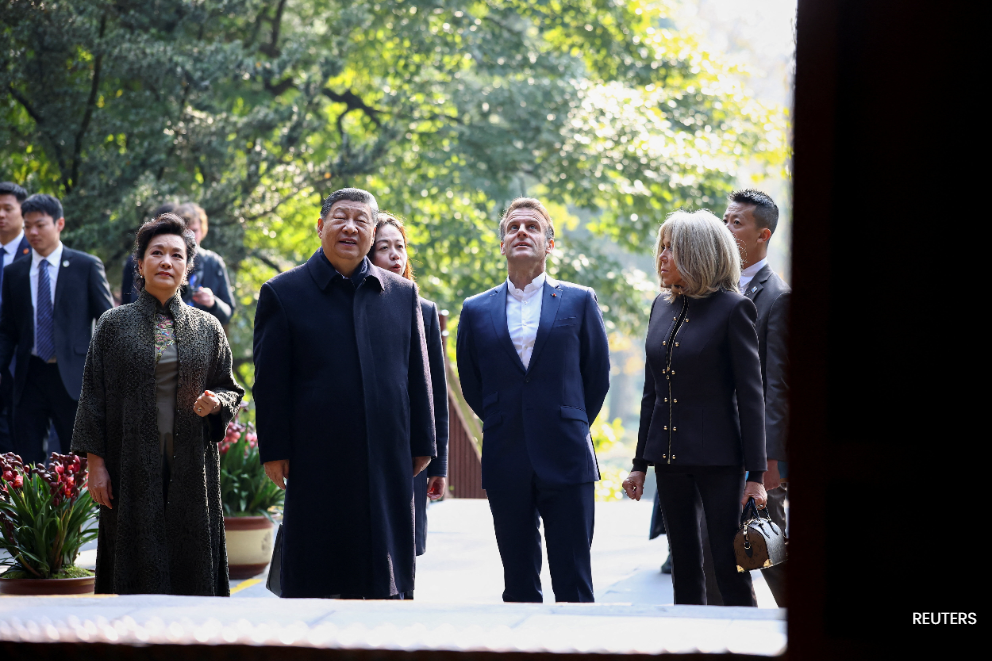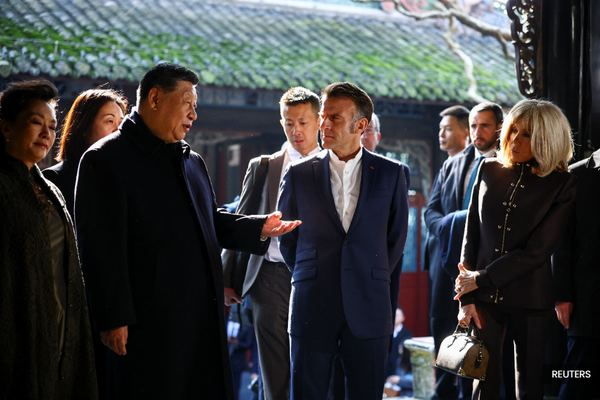
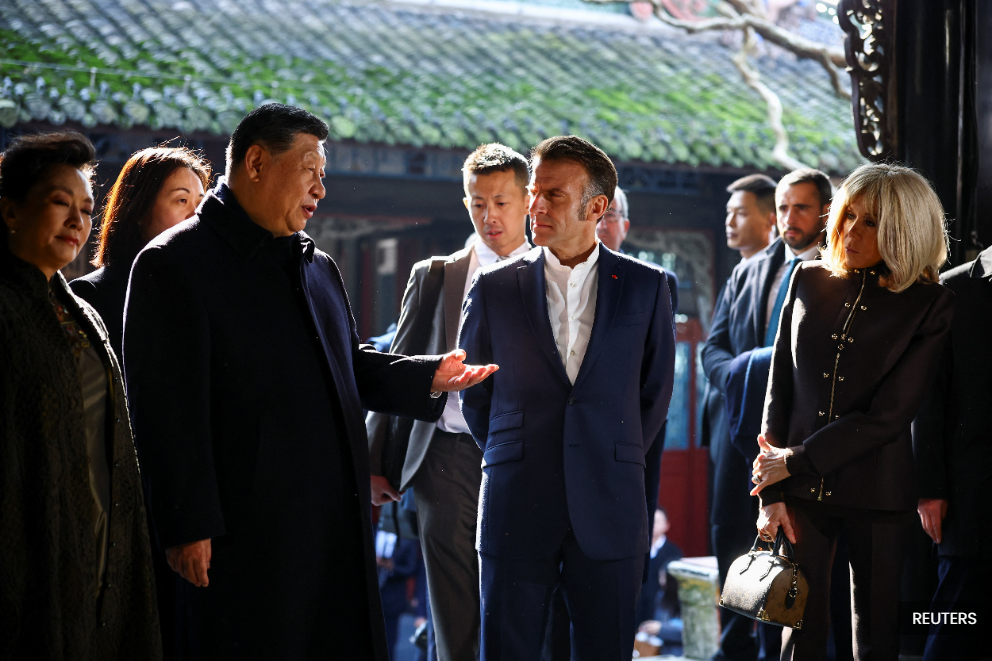
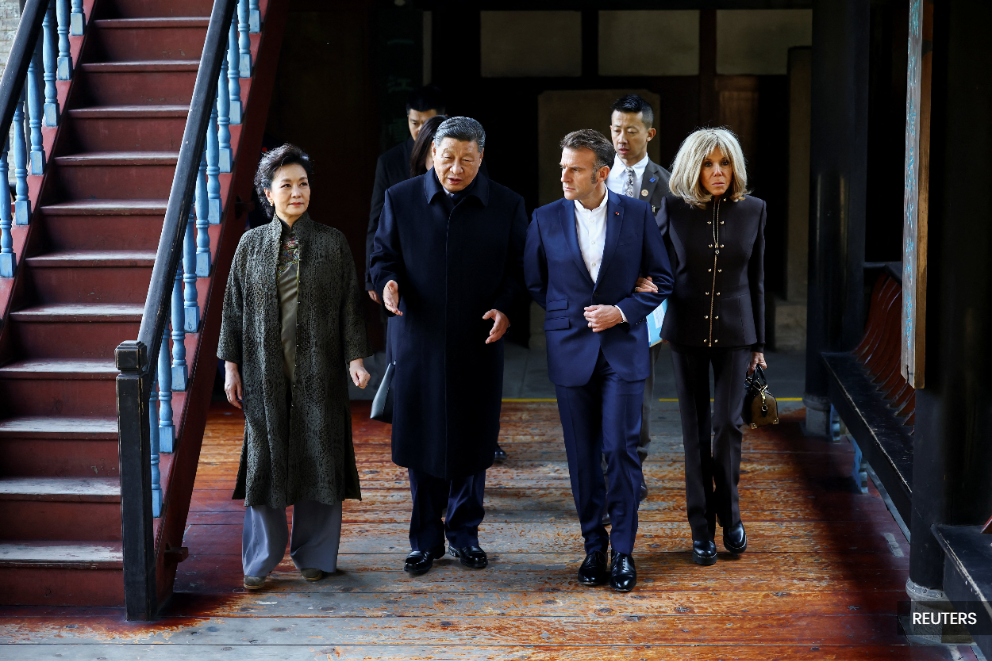
BEIJING, Dec 5 — Chinese leader Xi Jinping accompanied French President Emmanuel Macron to Chengdu today, a rare gesture seemingly reserved for the head of Europe's second-largest economy that highlights Beijing's focus on Paris in its ties with the European Union (EU).
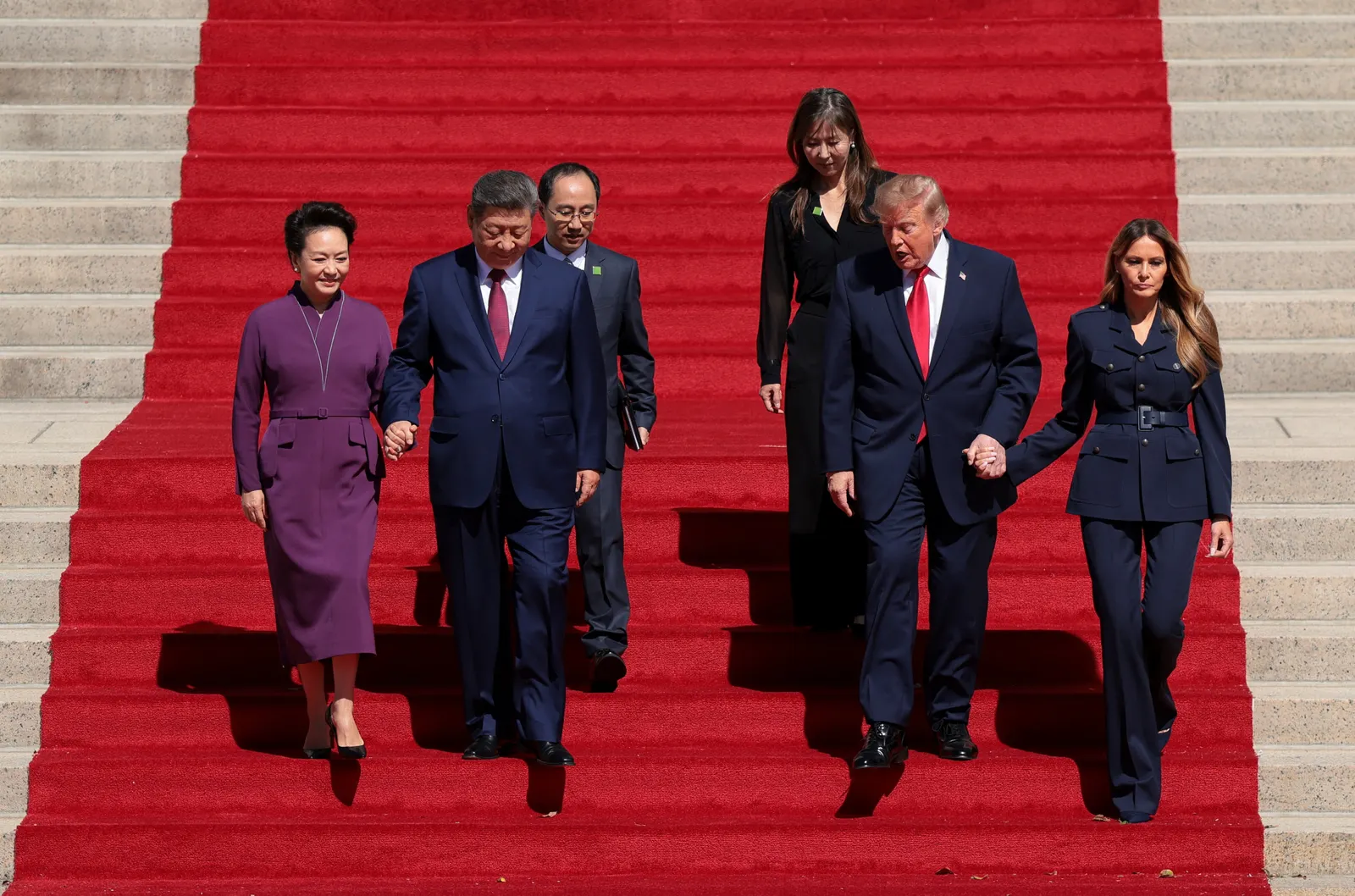
Even when United States (US) President Donald Trump made a landmark visit to China early during his first term in 2017, and Xi lavished him with a private dinner within Beijing's Forbidden City, the trip was confined to the Chinese capital.
Despite the apparent bonhomie between Xi and Macron, analysts have observed that the French President's visit so far has yielded little beyond bolstering Beijing's diplomatic credentials, as world leaders turn to China for economic assurances amid Trump's tariffs.
It has also provided Macron with a chance to project statesmanship after a tough summer in domestic politics.
Investors are watching to see whether a day that began with Macron surprising fellow joggers in the city's Jincheng Lake Park, before joining Xi at a historic dam site, will end with major commercial deals or a thaw in EU-China trade tensions, given that the French President has been joined on his fourth state visit to China by the heads of some of France's biggest firms.
A meeting in the Chinese capital yesterday yielded only 12 cooperation agreements covering areas like population ageing, nuclear energy, and panda conservation, and no monetary total was disclosed.
"I think they (France) thought that Xi would be in a position to offer a lot because Europe is really preparing this economic security doctrine.
"Macron probably felt that given his weight and the fact that France is clearly the one that is pushing the most on economic security, that they would get a deal, but nope," said think tank Bruegel's senior fellow Alicia Garcia-Herrero.
Economic opportunities face political constraints
Beijing may see friendly ties with France as a way into expanding its influence within the 27-strong EU, but it is very constrained in its ability to offer Paris major concessions.
The Chinese leader was not expected to sign off on a long-anticipated 500-jet Airbus order, for example, as that would reduce China's leverage in trade talks with the US, which is pressing for new Boeing commitments.
Xi is also unlikely to ease conditions for French cognac makers or pork producers, as doing so would weaken Beijing's negotiating position with Brussels over tariffs on Chinese-made electric vehicles (EV).
Nor can he offer Macron a breakthrough on the war in Ukraine for him to take back to Europe, given that China recently reaffirmed its support for Russia.
Recent visits by Spain's King Felipe VI and German Finance Minister Lars Klingbeil were similarly low on tangible outcomes.
Chinese government advisers say Beijing feels it has the upper hand and is waiting for Brussels to yield and accept a minimum price plan for its EVs rather than the tariffs currently levied on them.
"They (the EU) now recognise the complexity of the issue. After Trump became president again, they realised they are too dependent on the US.
"Europe is now in need of more reciprocal trade with China. The EU should really reflect on its China policy and not tie it too closely to Russia and Ukraine," one advisor said, requesting anonymity as he is not authorised to speak to the press.
Divide and conquer
Xi also did not raise the prospect of a trade deal with the EU with Macron, which China's top diplomat Wang Yi brought up when Estonia's Foreign Minister Margus Tsahkna visited last month, and which the Chinese Commerce Ministry has touted, despite talks over a landmark EU-China investment pact having been frozen since 2021.
The vote on whether to adopt the European Commission's EV tariffs divided the member states, with France voting in favour of the duties while Germany, Europe's biggest economy, voted against.
China could seek to exploit such divisions.
"It is interesting that they (China) keep raising it (a trade deal) with the member states. We have no plans whatsoever to have any kind of trade agreement with China," said a European Commission official, also requesting anonymity.