
By Norrasyidah Arshad
GOMBAK, Oct 3 — A special team established by Selangor will comprehensively study the GISB Holdings (GISBH) issue so such activities do not recur.
Menteri Besar Dato’ Seri Amirudin Shari said the unit will focus on members of GISBH, which practises deviant teachings linked to the Al-Arqam sect, which was declared aberrant since the 1990s.
He said efforts will be made to guide and rehabilitate children rescued from GISBH welfare homes.
“We are learning from one situation to another. We will pursue further action, and I believe police are completing an investigation under the Penal Code related to persecution and cruelty.
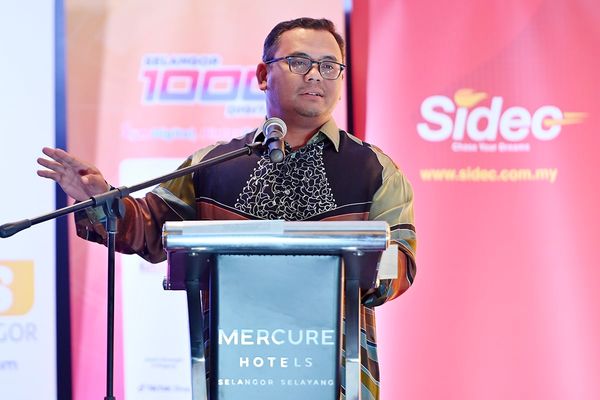
“I hope this can be implemented per the state government’s plan. The special team will look into this issue comprehensively so nothing escapes notice. This is a lesson,” he said after the Selangor 1000 Digital Series 5 closing ceremony at Hotel Mercure here today.
Menteri Besar Dato’ Seri Amirudin Shari speaks to the media after the Selangor 1000 Digital Series 5 closing ceremony at Hotel Mercure, Selayang, on October 3, 2024. — Picture by HARUN TAJUDIN/MEDIA SELANGOR
Amirudin said GISBH made moves that made their activities difficult to detect.
After Al-Arqam was banned, its ex-members established Rufaqa, later removed by the Selangor Islamic Religious Department (Jais), which declared the ex-members had changed their ways.
“They fulfilled 500 hours of repentance modules to return to the right path, including Ummu Jah (Al-Arqam founder Ashaari Muhammad’s widow). After that, we allowed them to rejoin society.
“However, they took this opportunity to again spread teachings declared deviant. This is the lesson we learnt, which we might have missed in the second series (Rufaqa) in handling the children,” he said.
Yesterday, Jais in a statement said several of GISBH’s beliefs and practices go against accepted teachings.
Jais director Dato’ Mohd Shahzihan Ahmad said GISBH members believe that leadership gives one divine grace and allows them into heaven.
Shahzihan said a probe also found that marriages and divorces were handled by group leaders, while marriage rites were dictated by those leaders.
He added that the marriages were not recorded with legitimate documentation, couples were allowed to wed without permission from the Selangor Muslim People’s Registrar of Marriage, Divorce and Ruju, and polygamy was practised without permission from the Syariah Court.