
By Danial Dzulkifly
SHAH ALAM, Aug 25 — The Malaysian Aerospace Industry Association (MAIA) has embarked on a new journey with Selangor through its involvement in the First Selangor Plan (RS-1), the state’s five-year economic and social development blueprint.
Among RS-1’s key strategies is to invest in building a comprehensive ecosystem for complex industries like aviation and aerospace manufacturing. Some of the notable initiatives include the Selangor Aero Park, the Drone Centre of Excellence, and the Bernam River Airfield.
The plan is set to supercharge Selangor’s already dominant position in Malaysia’s aerospace landscape. With over 60 per cent of the country’s aerospace manufacturing and MRO (maintenance, repair, and operations) capabilities concentrated in the state, RS-1’s targeted approach promises to elevate the industry further.
 Malaysian Aerospace Industry Association president Naguib Mohd Nor speaks to the press during the 2022 Selangor Aviation Show at the Skypark Regional Aviation Centre in Bukit Jelutong, Shah Alam, on September 9, 2022. — Picture by REMY ARIFIN/SELANGORKINI
MAIA’s president Naguib Mohd Nor revealed that the association is working closely with the state to accelerate the sector’s growth.
“In Selangor, we face a challenge of cost escalation versus value proposition. MAIA was involved with RS-1, and prior to that, our team assisted in drafting the Selangor Industry 4.0 roadmap.
“We conducted an in-depth study and benchmarking, with one significant benchmark being Bavaria in Germany. Bavaria has four times the per capita output of Selangor.
“This does not mean people in Selangor are less hardworking; it is about multiplying effort effectively. We need to realise value creation quickly and understand how synergies between initiatives, companies, and capabilities can be achieved,” he said in a recent interview with Selangor Journal.
Addressing economic challenges in the country, Naguib said the aviation sector is also evaluating the best way forward following diesel rationalisation, which has impacted the sector’s value chain.
“In a subsidised economy, there tends to be some level of complacency, similar to what we see in the Middle East. In Malaysia, subsidies on fuel, food, and other essentials can reduce motivation.
“For instance, with the diesel subsidy rationalisation, there was a noticeable impact. If the petrol subsidy is also rationalised, the middle-income group, which includes many in the aerospace industry, will feel it directly. This could accelerate the need for change, creating a pressure point for the industry,” he said.
However, Naguib is optimistic about the state's leadership under Menteri Besar Dato’ Seri Amirudin Shari, along with state executive councillor for investment, trade, and mobility Ng Sze Han; state executive councillor for innovation and Islamic affairs Dr Fahmi Ngah; Invest Selangor Bhd chief executive officer Dato’ Hasan Azhari, as well as other members of the administration, to carry out this vision and strengthen the aviation sector further.
“The knowledge is there. It is all about execution now, and nothing drives execution like pressure. The current environment is ripe for change,” he said.
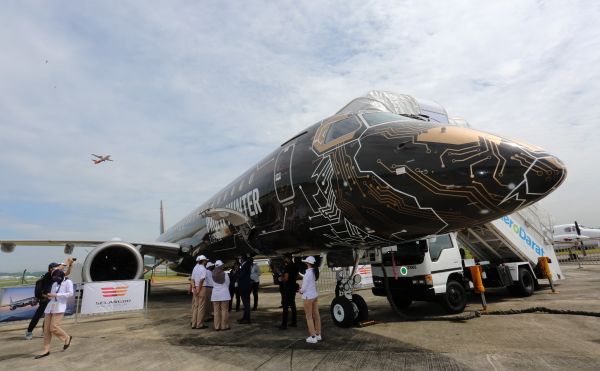
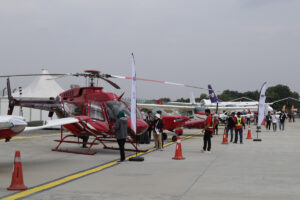 The aircrafts showcased at the Selangor Aviation Show (SAS) 2022 at SkyPark Regional Aviation Center (SkyPark RAC), Subang, on September 8, 2022. — Picture by FIKRI YUSOF/SELANGORKINI
Redefining standards
Naguib explained that MAIA is tackling major challenges in the sector head-on. With 111 members, mostly in Selangor, and including major players in aviation, they have the pulse on what the industry requires the most.
This includes helping industry players who work with the state train and retain talent in Malaysia.
Among the major efforts spearheaded by MAIA is the development of the aerospace skills framework under the Selangor Skills Framework Platform (SSFP).
“This framework, which has been integrated into a digital system by the state government under SSFP, is one of the most detailed skills frameworks in the country. It includes eight levels of job title definitions and provides clear career paths.
“Clarity in defining competencies, similar to what we see with SkillsFuture in Singapore, is crucial. It ensures that we understand the competencies required for current and emerging roles.
“The digital nature of the system allows the industry to sign up and provide updates, enabling organisations to build and update their organisational charts. This helps to maintain the high standards needed for skills and competence achievements,” he said.
This task is being undertaken by the Future Skills Talent Council of TalentCorp, where MAIA anchors the aerospace council.
It is vital to establish clear assessment criteria for any complex industry, Naguib said, as the lack of definitions for comprehensive skills and competence is a significant problem in these industries.
“Without clear definitions, it is challenging to prove the required standards. Once these definitions are in place, institutions can benchmark properly, and we can train trainers to elevate people to the necessary standard.
“New high-tech investments often articulate a skill or competence requirement, and the standard response is to provide a certificate. However, the certificate does not always reflect the actual competence or skill level.
“We are working with the state and the Department of Skills Development to redefine these standards and ensure they are dynamic and updated regularly, and I think this is the key to moving the needle forward,” he said.
 The 4th edition of the Selangor Aviation Show will take place at the Skypark Regional Aviation Centre, Selangor from September 12-14, 2024. — Picture courtesy of INVEST SELANGOR BHD
Another major issue is brain drain. Naguib explained that the matter is more complex than just talents seeking better pay abroad.
Higher salaries should not be used as a reason to whitewash the serious issues raised by talents about our local industries.
“It is not as simple as just paying more. Interestingly, for many technical professionals, the issue is not solely about salary. You do not need to match Singapore salaries to retain Malaysian talent, but you do need to offer job satisfaction.
“Even Singapore is losing talent to other places. If it were just about salary, you would see people jumping from RM10,000 here to SG$10,000 (RM33,636) there, and then from SG$10,000 to US$20,000 (RM87,515) at a company like Google.
“We need to have a clearer understanding of people’s motivations beyond their salary,” he said, referring to other factors including job satisfaction, career growth, and a conducive working environment, as significant factors in retaining talent.
Naguib added that the industry faces an attrition rate of roughly 10 per cent annually but needs fresh talents of 300 to 1,000 annually, ranging from skilled technicians to aerospace engineers.
 Visitors taking photos at the Selangor Aviation Show (SAS) 2022 at SkyPark Regional Aviation Centre (SkyPark RAC), Subang, on September 10, 2022. — Picture by REMY ARIFIN/SELANGORKINI
A crucial role
While the aviation industry faces a plethora of challenges, he is confident about the industry’s development within the country, particularly in Selangor.
The excitement comes from the fact that the goal is not just about building a national aviation hub but a regional one, and with the new addition of drone technology, the sector can only expand year on year.
To ensure the voices of the industry are properly heard and positioned, MAIA has always participated in the Selangor Aviation Show (SAS), the state’s premier commercial aviation platform for trade and investments.
MAIA envisions SAS to become the likes of Oshkosh Air Show in Wisconsin, the United States, the European Business Aviation Convention and Exhibition, the Farnborough International Airshow in the United Kingdom, and the Paris Air Show in France.
For this year, the air show, which was first introduced in 2021, is scheduled from September 12 to September 14. More information can be found at selangoraviationshow.com.
“Malaysia’s involvement in the aerospace industry is significant, but often underappreciated. For instance, almost every door on a 737 Boeing plane is made in Malaysia. People are usually surprised to learn this.
“They think it is just one door, but it is much more comprehensive than that,” he said, adding that Malaysia already has a comprehensive aviation manufacturing sector that produces critical parts for major players like Boeing and Airbus.
“Malaysians can be a bit myopic about how they view their contributions. The Selangor Aviation Show is crucial for keeping momentum and reinforcing the idea that Malaysia is an aerospace nation and Selangor is an aerospace hub.
“I am often asked if Malaysia can become an aerospace hub, and my answer is that we already are.
“Many Malaysians are unaware that we are also contributing to the space industry. For example, a significant number of parts for SpaceX rockets and Starlink satellites are made in Asia, including Malaysia.
“These companies cannot always declare who they are producing the parts for, but we have engaged with them and know that they produce these important parts. But the nation is blissfully unaware of this and the opportunities it represents,” Naguib said.
 Remote-control aircraft replicas and various drone models on display for visitors during the Selangor Aviation Show 2022 at the Skypark Regional Aviation Centre in Subang, on September 9, 2022. — Picture by REMY ARIFIN/SELANGORKINI