
KUALA LUMPUR, Aug 18 — Malaysia’s participation in Brics, alongside India’s established presence in the intergovernmental bloc, presents significant opportunities for both nations to deepen their economic collaboration through this influential trade platform.
Founder of Asean-India Business Council (Malaysia) Datuk Ramesh Kodammal said Malaysia’s entry into Brics will provide a strategic advantage in strengthening economic ties with India.
He said this alignment with Brics, combined with shared interests in the Indo-Pacific region, positions Malaysia as a pivotal trade and investment hub.
“India is already a key member of Brics. Malaysia’s upcoming membership in the group presents a valuable opportunity for both countries to leverage this platform for mutual benefit.
“Enhanced cooperation within Brics will let Malaysia bolster its economic engagement with India and capitalise on this strategic partnership,” Ramesh told Bernama, commenting on the expected key discussions between Prime Minister Datuk Seri Anwar Ibrahim and Indian ministers during his first official visit to New Delhi from tomorrow to Wednesday.
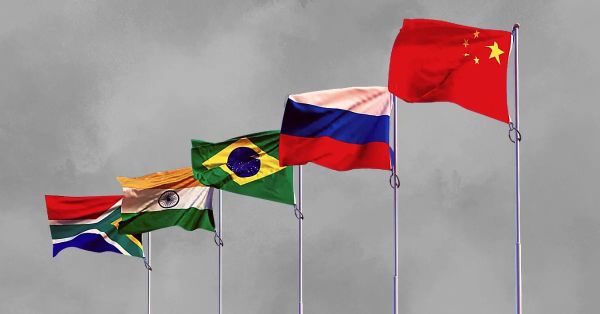
Brics was established in 2009 as a cooperative platform for emerging economies, initially comprising Brazil, Russia, India, and China, with South Africa joining in 2010. In January this year, Iran, Egypt, Ethiopia and the United Arab Emirates were admitted as new members.
Earlier, Anwar announced that Malaysia will first become a “partner country” of Brics before finalising its full participation.
Ramesh anticipated that a key discussion between Anwar and the Indian government would be to continue and potentially expand the visa-free policy to further boost tourism.
Indian nationals currently enjoy visa-free entry into Malaysia for up to 30 days. The policy, implemented on December 1 last year, will be in effect until December 31 this year.
The Indian government has reciprocated by allowing Malaysians to visit India on a 30-day double-entry electronic visa at no cost from July 1, 2024, until June 30, 2025. Applications can be made online through the Indian visa portal, with the e-tourist visa required to be used within 120 days of issuance.
Regarding Malaysia’s 2025 Asean chairmanship, Ramesh said Anwar should engage with his Indian counterpart to emphasise the key role Malaysia could play as a major trading hub for the region during his visit to India.
“In light of Malaysia’s Asean chairmanship in 2025, Anwar’s engagement with his Indian counterpart will highlight Malaysia’s strategic role as a key trading hub for the region,” he added.
Ramesh noted that Malaysia, leveraging its significant Indian diaspora — approximately 2.8 million strong — intends to advocate for a robust Asean-India partnership.
The Indian media reported that a number of agreements are expected to be signed between India and Malaysia during Anwar’s visit to New Delhi including in trade, investment, technology, regional security, labour, defence and tourism.
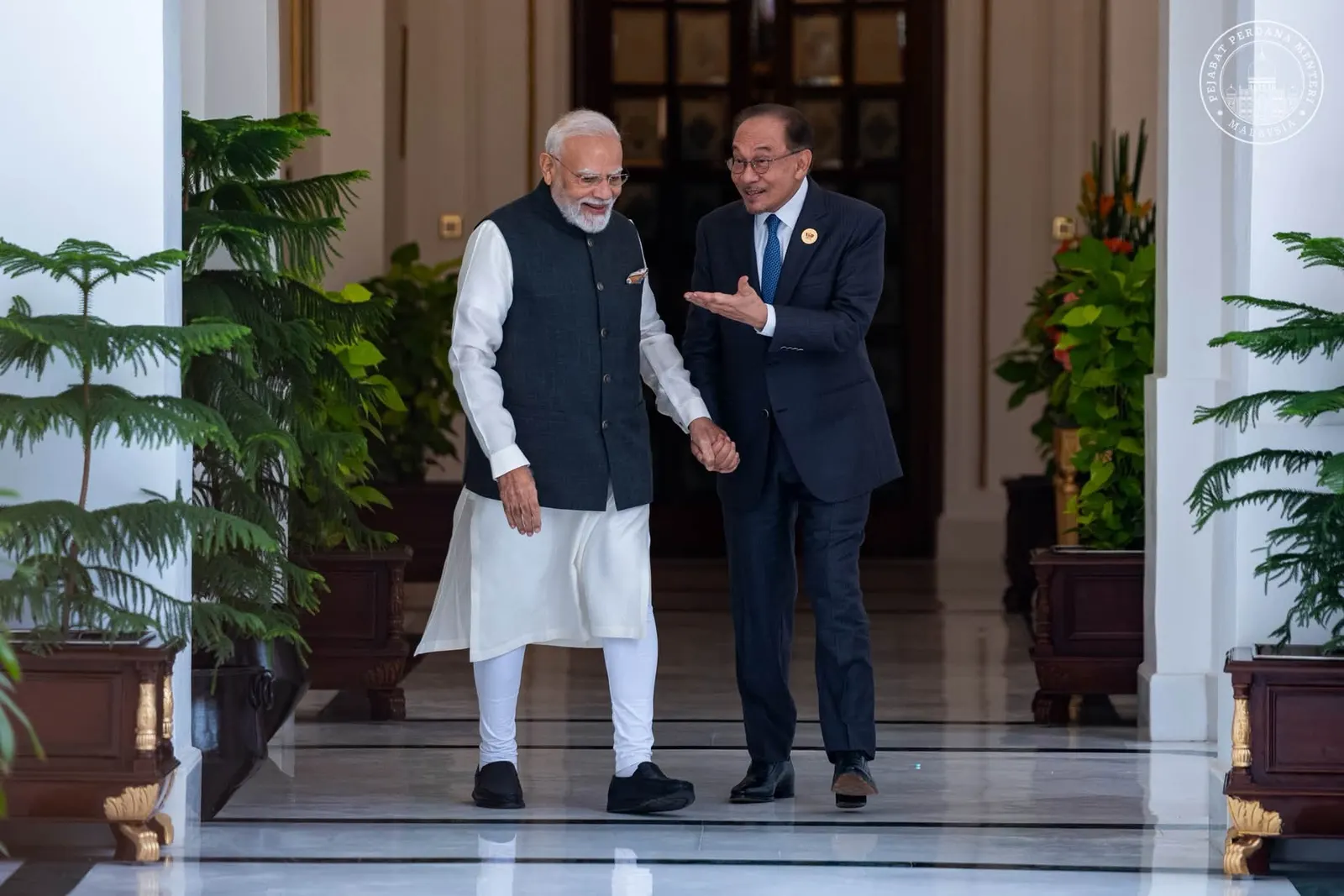
Anwar travelled to India in January 2019 to participate in a conference in New Delhi and met with India Prime Minister Narendra Modi at that time, but this will be his first visit to the country since entering office in November 2022.
The diplomatic relationship between India and Malaysia, which dates back to 1957, has grown from a Strategic Partnership in 2010 to an Enhanced Strategic Partnership in 2015.
India-Malaysia bilateral trade surpassed the US$20 billion (RM88.6 billion) mark in 2023-2024, and is projected to reach US$30 billion by 2025.
— Bernama