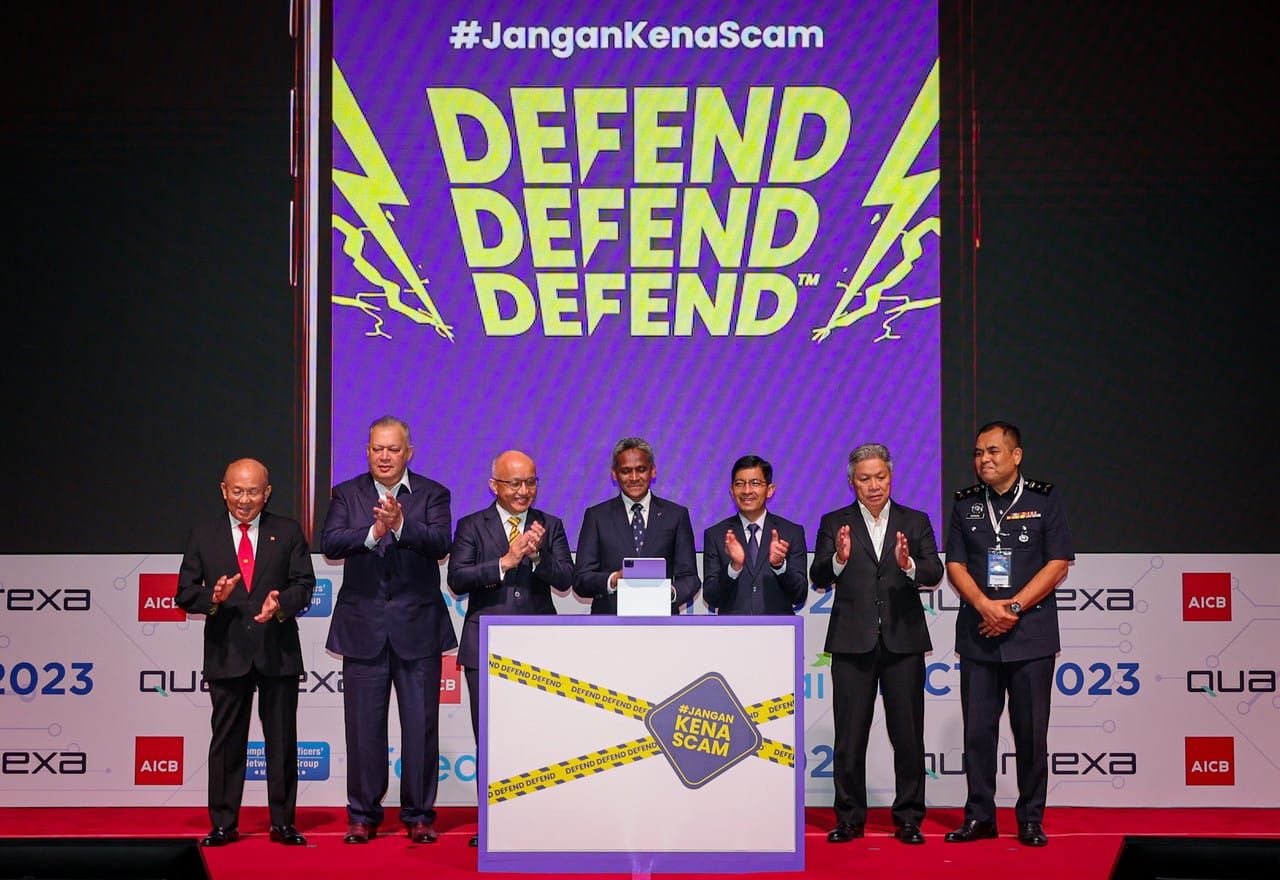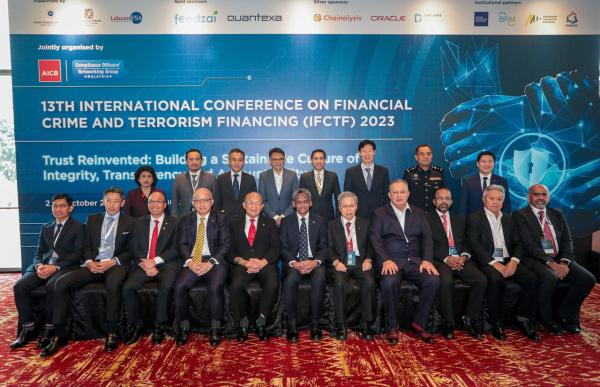

KUALA LUMPUR, Oct 3 — Malaysian financial institutions are ahead of their Southeast Asian peers when implementing anti-money laundering (AML) and counter-terrorism financing (CTF) measures to mitigate the risk of financial threat within its jurisdiction.
Speaking on the sidelines of the 13th International Conference on Financial Crime and Terrorism Financing (IFCTF) 2023 today, the Asia/Pacific Group on Money Laundering executive secretary Gordon Hook said Malaysian financial institutions are considered regional leaders in addressing the risks.
"Malaysian financial institutions are working hard to mitigate current risks and emerging threats arising from the usage of new technology in the country and within the region by having highly educated compliance officers who are extremely good at what they do.
"However, there will always be more things to be done to put more resources to address those risks, as the emerging risks still need additional resources, not the reallocation of existing resources," he told Bernama after a roundtable session.
Commenting on the rising threat relating to financial crimes, Hook said the top regional trends include corruption, tax evasion and drug trafficking.
"Although there is an increase in emerging risks within the region, like the use of cryptocurrencies for financial-related crimes, there are several existing issues and trends that should be addressed," he said.
Luno global head of compliance John Vallis said as a global cryptocurrency company, it is serious about managing exposure to potential financial crimes by applying the same standards and rules related to combating financial fraud.
"We strongly believe that the best way to create trust within the market is to work as closely as possible with the regulators in the market we are operating in," he said.
Meanwhile, founder and director of Centre for Global Advancement Kenya Amanda Gore said other forms of financial crime on the rise that might leverage cryptocurrencies in Southeast Asia include illegal gambling.
"We saw a lot of online casinos and illegal gambling set up since the Covid-19 pandemic and we are starting to see the hotspots they operate in at the moment.
"There is a rising risk of the platform acting as money exchanges using crypto as a form of payment and this can be a money laundering issue," she said.
The Asian Institute of Chartered Bankers (AICB) chief executive Edward Ling said banks and financial institutions must be relevant, agile, adaptable, and equipped with the knowledge and skills to thrive in the future of banking.
"AICB is here to provide professional banking education and talent development. The institute occupies a unique space in the financial services sector and is well placed to play a key role in the industry’s aim to achieve zero-tolerance for money laundering and terrorism financing," he said.
AICB currently offers professional qualifications in AML, CFT and regulatory compliance in strategic partnerships with the Asian Banking School (ABS), the largest specialised provider of quality banking training programmes in Asean and the International Compliance Association (ICA), a leading professional body for the global regulatory and financial crime compliance community.
The 13th IFCTF 2023, themed Trust Reinvented: Building a Sustainable Culture of Integrity, Transparency and Accountability, is jointly organised by AICB and its Compliance Officers’ Networking Group, with the support of Bank Negara Malaysia, Securities Commission Malaysia, and Labuan Financial Services Authority.
Over 50 leading global and regional financial crime experts shared their knowledge, experience and insights on disrupting proliferation financing, risk and threats around digital banks, the use of artificial intelligence in AML prevention and detection, cryptocurrency and cybercrime and regional and international cooperation mechanisms to combat transnational crime, among other issues.
The conference attracted over 1,000 delegates from local and international financial institutions.
— Bernama